Optimizing compensation in the AI-augmented workplace
💡Essential reading for leaders managing the organizational shift toward AI-integrated workflows.
⚡ 30-Second TL;DR
What Changed
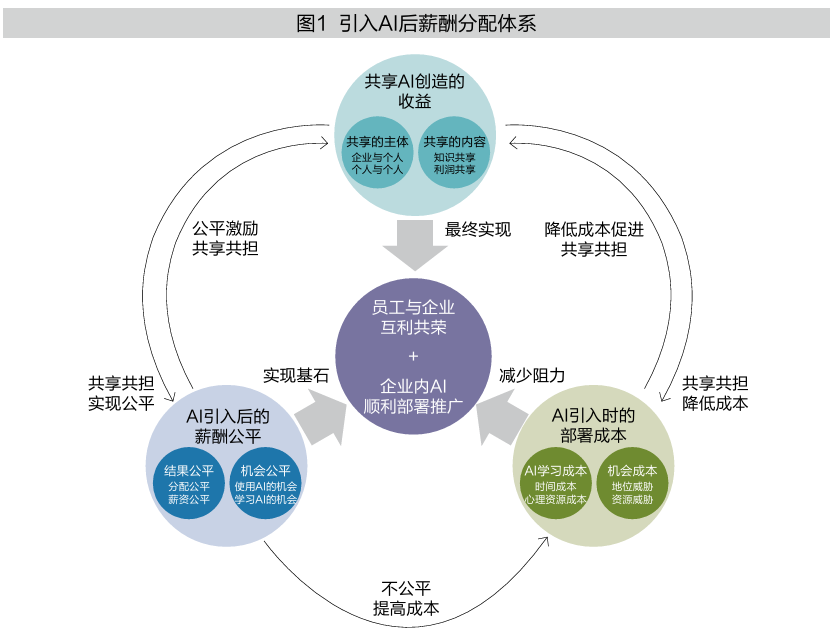
AI causes vertical and horizontal pay gaps due to varying automation rates.
Why It Matters
Addressing these compensation issues is critical for preventing employee resistance to AI adoption and ensuring long-term organizational productivity.
What To Do Next
Implement a transparent 'AI-augmented performance' framework that clearly defines how AI-driven efficiency gains are measured and rewarded.
Key Points
- •AI causes vertical and horizontal pay gaps due to varying automation rates.
- •Performance attribution between human effort and AI assistance is increasingly ambiguous.
- •Employees face high learning and opportunity costs when adopting AI.
- •Proposes 'AI profit sharing' and 'opportunity equity' as solutions for fairness.
🧠 Deep Insight
AI-generated analysis for this event — not the original article.
🔑 Enhanced Key Takeaways
- •Emerging 'AI-productivity dividends' are being calculated by firms using granular telemetry data to measure the specific time-savings per task, which is then used to adjust base salaries versus variable bonuses.
- •Regulatory bodies in the EU and parts of the US are beginning to scrutinize 'algorithmic management' in compensation, requiring transparency in how AI-driven performance metrics impact pay decisions to prevent indirect discrimination.
- •The concept of 'Human-in-the-loop' (HITL) compensation models is gaining traction, where employees are paid a premium for their role in auditing and correcting AI outputs, effectively shifting the value proposition from creation to verification.
- •Skill-based pay architectures are replacing traditional job-leveling frameworks, as AI proficiency becomes a distinct, measurable competency that can be decoupled from tenure or traditional role hierarchy.
- •Large-scale longitudinal studies indicate that firms implementing 'AI-augmented compensation' see a 15-20% reduction in turnover among high-performing employees who feel their AI-enhanced output is fairly recognized.
🛠️ Technical Deep Dive
- AI-driven compensation engines utilize multi-factor regression models to isolate the 'AI-contribution coefficient' from human-input variables.
- Implementation often involves integrating HRIS (Human Resource Information Systems) with LLM-based productivity logs to track task-completion velocity and error rates.
- Fairness algorithms are deployed to detect bias in performance scoring, often utilizing SHAP (SHapley Additive exPlanations) values to ensure that AI-assisted performance metrics do not unfairly penalize employees with limited access to premium AI tools.
🔮 Future ImplicationsAI analysis grounded in cited sources
⏳ Timeline
Weekly AI Recap
Read this week's curated digest of top AI events →
👉Related Updates


AI-curated news aggregator. All content rights belong to original publishers.
Original source: 虎嗅 ↗
This is a summary, not the original. Read the source, or get the weekly briefing.
The weekly digest
One email a week. Unsubscribe anytime.