OpenSearch MCP Apps Bring Interactive Agent Observability
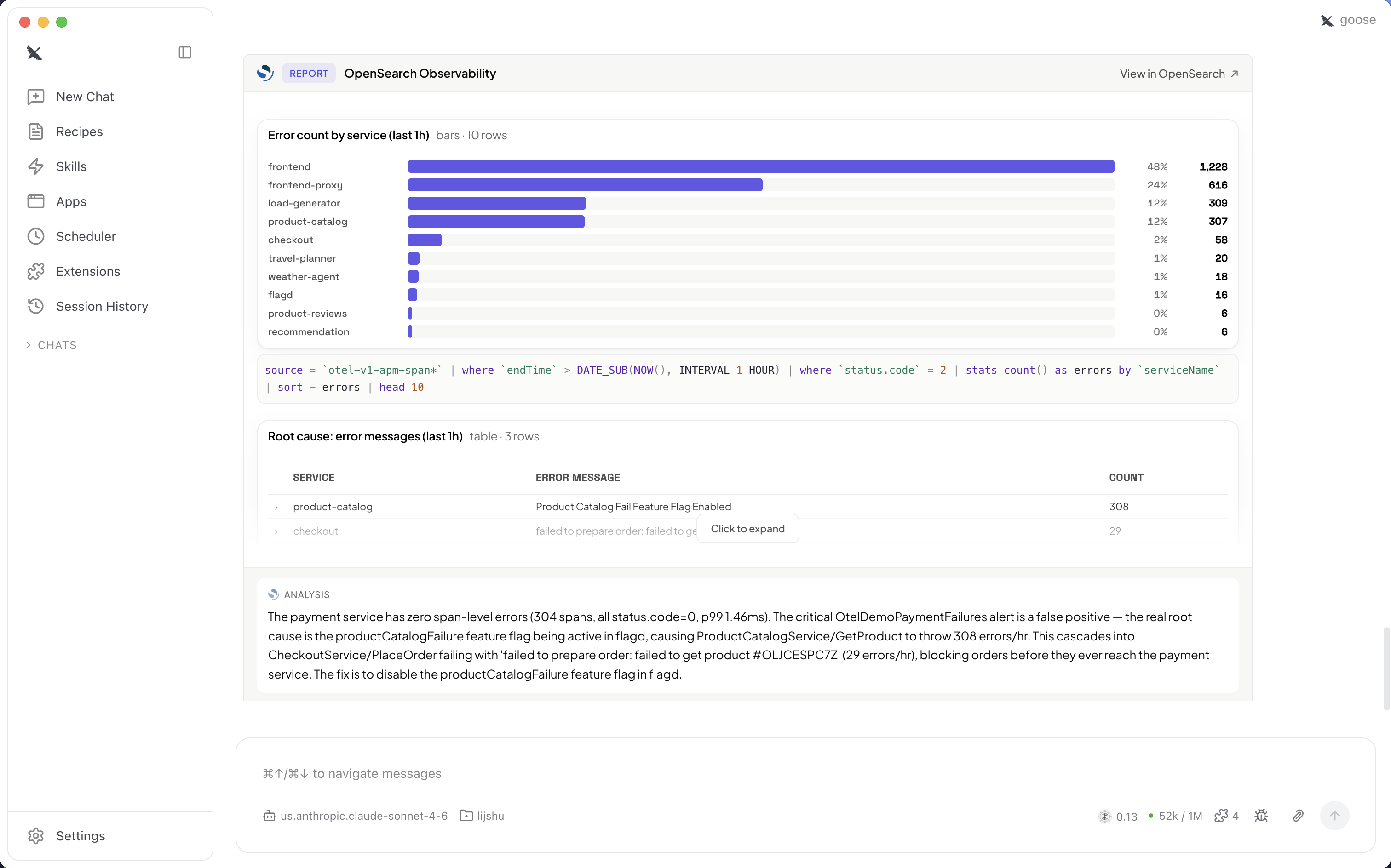
💡See how MCP Apps let AI agents visualize and verify observability investigations without leaving the IDE.
⚡ 30-Second TL;DR
What Changed
MCP Apps add interactive visualizations to AI agent responses in Amazon OpenSearch Service.
Why It Matters
This feature can reduce context switching during incident response and make agent-assisted observability more transparent. Teams can inspect evidence directly in the workflow instead of relying only on generated text.
What To Do Next
Set up the locally run Amazon OpenSearch Service MCP server in your IDE and test an alert-to-root-cause investigation using MCP Apps.
Key Points
- •MCP Apps add interactive visualizations to AI agent responses in Amazon OpenSearch Service.
- •A single locally run MCP server connects alert investigation, traces, logs, and root-cause analysis.
- •Developers can verify each investigation step inline without switching away from their IDE.
🧠 Deep Insight
Background and context from public sources — not the original article. 10 sources cited.
🔑 Enhanced Key Takeaways
- •The OpenSearch MCP server utilizes a standardized interface to replace bespoke, proprietary integration methods, promoting interoperability across different agentic IDEs.
- •The architecture supports multiple communication protocols including stdio, Streamable HTTP, and SSE, ensuring flexibility for diverse AI agent frameworks.
- •This integration is a direct response to the 10x increase in telemetry data generated by autonomous AI agents, which traditional observability stacks struggle to manage cost-effectively.
- •The initiative is part of a broader 2026 AWS strategy to build 'AI-native' platforms, which also includes memory retention features and automated search relevance tuning.
- •The OpenSearch MCP server is released as an open-source project, specifically designed to mitigate the high costs associated with proprietary, per-GB observability pricing models.
📊 Competitor Analysis▸ Show
| Feature | Amazon OpenSearch MCP | Datadog Bits AI | New Relic Grok |
|---|---|---|---|
| Integration | Open-source MCP standard | Proprietary/Closed | Proprietary/Closed |
| Pricing Model | Open-source/Self-hosted | Per-GB/Subscription | Per-GB/Subscription |
| IDE Support | Agnostic (MCP-compliant) | Datadog-specific | New Relic-specific |
🛠️ Technical Deep Dive
- The MCP server functions as a secure two-way bridge between the agentic IDE and the OpenSearch backend, enabling the agent to trigger UI component rendering.
- Implementation relies on the Model Context Protocol to facilitate direct querying of logs, traces, and metrics without manual context switching.
- The architecture supports modular 'AgentHealth' evaluation tools, allowing agents to perform automated root-cause analysis based on structured knowledge packages.
- The system is designed to handle high-cardinality telemetry data by offloading query execution to the local MCP server, reducing latency in agentic feedback loops.
🔮 Future ImplicationsAI analysis grounded in cited sources
⏳ Timeline
📎 Sources (10)
Factual claims are grounded in the sources below. Forward-looking analysis is AI-generated interpretation.
Weekly AI Recap
Read this week's curated digest of top AI events →
👉Related Updates

AI-curated news aggregator. All content rights belong to original publishers.
Original source: AWS Machine Learning Blog ↗
This is a summary, not the original. Read the source, or get the weekly briefing.
Weekly AI briefing
One email a week. Unsubscribe anytime.