OpenClaw Rewrites AI Industry Logic
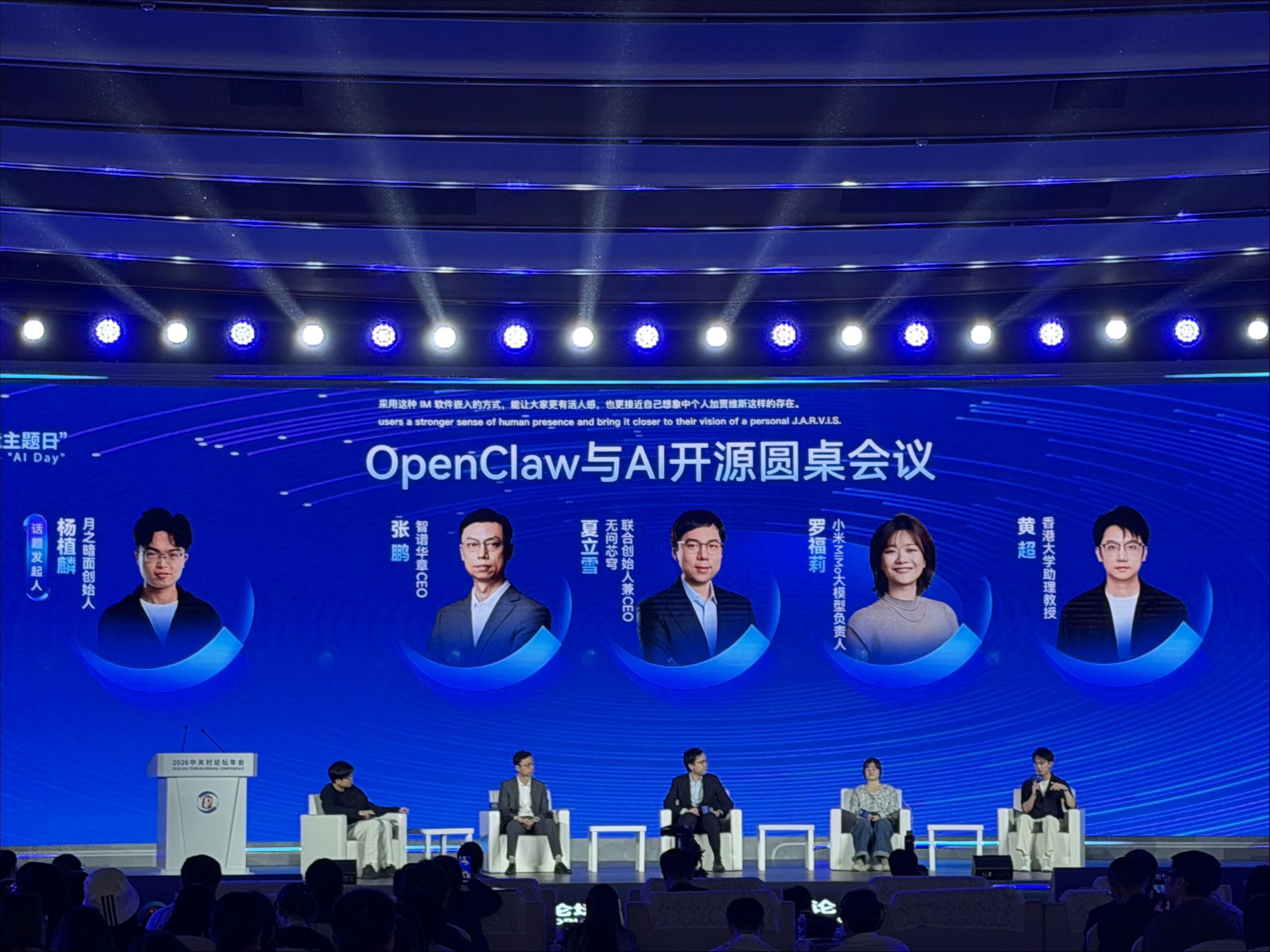
💡See how OpenClaw challenges AI paradigms—key for builders eyeing industry shifts.
⚡ 30-Second TL;DR
What Changed
Yang Zhilin, Zhang Peng, Luo Fuli lead OpenClaw discussions
Why It Matters
OpenClaw could disrupt traditional AI development models, forcing incumbents to adapt and offering new opportunities for innovators in AI infrastructure.
What To Do Next
Explore OpenClaw's GitHub repo to prototype AI workflows with its new logic.
Key Points
- •Yang Zhilin, Zhang Peng, Luo Fuli lead OpenClaw discussions
- •OpenClaw fundamentally rewrites AI industry logic
- •Talks transcend product/framework boundaries
- •Highlights broader AI ecosystem shifts
🧠 Deep Insight
Background and context from public sources — not the original article. 9 sources cited.
🔑 Enhanced Key Takeaways
- •OpenClaw has achieved unprecedented open-source adoption, becoming the first software project in history to surpass the GitHub star counts of established industry standards like React, Docker, and Kubernetes within three months.
- •The framework represents a fundamental architectural shift from 'chat-based' AI, where models are passive, to an 'agentic operating system' model that enables autonomous, 24/7 background execution, file system access, and tool orchestration.
- •Recent updates (v3.23) have introduced a strict sandboxed plugin architecture and 'compliance audit flows' at the execution pipeline level, forcing a move away from insecure, external-filter-based integrations used by many early third-party developers.
📊 Competitor Analysis▸ Show
| Feature | OpenClaw | Traditional Chat-based AI (e.g., ChatGPT/Claude) | Enterprise Agent Platforms |
|---|---|---|---|
| Execution | Autonomous, 24/7 background | Reactive, session-based | Managed, centralized |
| Environment | Local/Self-hosted | Cloud-hosted | Cloud/Hybrid |
| Pricing | Free (Open Source) | Subscription/API-based | Enterprise Licensing |
| Benchmarks | High (Task completion/Agentic) | High (Reasoning/Text) | High (Reliability/Security) |
🛠️ Technical Deep Dive
- •Architecture: Operates as an agentic operating system that interfaces with LLMs (model-agnostic) to execute multi-step workflows.
- •Memory System: Utilizes persistent local storage (Markdown files) for long-term context, allowing agents to maintain state across restarts and migrations.
- •Plugin/SDK: Recently transitioned to a new SDK requiring strict sandboxed isolation for all plugins, replacing legacy API-based extensions.
- •Security: Implements 'compliance audit flows' directly within the execution pipeline, requiring real-time feedback from models on output status.
- •Context Management: Employs intelligent token weight distribution and multi-level memory slots to optimize context for long-horizon tasks.
🔮 Future ImplicationsAI analysis grounded in cited sources
⏳ Timeline
📎 Sources (9)
Factual claims are grounded in the sources below. Forward-looking analysis is AI-generated interpretation.
Weekly AI Recap
Read this week's curated digest of top AI events →
👉Related Updates

AI-curated news aggregator. All content rights belong to original publishers.
Original source: 钛媒体 ↗
This is a summary, not the original. Read the source, or get the weekly briefing.
Weekly AI briefing
One email a week. Unsubscribe anytime.