OpenClaw Ignites Computer Use Agent Boom
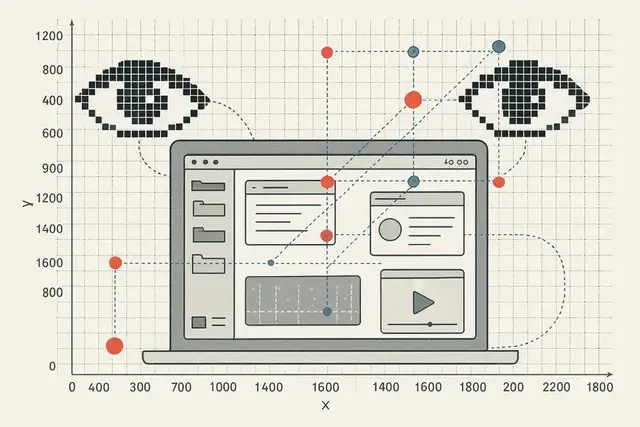
💡OpenClaw boom signals agent era—build/test now for automation edge.
⚡ 30-Second TL;DR
What Changed
OpenClaw achieves viral popularity
Why It Matters
Accelerates adoption of computer-controlling AI agents, shifting developer focus to agentic workflows and automation tools.
What To Do Next
Clone OpenClaw repo and benchmark its computer use agent performance locally.
Key Points
- •OpenClaw achieves viral popularity
- •Sparks Computer Use Agent category explosion
- •Represents major milestone in agent development
- •Not final product but category catalyst
🧠 Deep Insight
Background and context from public sources — not the original article. 7 sources cited.
🔑 Enhanced Key Takeaways
- •OpenClaw is an open-source, self-hosted AI agent framework that runs locally on user hardware, connecting LLMs like Claude or GPT-4o via API keys to execute tasks through a local gateway.[1][2][3]
- •It features a modular skills system with over 100 prebuilt skills from ClawHub for tasks like GitHub integration, web automation, and shell commands, plus user-created skills.[2][3]
- •Formerly known as Clawdbot and Moltbot, it supports multi-channel communication via Telegram, Discord, Slack, and others, with proactive 'heartbeat' scheduling for cron jobs.[2][4][5]
📊 Competitor Analysis▸ Show
| Feature | OpenClaw | AutoGPT | ChatGPT |
|---|---|---|---|
| Deployment | Local/self-hosted | Local | Cloud-only |
| Agent Structure | Multiple specialized agents with personalities | Autonomous single agent | Single assistant |
| Proactivity | Heartbeats (cron jobs) | Limited | Reactive |
| System Access | Shell commands, local files | Limited | Sandboxed |
🛠️ Technical Deep Dive
- •Local gateway acts as control plane, bridging LLMs (Anthropic Claude, OpenAI GPT-4o/5, Ollama local models) via user API keys to local tools and messaging channels.[1][2][3]
- •Modular skills in Markdown/TypeScript; over 100 via ClawHub (e.g., GitHub, web automation, smart home); agents defined by system prompt, skills, and model backend in dashboard.[2][3]
- •Stateful with hierarchical persistent memory; proactive via heartbeat scheduler for cron jobs/background tasks; user controls via skill toggles for safety.[1][2][4]
🔮 Future ImplicationsAI analysis grounded in cited sources
⏳ Timeline
📎 Sources (7)
Factual claims are grounded in the sources below. Forward-looking analysis is AI-generated interpretation.
- o-mega.ai — Openclaw Creating the AI Agent Workforce Ultimate Guide 2026
- pacgenesis.com — What Is Openclaw AI Everything You Need to Know About the Open Source AI Agent That Actually Does Things
- tencentcloud.com — 140791
- lightpdf.com — What Is Openclaw
- ai2sql.io — How to Build Your Own AI Agent Team with Openclaw in 15 Minutes
- youtube.com — Watch
- tosea.ai — Openclaw Moltbot AI Agent Guide 2026
Weekly AI Recap
Read this week's curated digest of top AI events →
👉Related Updates



AI-curated news aggregator. All content rights belong to original publishers.
Original source: 钛媒体 ↗
This is a summary, not the original. Read the source, or get the weekly briefing.
Weekly AI briefing
One email a week. Unsubscribe anytime.