OpenClaw Agents Disrupt EdTech
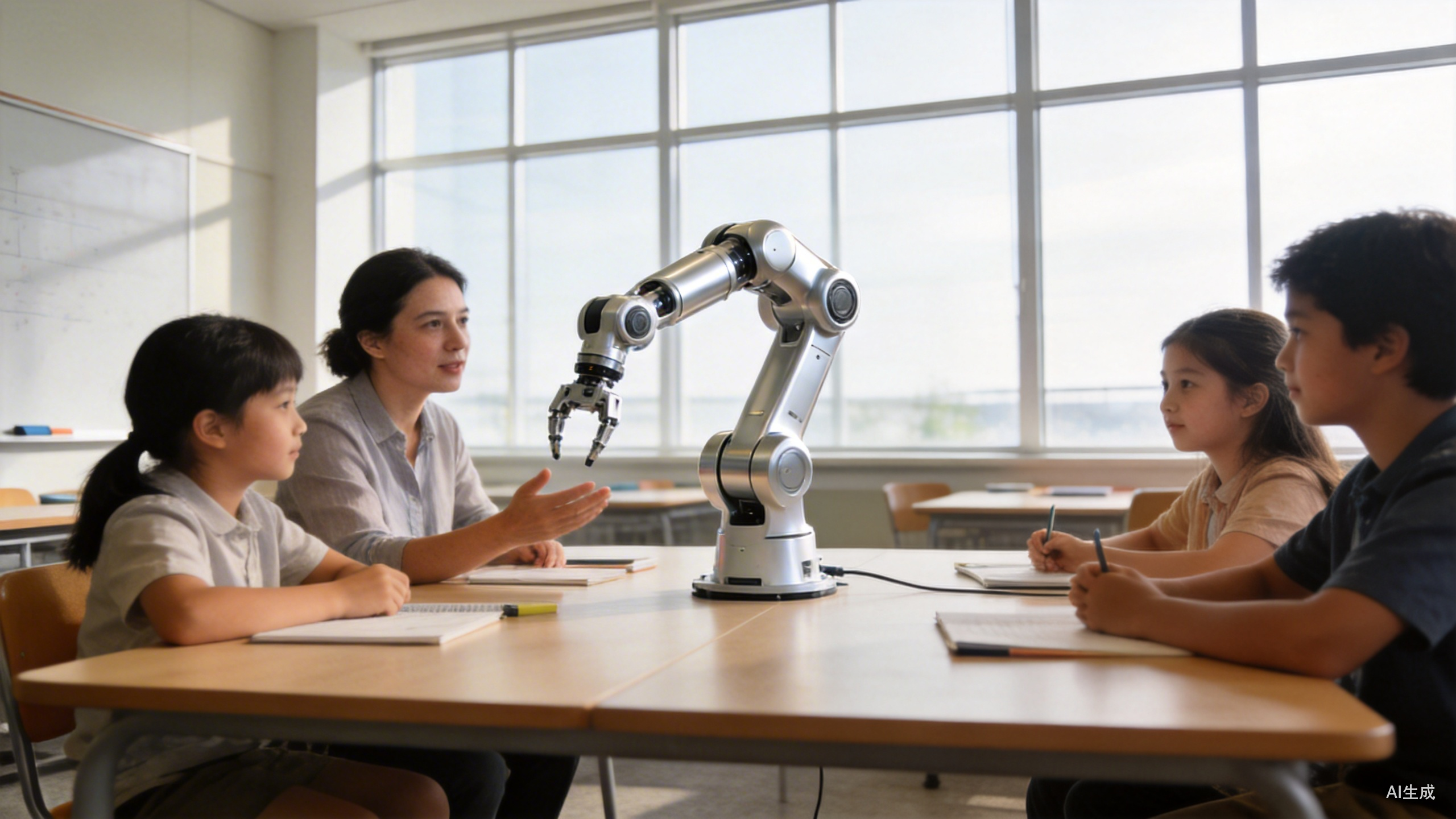
💡Agentic AI like OpenClaw eyes $300B edtech disruption—build or be replaced.
⚡ 30-Second TL;DR
What Changed
AI agents automate recruitment, private ops, and smart scheduling in tutoring centers.
Why It Matters
Agentic AI threatens labor-intensive edtech models, pushing founders toward agent integration. Enables scalable personalization, potentially birthing trillion-scale platforms via data moats.
What To Do Next
Prototype an agentic AI for lesson planning using frameworks like LangChain or AutoGen.
Key Points
- •AI agents automate recruitment, private ops, and smart scheduling in tutoring centers.
- •Agents enable teacherless personalized learning paths, lesson prep, and student monitoring.
- •Vocational ed highly vulnerable; K12 safer due to exams and discipline needs.
- •Predicts rise of small AI-teacher teams eroding institutions, plus data flywheels for platforms.
🧠 Deep Insight
Background and context from public sources — not the original article. 9 sources cited.
🔑 Enhanced Key Takeaways
- •OpenClaw launched approximately three months prior to March 2026, rapidly gaining 247,000 GitHub stars and over 2.2 million deployed agent instances despite significant security vulnerabilities including nine CVEs and over 1,184 malicious skills on ClawHub.[2]
- •OpenClaw functions as a self-hosted gateway connecting LLMs like GPT-4 or Claude to tools via a modular skill system, with ClawHub offering over 10,700 community skills that agents can autonomously discover and install.[2][4][5]
- •Security concerns are prominent, with over 135,000 instances exposed online using default credentials, prompting warnings from Palo Alto Networks as a major insider threat, though users control permissions via identity files and skill toggles.[2][4]
🛠️ Technical Deep Dive
- •OpenClaw operates via a Gateway that normalizes inputs from messaging apps (e.g., WhatsApp, Slack), loads session memory and skills, passes context to a configured LLM for reasoning, and executes actions through modular skills.[5]
- •Core layers include identity files (SOUL.md/AGENTS.md) for agent personality and permissions loaded at conversation start, a skill layer with over 100 preconfigured AgentSkills and thousands on ClawHub, and autonomous skill discovery/installation by the AI.[2]
- •Self-hosted on user devices with local storage of interaction history and configuration; supports Docker deployment, cloud servers, API integrations, background jobs, and connections to over 50 services without remote server dependency.[1][4][5]
🔮 Future ImplicationsAI analysis grounded in cited sources
⏳ Timeline
📎 Sources (9)
Factual claims are grounded in the sources below. Forward-looking analysis is AI-generated interpretation.
- youtube.com — Watch
- growexx.com — Openclaw Skills Development Guide for Developers 2026 Edition
- createwith.com — Events
- o-mega.ai — Openclaw Creating the AI Agent Workforce Ultimate Guide 2026
- autonomous.ai — What Is Openclaw
- matthewrhoads.com — Autonomous AI and the Possible Future of AI in Schools Welcome Moltbot and Autonomous AI Agents
- getaiform.com — Openclaw Law Firm AI Agents Case Intake Qualification Dashform 2026
- tencentcloud.com — 140897
- NVIDIA — Gtc26 Dlit82488
Weekly AI Recap
Read this week's curated digest of top AI events →
👉Related Updates
AI-curated news aggregator. All content rights belong to original publishers.
Original source: 虎嗅 ↗
This is a summary, not the original. Read the source, or get the weekly briefing.
Weekly AI briefing
One email a week. Unsubscribe anytime.