OpenAI's Screenshot Feature Risks Privacy
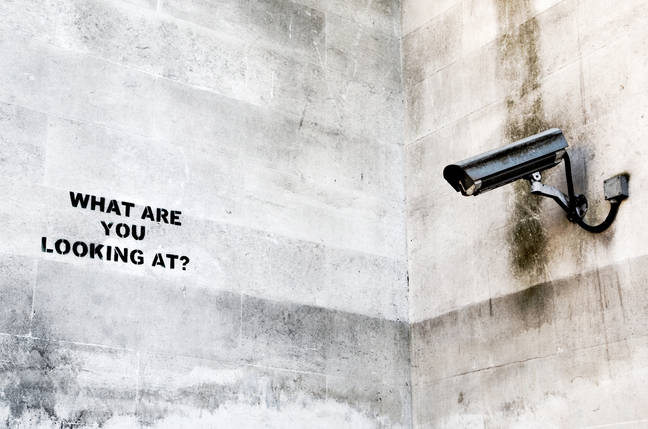
💡OpenAI's Recall-like screenshots: privacy traps for AI app builders.
⚡ 30-Second TL;DR
What Changed
OpenAI introduces screenshot-based self-surveillance
Why It Matters
This feature may deter enterprise adoption due to privacy concerns, prompting AI teams to audit data handling. It underscores ongoing tensions between AI advancement and user trust. Practitioners should prepare for potential backlash or regulatory probes.
What To Do Next
Review OpenAI's latest ChatGPT update notes for self-surveillance opt-in settings and disable if handling sensitive data.
Key Points
- •OpenAI introduces screenshot-based self-surveillance
- •Feature likened to Microsoft Recall for privacy risks
- •Designed to make models smarter via user data capture
- •Sarcastic coverage highlights 'shooting privacy in the foot'
🧠 Deep Insight
AI-generated analysis for this event — not the original article.
🔑 Enhanced Key Takeaways
- •The feature, internally referred to as 'Vision-Contextual Awareness,' utilizes a local-first processing architecture to perform initial image analysis before transmitting metadata to OpenAI's servers, aiming to mitigate raw data exposure.
- •Regulatory bodies in the EU have already signaled intent to investigate whether this feature violates GDPR 'data minimization' principles, specifically regarding the automated capture of third-party application data.
- •Enterprise versions of the tool include an 'Admin-Lock' feature that allows IT departments to disable screenshot ingestion at the kernel level, a direct response to corporate security concerns following the Microsoft Recall backlash.
📊 Competitor Analysis▸ Show
| Feature | OpenAI (Vision-Contextual) | Microsoft (Recall) | Anthropic (Computer Use) |
|---|---|---|---|
| Primary Focus | Model training/context | OS-level search | Agentic task execution |
| Pricing | Included in Plus/Team | OS-integrated | API-based usage |
| Privacy Model | Hybrid (Local/Cloud) | Local-first (Encrypted) | Cloud-based (API) |
🛠️ Technical Deep Dive
- •Utilizes a lightweight Vision Transformer (ViT) encoder running on the client device to generate semantic embeddings of screen content.
- •Implements differential privacy noise injection on the metadata sent to OpenAI servers to prevent exact reconstruction of sensitive UI elements.
- •Uses OCR (Optical Character Recognition) pipelines optimized for high-frequency sampling, triggered only by specific user-defined interaction events rather than continuous recording.
- •Data retention policies for the captured visual context are capped at 30 days by default, with an option for users to purge the vector database locally.
🔮 Future ImplicationsAI analysis grounded in cited sources
⏳ Timeline
Weekly AI Recap
Read this week's curated digest of top AI events →
👉Related Updates
AI-curated news aggregator. All content rights belong to original publishers.
Original source: The Register - AI/ML ↗
This is a summary, not the original. Read the source, or get the weekly briefing.
The weekly digest
One email a week. Unsubscribe anytime.