OpenAI targets 50% reduction in model inference costs
Learn how OpenAI is slashing inference costs by 50% using KV cache optimization techniques.
30-Second TL;DR
What Changed
OpenAI is optimizing KV cache to reduce inference costs by over 50%.
Why It Matters
If successful, this will drastically lower the barrier for deploying large-scale agents and long-context applications, potentially shifting the industry focus from raw model size to inference efficiency.
What To Do Next
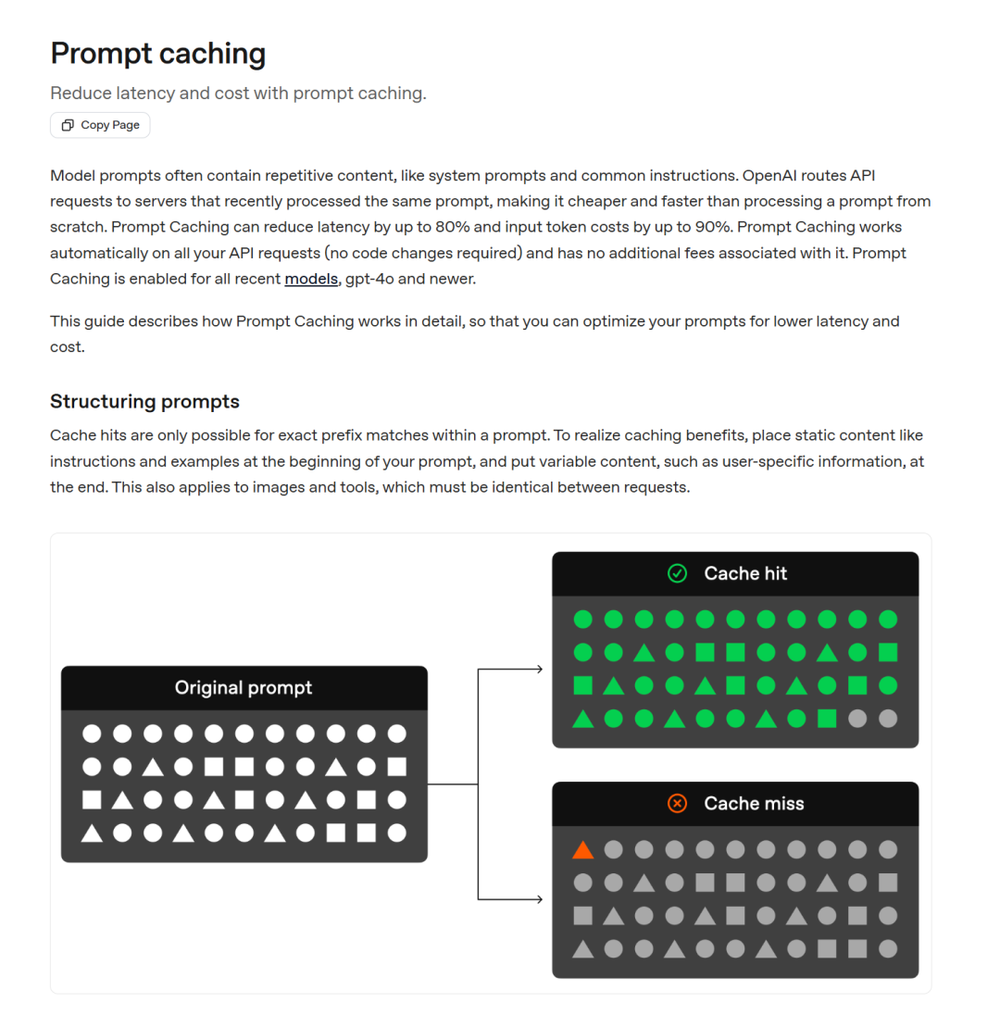
Review your current LLM implementation to see if you can adopt Prompt Caching for repetitive system prompts or long context history.
Key Points
- •OpenAI is optimizing KV cache to reduce inference costs by over 50%.
- •The strategy mirrors DeepSeek's 'Multi-head Latent Attention' (MLA) approach.
- •Focus is on reducing HBM (High Bandwidth Memory) bottlenecks during inference.
- •Prompt Caching is being leveraged to reuse intermediate computation results.
Deep Insight
AI-generated analysis for this event — not the original article.
Enhanced Key Takeaways
- •OpenAI's initiative is reportedly integrated into a broader 'Project Strawberry' or successor reasoning-model optimization roadmap to handle long-context windows more efficiently.
- •The architecture shift involves moving away from standard Multi-Head Attention (MHA) toward compressed KV cache representations to alleviate the HBM bandwidth wall.
- •Industry analysts suggest this move is a direct response to the 'inference-compute-to-revenue' ratio pressure, as OpenAI seeks to maintain margins against open-weights models.
- •Implementation of these optimizations is expected to be rolled out via the OpenAI API, potentially allowing developers to see lower latency for high-throughput applications.
- •The strategy includes dynamic KV cache eviction policies that prioritize retaining tokens with higher attention scores, further reducing the memory footprint per request.
Competitor Analysis
- OpenAI (Proposed)
- Compressed/Dynamic
- DeepSeek (MLA)
- Multi-head Latent Attention
- Google (Gemini/Flash)
- Long-context Windowing
- Anthropic (Claude)
- Context Caching
- OpenAI (Proposed)
- Cost/HBM Efficiency
- DeepSeek (MLA)
- Memory Compression
- Google (Gemini/Flash)
- Throughput/Latency
- Anthropic (Claude)
- Accuracy/Recall
- OpenAI (Proposed)
- Proprietary/New
- DeepSeek (MLA)
- MLA
- Google (Gemini/Flash)
- Mixture-of-Experts
- Anthropic (Claude)
- Sparse Attention
| Feature | OpenAI (Proposed) | DeepSeek (MLA) | Google (Gemini/Flash) | Anthropic (Claude) |
|---|---|---|---|---|
| KV Cache Optimization | Compressed/Dynamic | Multi-head Latent Attention | Long-context Windowing | Context Caching |
| Primary Focus | Cost/HBM Efficiency | Memory Compression | Throughput/Latency | Accuracy/Recall |
| Architecture | Proprietary/New | MLA | Mixture-of-Experts | Sparse Attention |
Technical Deep Dive
- Multi-head Latent Attention (MLA) reduces KV cache size by compressing the key and value heads into a low-rank latent vector.
- HBM (High Bandwidth Memory) bottlenecks are mitigated by reducing the data movement required during the decoding phase of inference.
- Prompt Caching mechanisms store the KV states of prefix tokens in a persistent cache, avoiding redundant re-computation for repeated system prompts or documents.
- The architecture likely utilizes Grouped Query Attention (GQA) as a baseline, further refined by latent compression techniques to minimize memory overhead.
Future ImplicationsAI analysis grounded in cited sources
Timeline
- 2023-11OpenAI introduces GPT-4 Turbo with significantly lower pricing and increased context window.
- 2024-05OpenAI releases GPT-4o, emphasizing multimodal efficiency and reduced latency.
- 2024-08OpenAI announces Prompt Caching for API developers to reduce costs for repeated context.
- 2025-02OpenAI begins internal testing of advanced reasoning models requiring optimized memory architectures.
Event Coverage
Weekly AI Recap
Read this week's curated digest of top AI events →
AI-curated news aggregator. All content rights belong to original publishers.
Original source: 虎嗅 ↗
This is a summary, not the original. Read the source, or get the weekly briefing.
The weekly digest
One email a week. Unsubscribe anytime.