OpenAI rolls out bidirectional voice mode for ChatGPT
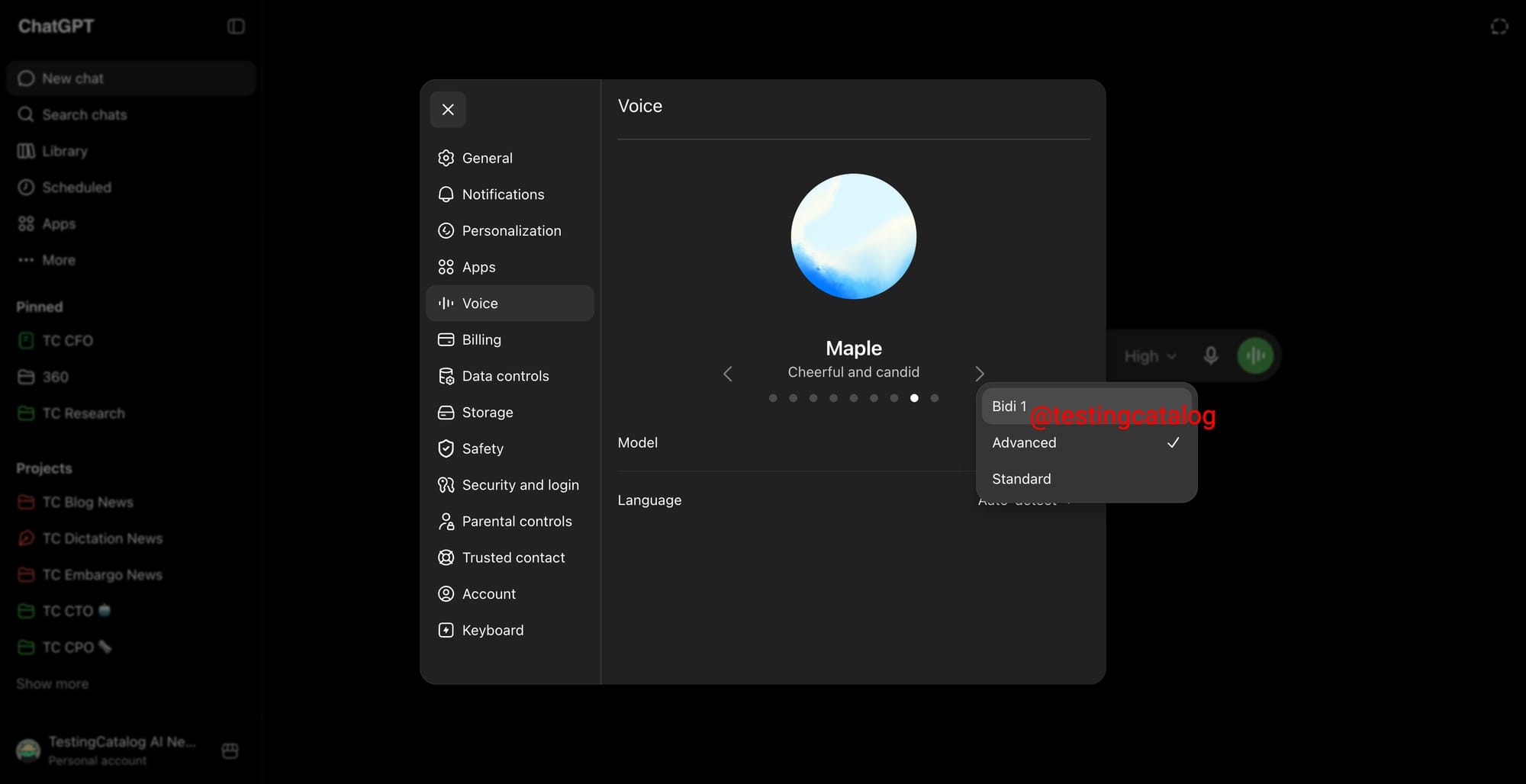
Experience the next level of conversational AI with OpenAI's new low-latency, context-aware bidirectional voice mode.
30-Second TL;DR
What Changed
Enables real-time, bidirectional conversational audio
Why It Matters
This update significantly enhances the user experience for voice-based AI interactions, making ChatGPT a more viable tool for hands-free productivity and complex verbal tasks.
What To Do Next
Update your ChatGPT mobile app and test the new voice mode to evaluate its latency and conversational coherence for your specific use cases.
Key Points
- •Enables real-time, bidirectional conversational audio
- •Features improved context retention for longer interactions
- •Rollout scheduled for the current week
Deep Insight
AI-generated analysis for this event — not the original article.
Enhanced Key Takeaways
- •The bidirectional voice mode utilizes a new end-to-end multimodal model architecture that processes audio, vision, and text natively without separate transcription steps [1].
- •Latency has been significantly reduced to human-level response times, averaging approximately 320 milliseconds for audio-to-audio interactions [1].
- •The system includes advanced emotional intelligence capabilities, allowing the model to detect and respond to user tone, speed, and emotional inflection in real-time [1].
- •OpenAI implemented new safety guardrails specifically for voice, including the ability to detect and refuse requests to generate copyrighted music or mimic specific individuals' voices [1].
- •The rollout is being phased to ChatGPT Plus and Team subscribers first, with Enterprise and Edu tiers receiving access in the following weeks [1].
Competitor Analysis
- OpenAI (Advanced Voice)
- ~320ms (Native)
- Google (Gemini Live)
- Low (Native)
- Anthropic (Claude)
- N/A (Text-based)
- OpenAI (Advanced Voice)
- Audio/Vision/Text
- Google (Gemini Live)
- Audio/Vision/Text
- Anthropic (Claude)
- Text/Vision
- OpenAI (Advanced Voice)
- Subscription (Plus/Team)
- Google (Gemini Live)
- Subscription (Gemini Advanced)
- Anthropic (Claude)
- N/A
| Feature | OpenAI (Advanced Voice) | Google (Gemini Live) | Anthropic (Claude) |
|---|---|---|---|
| Latency | ~320ms (Native) | Low (Native) | N/A (Text-based) |
| Multimodal | Audio/Vision/Text | Audio/Vision/Text | Text/Vision |
| Pricing | Subscription (Plus/Team) | Subscription (Gemini Advanced) | N/A |
Technical Deep Dive
- Architecture: Utilizes a single, unified model trained on audio, vision, and text, bypassing the traditional pipeline of Speech-to-Text (STT) -> LLM -> Text-to-Speech (TTS).
- Latency Optimization: Employs a streaming architecture that allows the model to begin generating audio tokens before the user has finished speaking.
- Context Handling: Uses a long-context window capable of maintaining state across multi-turn voice conversations without losing track of previous audio-based inputs.
- Audio Processing: Supports high-fidelity audio output with variable prosody, allowing the model to whisper, sing, or change its speaking rate dynamically.
Future ImplicationsAI analysis grounded in cited sources
Timeline
- 2023-09OpenAI introduces initial voice conversation capabilities for ChatGPT.
- 2024-05OpenAI announces the GPT-4o model with native multimodal audio capabilities.
- 2024-09Advanced Voice Mode begins limited alpha rollout to ChatGPT Plus users.
- 2025-02OpenAI expands voice mode availability to include more languages and regional accents.
- 2026-06OpenAI rolls out updated bidirectional voice mode with improved context retention.
Weekly AI Recap
Read this week's curated digest of top AI events →
AI-curated news aggregator. All content rights belong to original publishers.
Original source: TestingCatalog ↗
This is a summary, not the original. Read the source, or get the weekly briefing.
The weekly digest
One email a week. Unsubscribe anytime.