OpenAI reportedly planning major ChatGPT overhaul
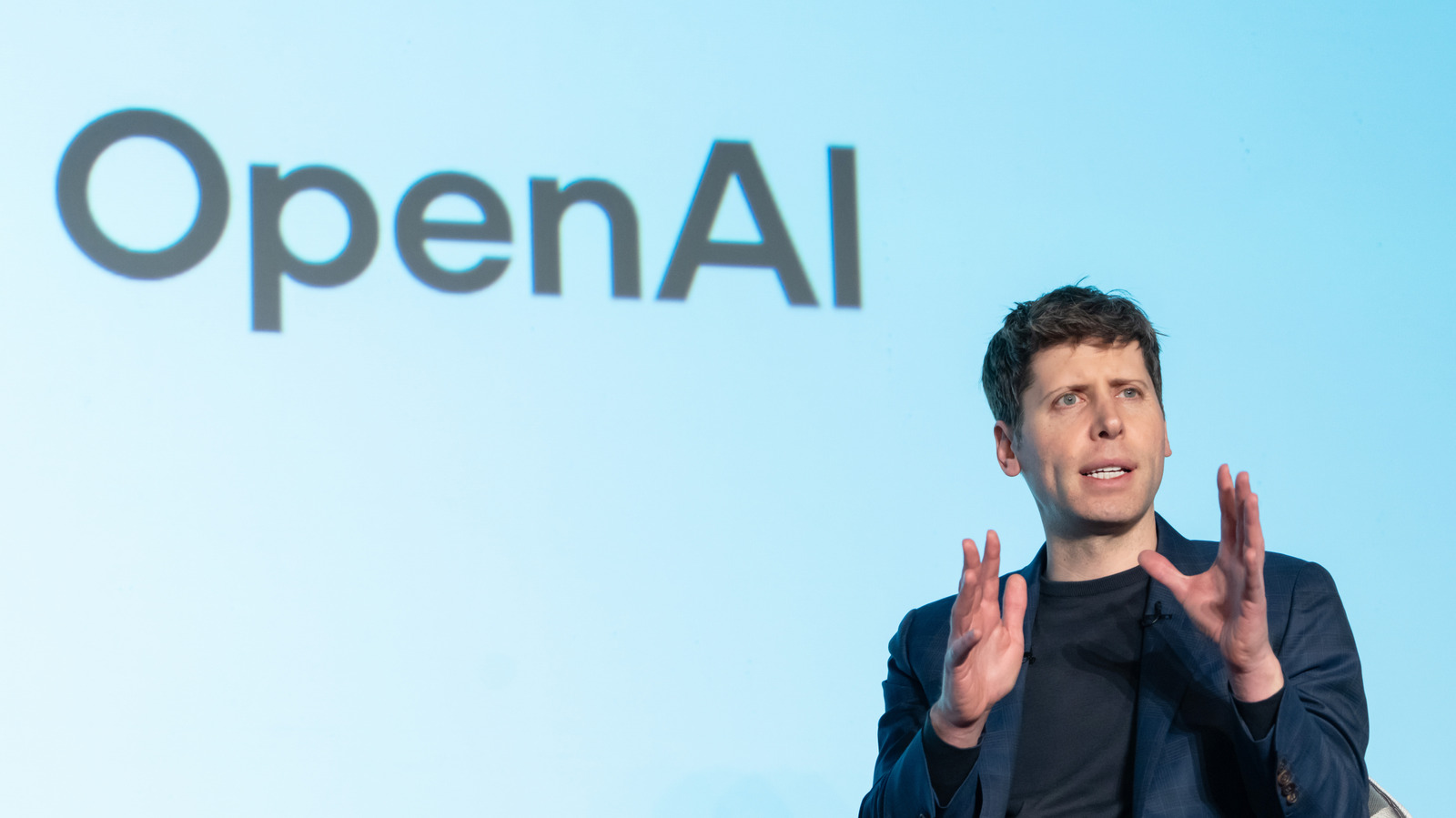
💡Stay ahead of potential UI/UX and functional shifts in the world's most popular AI chatbot.
⚡ 30-Second TL;DR
What Changed
OpenAI is developing a major revamp for the ChatGPT interface and functionality.
Why It Matters
A major overhaul could shift user workflows and potentially introduce new multimodal capabilities or UI paradigms. Practitioners should prepare for potential API or interface changes that may affect existing integrations.
What To Do Next
Monitor the OpenAI developer blog and official status page for upcoming API documentation changes related to the new ChatGPT release.
Key Points
- •OpenAI is developing a major revamp for the ChatGPT interface and functionality.
- •The update is scheduled for release in the coming weeks.
- •The report originates from The Financial Times, citing internal sources.
🧠 Deep Insight
Background and context from public sources — not the original article. 14 sources cited.
🔑 Enhanced Key Takeaways
- •The overhaul aims to transform ChatGPT from a conversational assistant into a broader platform combining coding tools (Codex), AI agents, and third-party applications from partners like Canva and Booking.com.
- •OpenAI's strategic shift is driven by a desire to attract more enterprise users and generate higher revenue through paid products and services, particularly in anticipation of a potential Initial Public Offering (IPO) as early as September 2026.
- •The redesign will initially manifest as updates to ChatGPT's website and mobile applications, featuring a new interface designed to guide users towards these enhanced functionalities.
- •A senior OpenAI employee reportedly declared, "Chat is dead," signaling a deliberate move away from purely conversational AI towards more proactive, task-oriented "agents" capable of autonomously performing complex tasks.
- •The company has reorganized several product groups under Thibault Sottiaux, who previously led the Codex coding product, underscoring the emphasis on developing a comprehensive personal AI assistant for diverse work and personal activities.
📊 Competitor Analysis▸ Show
| Feature/Category | OpenAI ChatGPT (GPT-5.5) | Anthropic Claude (Opus 4.6, Sonnet 4.6) | Google Gemini (3.1 Pro) | DeepSeek (V3.2, R1) | Perplexity AI (Pro) |
|---|---|---|---|---|---|
| Primary Focus | Superapp, AI Agents, Coding, Image Gen, Enterprise | Coding, Reasoning, Enterprise AI, Safety | Google Workspace Integration, Multimodal Search | High-Performance, Low-Cost, Open-Source | Real-time Web Research, Source Citations |
| Consumer Pricing | Plus: $20/month (higher limits, web browsing, image gen, custom GPTs); Go: $8/month (expanded access to GPT-5.2 Instant); Pro: $200/month (unlimited GPT-5.2) | Pro: $20/month; Max: $100-$200/month | Pro: $19.99/month (includes 2TB Google Cloud storage, YouTube Premium) | Free chat interface; API (pay-as-you-go, e.g., $0.28/1M input tokens) | Pro: $20/month (access to GPT-5.4 & Claude 4.6, real-time search) |
| Coding Performance | Strong coding capabilities, Codex product integration | Industry-leading coding performance (SWE-bench, real-world tasks), agentic coding tool | Strong, can match/surpass GPT in some cases | Competitive performance at lower cost, DeepSeek R1 for reasoning | Superior for coding in Pro version |
| Context Window | GPT-5.4 supports 1,050,000 tokens | Opus 4.6 and Sonnet 4.6 support up to 1,000,000 tokens | Gemini 3.1 Pro reaches 1,000,000 tokens | Not explicitly stated for chat, but competitive | Not explicitly stated, but accesses multiple models |
| Agentic Capabilities | Shifting towards AI agents for complex tasks | Excels at extended thinking, agentic coding tasks, computer use (screen viewing, mouse/keyboard control) | Improving, free access limited | DeepSeek R1 for reasoning | Deep research agentic capability |
| Speed (TPS) | GPT-5.4 nano: 187 TPS (April 2026) | Not explicitly stated, but focuses on extended thinking | Gemini 3.1 Pro: 115 TPS (April 2026) | DeepSeek V3.2: $0.28/1M input tokens (focus on cost-efficiency) | Not explicitly stated, but real-time search focused |
🛠️ Technical Deep Dive
- Built upon the Transformer architecture, a neural network design optimized for Natural Language Processing (NLP) tasks, and trained on extensive textual data.
- Employs an encoder-decoder framework to process input messages into a continuous representation and then generate contextually appropriate responses.
- Implemented using the PyTorch library, consisting of multiple layers, each with a specific function.
- Incorporates various NLP techniques including tokenization, named entity recognition, sentiment analysis, and part-of-speech tagging.
- Leverages reinforcement learning from human feedback to continuously refine its conversational skills and improve response accuracy over time.
- The underlying system architecture involves a multi-layered distributed system, including frontend edge networks, API gateways, orchestration services, and large GPU clusters (e.g., NVIDIA H100 or A100 GPUs).
- Utilizes parallelism strategies such as tensor parallelism (splitting weight matrices across GPUs) and pipeline parallelism (assigning different layers to different GPUs) for efficient processing of large models.
- Employs Server-Sent Events (SSE) to stream generated tokens back to the client in real-time, enhancing the perceived responsiveness of the user interface.
🔮 Future ImplicationsAI analysis grounded in cited sources
⏳ Timeline
📎 Sources (14)
Factual claims are grounded in the sources below. Forward-looking analysis is AI-generated interpretation.
Weekly AI Recap
Read this week's curated digest of top AI events →
👉Related Updates

AI-curated news aggregator. All content rights belong to original publishers.
Original source: Engadget ↗
This is a summary, not the original. Read the source, or get the weekly briefing.
The weekly digest
One email a week. Unsubscribe anytime.