๐Ÿ“‹Stalecollected in 25m

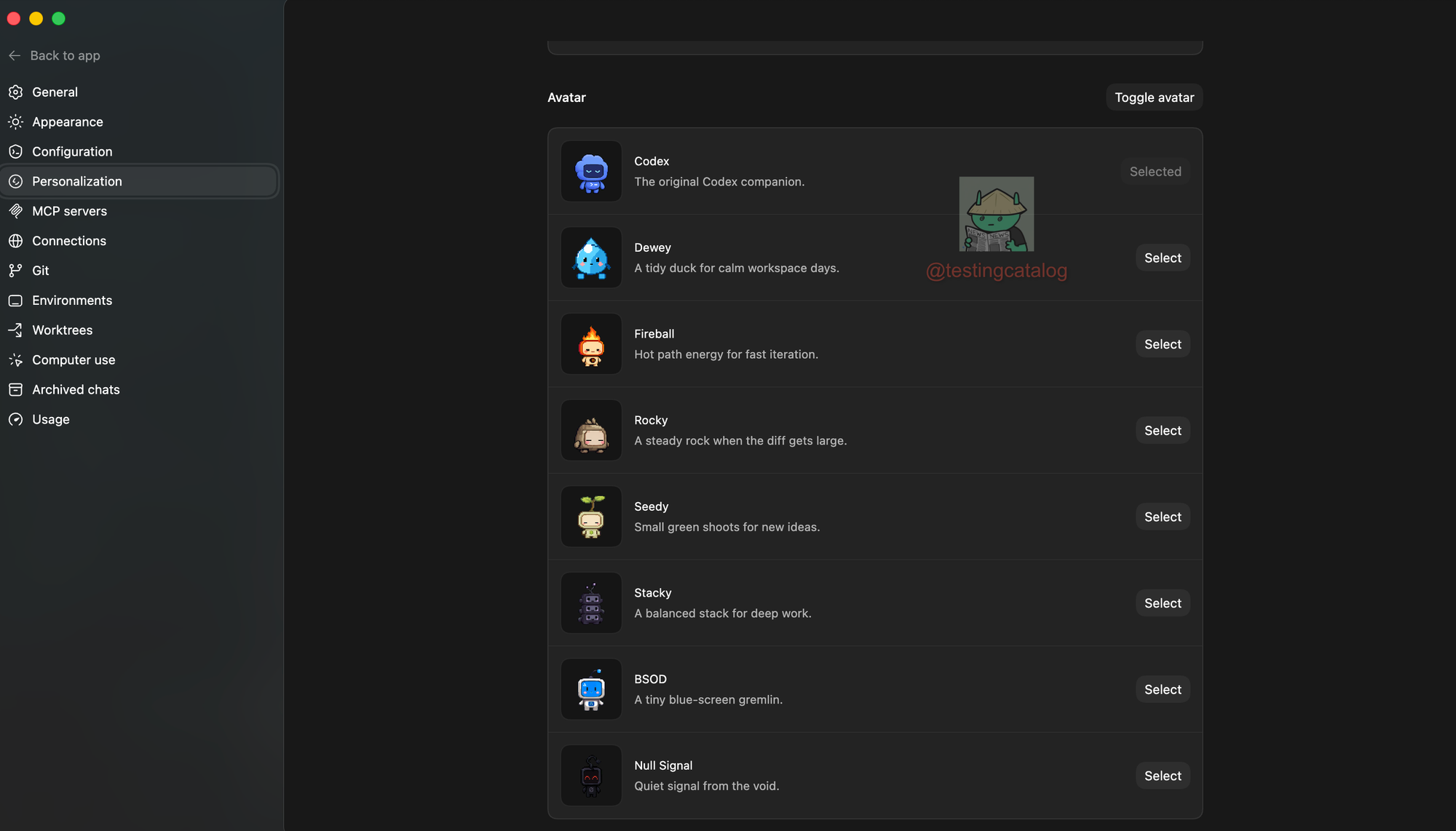
OpenAI Preps 8 Avatars for Codex
OpenAI Preps 8 Avatars for Codex
PostLinkedIn
๐Ÿ“‹Read original on TestingCatalog

๐Ÿ’กAvatars could make AI coding sessions more engaging for devs using Codex!

โšก 30-Second TL;DR

What Changed

OpenAI launching 8 interactive Avatars in Codex app

Why It Matters

This could boost developer engagement in Codex by adding personalized visual elements, potentially increasing tool adoption among coders using OpenAI's AI assistance.

What To Do Next

Join Codex waitlist to access upcoming avatar beta features.

Who should care:Developers & AI Engineers

Key Points

  • โ€ขOpenAI launching 8 interactive Avatars in Codex app
  • โ€ขUsers can select predefined or create custom Avatars
  • โ€ขAvatars act as visual companions during coding sessions

๐Ÿง  Deep Insight

AI-generated analysis for this event.

๐Ÿ”‘ Enhanced Key Takeaways

  • โ€ขThe avatars are powered by a new multimodal 'Codex-Persona' engine that integrates real-time telemetry from the IDE to trigger context-aware emotional expressions and coding suggestions.
  • โ€ขOpenAI is implementing a 'Persona-as-a-Service' API, allowing enterprise developers to integrate custom-branded avatars into proprietary internal coding environments.
  • โ€ขThe feature utilizes low-latency streaming protocols to ensure avatar animations remain synchronized with LLM token generation, minimizing the 'uncanny valley' effect during high-speed code completion.
๐Ÿ“Š Competitor Analysisโ–ธ Show
FeatureOpenAI Codex AvatarsGitHub Copilot (Visual)Cursor (Agentic)
Visual PresenceInteractive 3D/2D AvatarsStatic Status IndicatorsTerminal-based UI
CustomizationHigh (Custom/Predefined)Low (Theme only)None
Context AwarenessEmotional/Coding StateTask StatusCodebase/Terminal State
PricingIncluded in Codex ProIncluded in CopilotIncluded in Pro Tier

๐Ÿ› ๏ธ Technical Deep Dive

  • โ€ขArchitecture: Utilizes a lightweight 'Persona-Adapter' layer that sits on top of the base Codex model, mapping latent space vectors to specific animation triggers.
  • โ€ขLatency Optimization: Employs a speculative decoding mechanism where the avatar's 'thought' animation is pre-rendered based on the model's initial token probability distribution.
  • โ€ขIntegration: Built as a VS Code extension using the Webview API, communicating with the OpenAI backend via WebSockets for sub-100ms animation updates.
  • โ€ขCustomization Engine: Uses a fine-tuned Stable Diffusion-based model to generate avatar assets from user-provided text prompts or reference images.

๐Ÿ”ฎ Future ImplicationsAI analysis grounded in cited sources

Gamification of coding will increase developer retention in enterprise environments.
The introduction of interactive companions shifts the perception of coding from a solitary task to a collaborative, engaging experience.
OpenAI will expand avatar functionality to include voice-based pair programming.
The current visual-only implementation serves as a foundation for integrating real-time speech synthesis and voice recognition for hands-free coding.

โณ Timeline

2021-08
OpenAI releases the original Codex model via private beta API.
2022-06
OpenAI announces the deprecation of the standalone Codex API in favor of GPT-3.5/4 models.
2025-11
OpenAI pivots Codex back to a standalone product focus with enhanced IDE integration.
2026-03
OpenAI begins internal testing of the 'Persona' visual interface for developer tools.
๐Ÿ“ฐ

Weekly AI Recap

Read this week's curated digest of top AI events โ†’

๐Ÿ‘‰Related Updates

AI-curated news aggregator. All content rights belong to original publishers.
Original source: TestingCatalog โ†—