OpenAI Launches Codex Plugins Beyond Coding
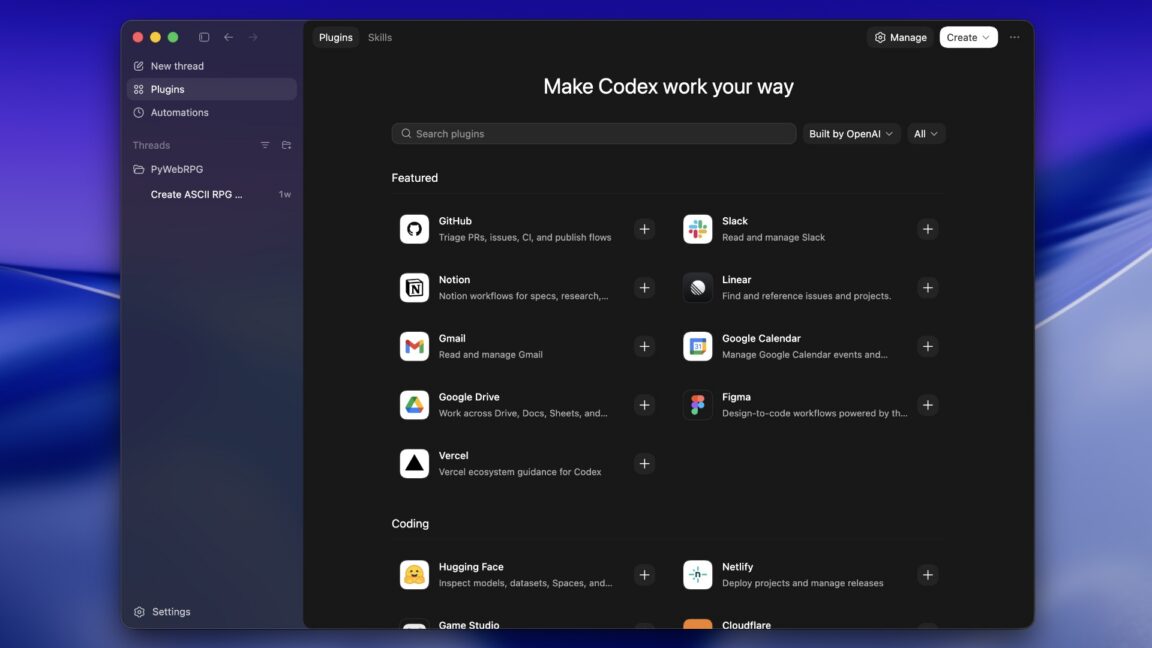
💡Codex plugins unlock non-coding tasks—vital for versatile AI apps
⚡ 30-Second TL;DR
What Changed
OpenAI adds plugins feature to Codex
Why It Matters
This enables developers to integrate external services with Codex, boosting versatility for real-world applications. It positions OpenAI to catch up in multi-tool AI ecosystems.
What To Do Next
Test OpenAI Codex plugins to integrate external APIs into your AI coding workflows.
Key Points
- •OpenAI adds plugins feature to Codex
- •Expands Codex use beyond coding tasks
- •Competitors offered similar plugins earlier
🧠 Deep Insight
AI-generated analysis for this event — not the original article.
🔑 Enhanced Key Takeaways
- •The Codex plugin architecture leverages a new 'Tool-Use Orchestrator' layer that allows the model to dynamically select and execute external API calls based on natural language intent, moving beyond static code generation.
- •OpenAI has implemented a sandboxed execution environment for these plugins, utilizing a lightweight WebAssembly (Wasm) runtime to mitigate security risks associated with executing third-party code.
- •This update marks a strategic pivot for Codex, transitioning it from a specialized code-completion engine into a general-purpose agentic framework capable of interacting with enterprise software suites like Salesforce and Jira.
📊 Competitor Analysis▸ Show
| Feature | OpenAI Codex Plugins | Anthropic Claude Tool Use | Google Gemini Extensions |
|---|---|---|---|
| Integration Focus | Enterprise/DevOps APIs | Document/Data Analysis | Google Workspace/Maps |
| Pricing | Usage-based API tiers | Usage-based API tiers | Tiered/Subscription |
| Benchmarks | High code-execution accuracy | High reasoning/context | High retrieval accuracy |
🛠️ Technical Deep Dive
- •Architecture: Utilizes a multi-modal agentic framework where the core Codex model is fine-tuned to output structured JSON schemas for function calling.
- •Orchestration: Employs a 'Chain-of-Thought' reasoning step before plugin invocation to verify parameter validity against API definitions.
- •Security: Plugins operate within a restricted, ephemeral containerized environment with no persistent access to the host system.
- •Latency: Implements speculative decoding to reduce the overhead of generating tool-call tokens.
🔮 Future ImplicationsAI analysis grounded in cited sources
⏳ Timeline
Weekly AI Recap
Read this week's curated digest of top AI events →
👉Related Updates


AI-curated news aggregator. All content rights belong to original publishers.
Original source: Ars Technica AI ↗
This is a summary, not the original. Read the source, or get the weekly briefing.
The weekly digest
One email a week. Unsubscribe anytime.