OpenAI improves ChatGPT memory for free tier users
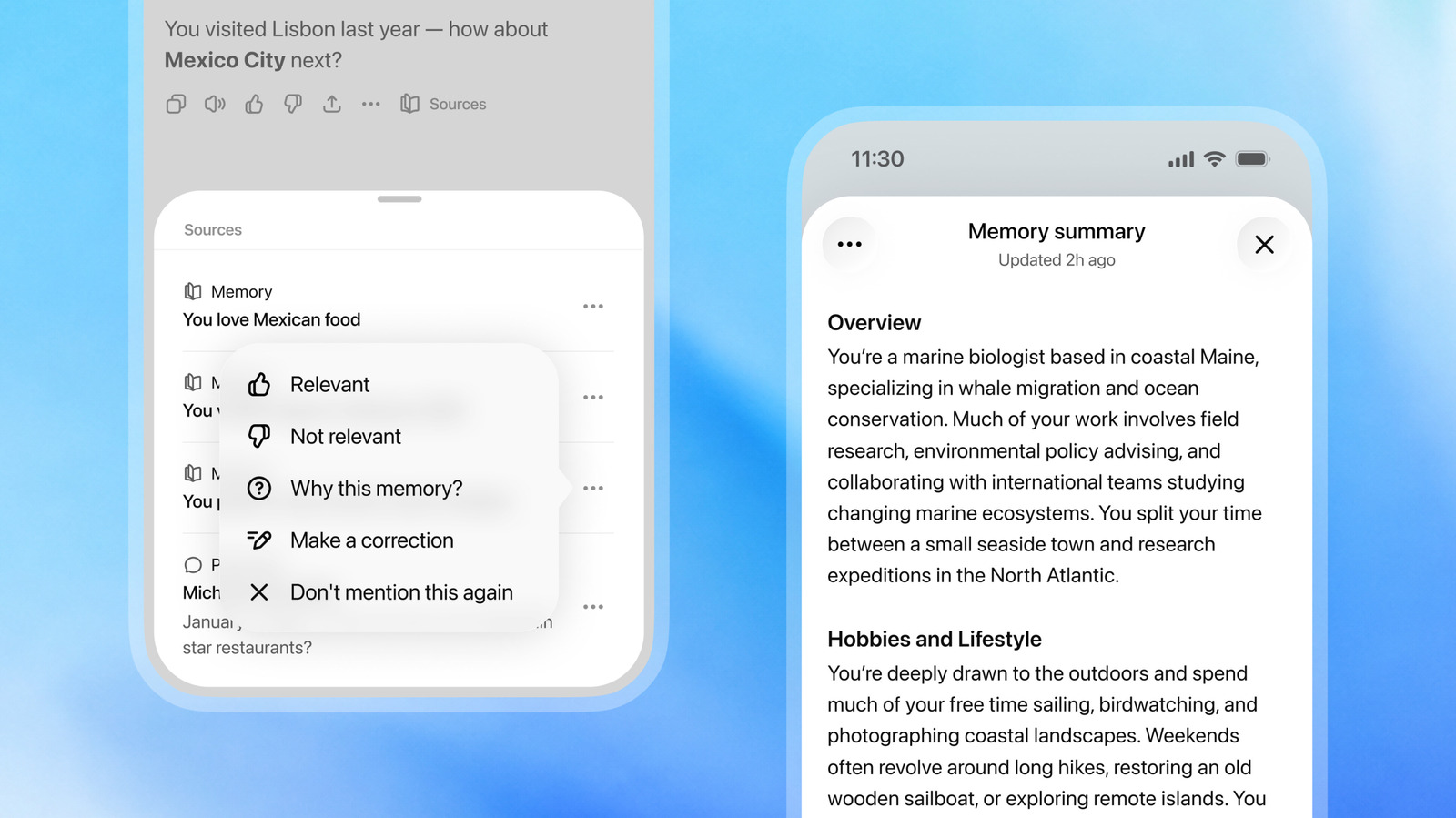
💡See how OpenAI's architectural improvements to memory affect the capabilities of free-tier AI agents.
⚡ 30-Second TL;DR
What Changed
Memory capabilities improved for free-tier ChatGPT users
Why It Matters
Enhanced memory for free users lowers the barrier for complex, multi-turn workflows without requiring a paid subscription.
What To Do Next
Test your existing prompts in the free tier to see if the improved memory allows for more complex, stateful agentic behavior.
Key Points
- •Memory capabilities improved for free-tier ChatGPT users
- •Significant architectural updates to 'dreaming' system
- •Better context retention across long-term interactions
🧠 Deep Insight
Background and context from public sources — not the original article. 10 sources cited.
🔑 Enhanced Key Takeaways
- •The rollout of the 'dreaming' architecture to free-tier users was made possible by a significant 5x reduction in the compute required to serve this advanced memory system.
- •The updated memory system, referred to as 'Dreaming V3,' is designed to overcome challenges such as memory staleness, correctness, and scalability when applied across hundreds of millions of users over multi-year interactions.
- •Users now have access to a 'memory summary' page, providing a transparent way to review, add, update, or provide specific instructions on what ChatGPT should remember and how it should utilize that information.
- •OpenAI's internal evaluations show that the new dreaming-based system significantly improves factual recall task success and preference adherence compared to previous memory implementations from 2024 and 2025.
- •For ChatGPT Plus and Pro subscribers, this update also includes a doubling of their available memory capacity, enhancing their ability to maintain context across even more extensive interactions.
🛠️ Technical Deep Dive
- The 'dreaming' architecture functions as a background process that automatically curates and synthesizes memories by referencing chat history, moving beyond explicit 'saved memories' that relied on direct user cues.
- This system is engineered to continuously learn from numerous conversations, updating ChatGPT's memory state to ensure freshness, continuity, and relevance of context.
- Memories are designed to be automatically revised and updated over time, preventing information from becoming stale or inaccurate, such as updating a planned trip to a past event.
- The underlying mechanism likely involves advanced retrieval mechanisms, potentially utilizing vector embeddings to dynamically fetch relevant past details based on patterns and relevance scores within the current conversation.
- The latest iteration of this architecture is noted for being significantly more capable and compute-efficient, evidenced by the 5x reduction in computational resources needed for free-tier deployment.
🔮 Future ImplicationsAI analysis grounded in cited sources
⏳ Timeline
📎 Sources (10)
Factual claims are grounded in the sources below. Forward-looking analysis is AI-generated interpretation.
Weekly AI Recap
Read this week's curated digest of top AI events →
👉Related Updates


AI-curated news aggregator. All content rights belong to original publishers.
Original source: Engadget ↗
This is a summary, not the original. Read the source, or get the weekly briefing.
The weekly digest
One email a week. Unsubscribe anytime.