🇨🇳cnBeta (Full RSS)•Stalecollected in 4h
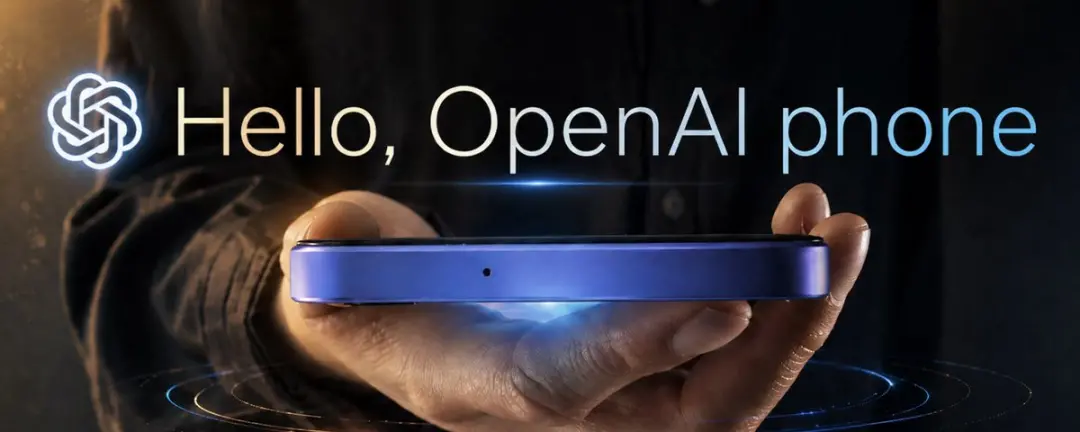
OpenAI Agent Phone Eyes 2027 Mass Production
💡OpenAI's 30M-unit AI phone rumor could reshape mobile AI agents
⚡ 30-Second TL;DR
What Changed
OpenAI AI agent smartphone enters accelerated development mode
Why It Matters
This signals OpenAI's push into AI hardware, potentially disrupting smartphone market with agentic AI integration and challenging Apple/Google dominance.
What To Do Next
Track Guo Mingxi's updates on X for OpenAI hardware partnerships.
Who should care:Founders & Product Leaders
Key Points
- •OpenAI AI agent smartphone enters accelerated development mode
- •Mass production potentially as early as H1 2027, ahead of 2028 timeline
- •Projected shipments of 30 million units within one year of launch
🧠 Deep Insight
AI-generated analysis for this event.
🔑 Enhanced Key Takeaways
- •The device is reportedly being developed in partnership with a major contract manufacturer, leveraging OpenAI's proprietary 'Operator' agentic framework to handle cross-app task automation.
- •Supply chain reports indicate the device will prioritize a custom-designed NPU (Neural Processing Unit) architecture specifically optimized for low-latency inference of OpenAI's multimodal models, rather than relying on standard mobile chipsets.
- •Industry analysts suggest the 30 million unit target is contingent on OpenAI securing exclusive carrier subsidies in the US and EU markets to offset the high BOM (Bill of Materials) cost associated with advanced AI hardware.
📊 Competitor Analysis▸ Show
| Feature | OpenAI Agent Phone | Apple iPhone (AI-integrated) | Google Pixel (AI-integrated) |
|---|---|---|---|
| Primary AI Focus | Agentic Task Automation | Privacy-First On-Device AI | Cloud-Integrated Assistant |
| Model Architecture | Proprietary Agentic Model | Hybrid (On-device/Private Cloud) | Gemini Nano/Pro |
| Hardware Strategy | Custom NPU-centric | A-Series Silicon | Tensor G-Series |
| Pricing Strategy | Premium/Subsidized | Premium | Mid-to-Premium |
🛠️ Technical Deep Dive
- •Architecture: Likely utilizes a 'System-on-Agent' (SoA) design, integrating a high-bandwidth memory (HBM) stack to handle large context windows for real-time agentic reasoning.
- •Software Stack: Built on a hardened version of Android with a custom 'Agent Layer' that intercepts system calls to execute multi-step user requests across third-party applications.
- •Multimodal Input: Expected to feature a dedicated 'always-on' sensor array for continuous environmental context awareness, processed locally to maintain user privacy.
🔮 Future ImplicationsAI analysis grounded in cited sources
The device will trigger a shift toward 'Agent-First' mobile operating systems.
By prioritizing autonomous task execution over traditional app-centric navigation, OpenAI forces competitors to redesign mobile UI/UX paradigms.
Hardware margins for smartphone OEMs will compress significantly.
The high cost of specialized AI silicon and the need for aggressive pricing to achieve 30 million units will force a move toward service-based revenue models.
⏳ Timeline
2023-11
OpenAI announces GPTs, enabling custom agentic workflows.
2024-05
OpenAI releases GPT-4o, introducing native multimodal capabilities.
2025-02
OpenAI begins internal prototyping of dedicated hardware interfaces.
2026-01
OpenAI formalizes supply chain partnerships for agentic hardware development.
📰 Event Coverage
📰
Weekly AI Recap
Read this week's curated digest of top AI events →
👉Related Updates
AI-curated news aggregator. All content rights belong to original publishers.
Original source: cnBeta (Full RSS) ↗