Omniverse Launches Simulation-First Manufacturing Era
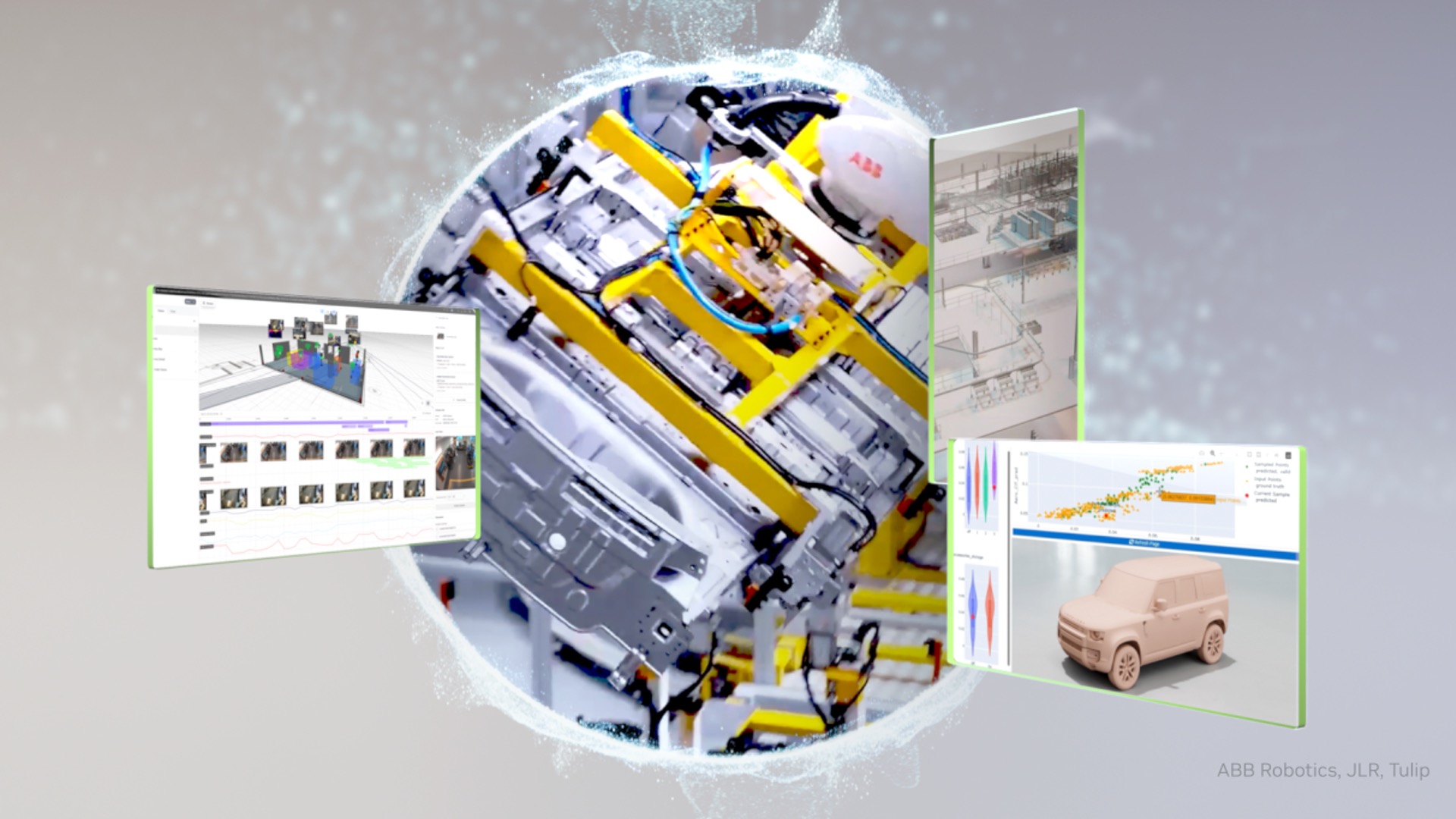
💡Omniverse shifts manufacturing to sim-first—cut physical tests now!
⚡ 30-Second TL;DR
What Changed
Manufacturing adopts simulation-first approach via Omniverse
Why It Matters
Reduces costs and time in manufacturing prototyping via digital twins. AI practitioners gain tools for scalable sim-based development in heavy industry.
What To Do Next
Sign up for Omniverse free trial and simulate a manufacturing workflow to prototype digital twins.
Key Points
- •Manufacturing adopts simulation-first approach via Omniverse
- •Challenges reliance on physical real-world testing
- •Enables fully virtual design-build-test cycles
- •Arrives as new era in industrial simulation
🧠 Deep Insight
AI-generated analysis for this event — not the original article.
🔑 Enhanced Key Takeaways
- •NVIDIA Omniverse leverages OpenUSD (Universal Scene Description) as the foundational framework, allowing for seamless interoperability between disparate CAD, CAE, and PLM software tools in a unified virtual environment.
- •The platform integrates 'Digital Twin' technology with real-time physics engines (PhysX) and AI-driven predictive analytics, enabling manufacturers to simulate factory floor throughput and robotic interactions with high-fidelity accuracy before physical deployment.
- •Strategic partnerships with industrial leaders like Siemens, BMW, and Foxconn have been critical in validating the 'simulation-first' workflow, specifically focusing on reducing commissioning time and optimizing energy consumption in large-scale production facilities.
📊 Competitor Analysis▸ Show
| Feature | NVIDIA Omniverse | Siemens Xcelerator | Dassault Systèmes 3DEXPERIENCE |
|---|---|---|---|
| Core Focus | Real-time 3D collaboration & simulation | Industrial automation & PLM integration | Product lifecycle & virtual twin modeling |
| Interoperability | High (OpenUSD-based) | Proprietary/Partner-focused | Proprietary-focused |
| Simulation Engine | PhysX / RTX-accelerated | Tecnomatix / Simcenter | DELMIA / SIMULIA |
| Pricing Model | Enterprise subscription (per user/GPU) | Tiered enterprise licensing | Tiered enterprise licensing |
🛠️ Technical Deep Dive
- OpenUSD Integration: Utilizes Pixar’s Universal Scene Description to enable non-destructive, multi-user editing of complex 3D industrial scenes.
- RTX Path Tracing: Employs hardware-accelerated ray tracing to provide photorealistic visualization of factory environments, essential for human-in-the-loop safety simulations.
- Modulus Integration: Incorporates NVIDIA Modulus for physics-informed machine learning, allowing for the creation of surrogate models that accelerate simulation speeds by orders of magnitude compared to traditional CFD (Computational Fluid Dynamics).
- Connectors: Uses specialized connectors to bridge data from industry-standard tools like Autodesk Revit, PTC Creo, and Bentley Systems, maintaining live-sync capabilities.
🔮 Future ImplicationsAI analysis grounded in cited sources
⏳ Timeline
Weekly AI Recap
Read this week's curated digest of top AI events →
👉Related Updates
AI-curated news aggregator. All content rights belong to original publishers.
Original source: NVIDIA Blog ↗
This is a summary, not the original. Read the source, or get the weekly briefing.
The weekly digest
One email a week. Unsubscribe anytime.