Omdia: Smartphone Prices to Surge 21% by 2026
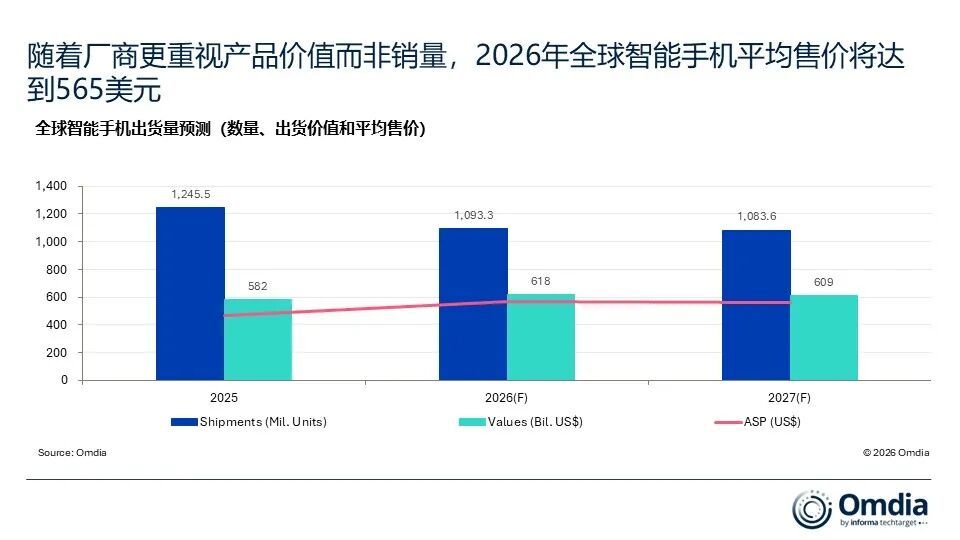
Market shift toward premium hardware signals a critical window for deploying high-performance on-device AI.
30-Second TL;DR
What Changed
Global smartphone shipments to drop to 1.093 billion units by 2026
Why It Matters
Higher smartphone prices and lower shipment volumes may affect the adoption rate of on-device AI features. Developers should optimize models for premium hardware segments as the market shifts toward higher-end devices.
What To Do Next
Optimize your on-device AI models for high-end NPU architectures to align with the premium-focused smartphone market trend.
Key Points
- •Global smartphone shipments to drop to 1.093 billion units by 2026
- •Average selling price (ASP) projected to hit $565, a 21% increase
- •Rising component costs and geopolitical factors driving market shift
Deep Insight
AI-generated analysis for this event — not the original article.
Enhanced Key Takeaways
- •The shift toward premiumization is being accelerated by the integration of on-device generative AI, which requires more expensive NPU-capable chipsets and increased DRAM capacity.
- •Supply chain diversification efforts, such as 'China Plus One' strategies, are increasing manufacturing overheads as companies relocate production to regions with higher labor or logistics costs.
- •The decline in shipment volume is partially attributed to extended replacement cycles, as consumers hold onto devices for longer periods due to incremental hardware improvements.
- •Memory component pricing, specifically for LPDDR5X and UFS 4.0 storage, has experienced significant volatility, directly impacting the bill of materials (BOM) for flagship devices.
- •Regulatory pressures, including the EU's Digital Markets Act and right-to-repair mandates, are forcing OEMs to invest more in software longevity and modular design, adding to long-term cost structures.
Technical Deep Dive
- Increased BOM costs are driven by the adoption of 3nm process node chipsets (e.g., Snapdragon 8 Gen series, Apple A-series) which command higher wafer pricing from foundries like TSMC.
- Integration of advanced camera sensors, including larger 1-inch type sensors and periscope telephoto lenses, has significantly increased the mechanical and optical cost per unit.
- Shift toward LTPO OLED display technology across mid-range segments to support variable refresh rates (1Hz-120Hz) has raised display module costs.
- Enhanced thermal management systems, such as larger vapor chambers and graphene cooling sheets, are now standard requirements to support sustained AI processing loads.
Future ImplicationsAI analysis grounded in cited sources
Timeline
- 2023-01Global smartphone shipments hit a decade low, signaling the start of the post-pandemic market correction.
- 2024-05Omdia reports initial signs of ASP recovery as premium segment growth outpaces entry-level volume.
- 2025-02Major semiconductor manufacturers announce price hikes for advanced logic chips, citing increased R&D costs for AI-optimized silicon.
- 2025-11Industry data confirms a sustained trend of consumers prioritizing high-end models over budget alternatives, driving up global ASP.
Weekly AI Recap
Read this week's curated digest of top AI events →
Related Updates

AI-curated news aggregator. All content rights belong to original publishers.
Original source: cnBeta (Full RSS) ↗
This is a summary, not the original. Read the source, or get the weekly briefing.
The weekly digest
One email a week. Unsubscribe anytime.