OFAC issues new guidance on sanctions evasion
💡Critical compliance update for global tech firms: OFAC's new 10-year lookback and 'functional control' rules.
⚡ 30-Second TL;DR
What Changed
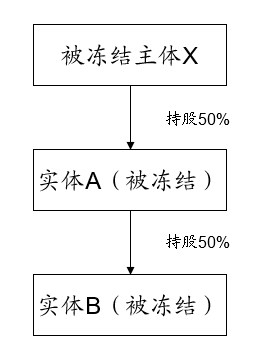
OFAC adopts a 'functional definition' of control, looking beyond 50% ownership thresholds.
Why It Matters
Enterprises operating internationally must overhaul their due diligence processes to account for 'functional control' and extended record-keeping requirements.
What To Do Next
Audit your entity's beneficial ownership mapping against OFAC's functional control criteria and ensure 10-year record retention policies are in place.
Key Points
- •OFAC adopts a 'functional definition' of control, looking beyond 50% ownership thresholds.
- •The statute of limitations for sanctions violations has been extended to 10 years.
- •Chinese firms must balance US compliance with China's 'Blocking Measures' (阻斷辦法).
🧠 Deep Insight
Web-grounded analysis with 23 cited sources.
🔑 Enhanced Key Takeaways
- •The new OFAC guidance, issued on March 31, 2026, explicitly states that it will disregard the legal form of purported transfers in favor of "underlying practical and economic realities" to determine if a blocked person retains a continuing interest in property.
- •OFAC's advisory highlights that opaque legal structures, including trusts, proxies, straw owners, and front businesses, are frequently employed by blocked persons to conceal their continuing interest in various assets like investment vehicles, bank accounts, real estate, private jets, yachts, and companies.
- •The extension of the statute of limitations to 10 years, enacted on April 24, 2024, applies to civil and criminal violations of the International Emergency Economic Powers Act (IEEPA) and the Trading with the Enemy Act (TWEA) that were not already time-barred, effectively covering violations that occurred after April 24, 2019.
- •China's "Blocking Measures" were formally invoked for the first time on May 2, 2026, in response to US sanctions imposed on five Chinese refiners accused of trading Iranian oil, marking a significant escalation from diplomatic protest to active enforcement and creating direct legal conflicts for multinational companies.
- •The guidance provides a non-exhaustive list of "red flags" indicative of sham transactions, including commercially unreasonable transactions, transfers to family members or close associates, transfers lacking an apparent business purpose, and the use of unduly complex corporate structures, especially those involving high-risk jurisdictions.
🛠️ Technical Deep Dive
- OFAC's "functional definitions" of "interest" and "property interest" prioritize the underlying practical and economic realities over legal formalities to determine if a blocked interest persists.
- Sham transactions are characterized by blocked persons utilizing opaque legal structures such as trusts, proxies, straw owners, and front businesses to obscure their ongoing interest in assets like investment vehicles, bank accounts, real estate, private jets, yachts, and companies.
- Key "red flags" that may indicate a sham transaction include:
- Transactions that are commercially unreasonable or lack adequate consideration.
- Transfers of property to family members or close associates, which OFAC views as potentially superficial.
- Transfers with an unclear business purpose or to individuals lacking relevant experience or qualifications for the transferred property.
- The use of excessively complex corporate structures, particularly those involving jurisdictions identified as high-risk.
- Evidence of formal or informal agreements, agent-principal, or other close relationships suggesting the nominal owner is not independent from the blocked person.
- The new guidance supplements OFAC's existing 50 Percent Rule, which automatically blocks entities owned 50% or more by sanctioned persons, by providing criteria to assess whether purported divestments below this threshold are genuine or merely sham transactions.
🔮 Future ImplicationsAI analysis grounded in cited sources
⏳ Timeline
📎 Sources (23)
Factual claims are grounded in the sources below. Forward-looking analysis is AI-generated interpretation.
- Google Search Source
- Google Search Source
- Google Search Source
- Google Search Source
- Google Search Source
- Google Search Source
- Google Search Source
- Google Search Source
- Google Search Source
- Google Search Source
- Google Search Source
- Google Search Source
- Google Search Source
- Google Search Source
- Google Search Source
- Google Search Source
- Google Search Source
- Google Search Source
- Google Search Source
- Google Search Source
- Google Search Source
- Google Search Source
- Google Search Source
Weekly AI Recap
Read this week's curated digest of top AI events →
👉Related Updates

AI-curated news aggregator. All content rights belong to original publishers.
Original source: 虎嗅 ↗