Odysseus: Self-hosted AI workbench for local ChatGPT-level power
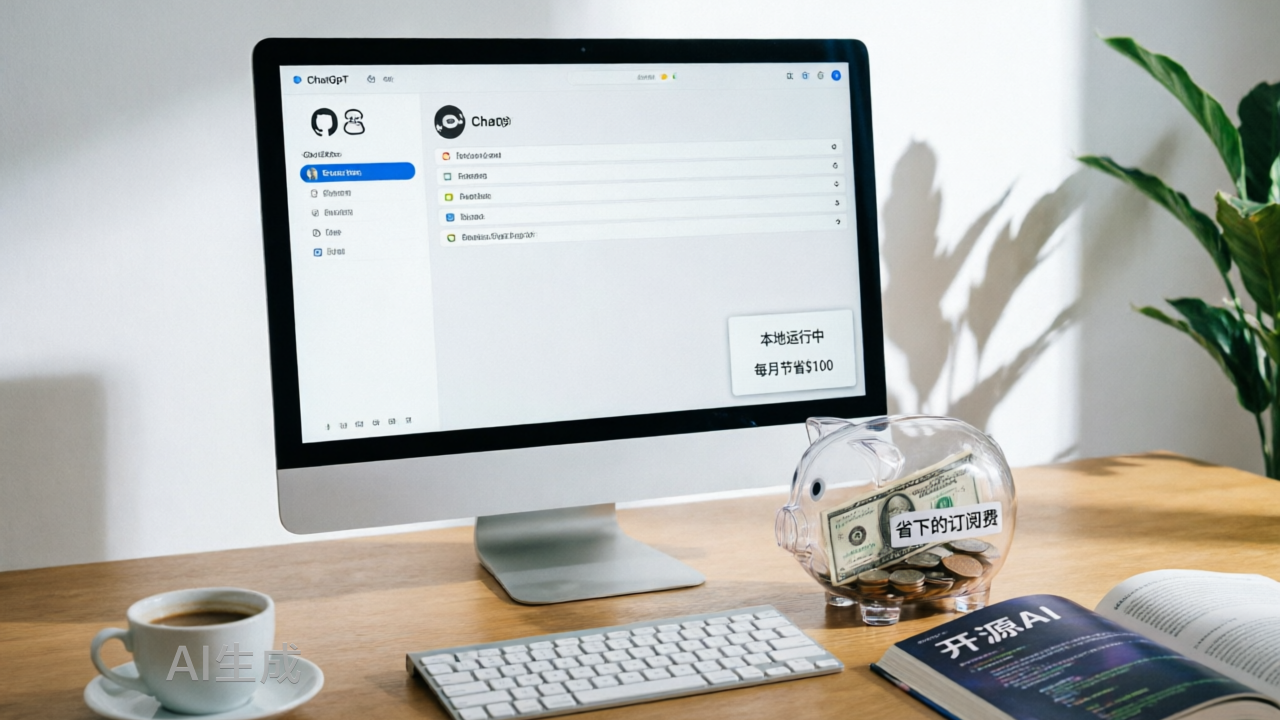
💡Run ChatGPT-level AI locally for free while keeping your data private and secure.
⚡ 30-Second TL;DR
What Changed
Achieved over 60,000 stars on GitHub within one week of launch
Why It Matters
This tool significantly lowers the barrier for developers to build private, cost-effective AI applications without relying on cloud APIs.
What To Do Next
Download the Odysseus repository from GitHub to test its local model performance against your current cloud-based workflows.
Key Points
- •Achieved over 60,000 stars on GitHub within one week of launch
- •Provides ChatGPT-level capabilities for local execution
- •Ensures data privacy by keeping all operations offline
- •Supports model swapping to suit specific user needs
🧠 Deep Insight
Background and context from public sources — not the original article. 16 sources cited.
🔑 Enhanced Key Takeaways
- •Odysseus was developed by YouTube personality Felix Kjellberg, widely known as PewDiePie, marking a notable entry of a major public figure into the open-source AI development space.
- •It features a unique 'Cookbook' component that automatically scans the user's hardware, including VRAM and driver versions, to recommend compatible open-weight models from a catalog of over 270 options, facilitating one-click download and serving without complex manual configuration.
- •Beyond basic chat, Odysseus integrates a comprehensive suite of personal productivity tools, including AI-powered email triage (IMAP/SMTP), CalDAV calendar synchronization, notes, tasks, and a document editor, aiming to provide a unified AI workspace.
- •The platform supports advanced autonomous AI agents capable of multi-step tasks, utilizing tools for shell execution, file system access, web search via SearXNG, and leveraging persistent memory and self-evolving skills across sessions.
- •While prioritizing local execution and data privacy, Odysseus also offers hybrid model support, allowing users to seamlessly integrate and switch between local models (via Ollama, vLLM, llama.cpp) and cloud-based APIs from providers like OpenAI, Anthropic, and OpenRouter.
📊 Competitor Analysis▸ Show
Competitor Analysis
| Feature / Product | Odysseus (Self-hosted AI Workbench) | Open WebUI / AnythingLLM (Self-hosted AI UIs) | OpenClaw (Self-hosted AI Agent) |
|---|---|---|---|
| Primary Focus | Unified AI workspace with chat, agents, research, email, calendar, documents, model management. | Chat-centric interaction, document-based RAG (Retrieval-Augmented Generation). | Autonomous AI agent for background task automation via messaging apps. |
| Data Privacy | Local-first, privacy-first; all data stays on user's machine by default. No telemetry. | Generally privacy-focused as self-hosted, but specific implementations vary. | Self-hosted, data stays local. |
| Model Support | Local (Ollama, vLLM, llama.cpp) & Cloud APIs (OpenAI, Anthropic, OpenRouter, custom OpenAI-compatible endpoints). Hardware-aware 'Cookbook' for recommendations. | Primarily local models (often via Ollama) and some cloud APIs. | Connects to various LLMs for agentic tasks. |
| Key Features | Autonomous agents with tool use (shell, files, web search), deep research, email triage, calendar sync, document editor, model comparison, persistent memory/skills. | Focus on chat interface, RAG capabilities, document interaction. | Background automation, email management, scheduling, scripting, smart home control. |
| Pricing | Free and open-source (MIT licensed). | Typically free and open-source. | Free and open-source. |
| Benchmarks | No specific comparative benchmarks against competitors found in search results. | No specific comparative benchmarks against competitors found in search results. | No specific comparative benchmarks against competitors found in search results. |
| Ease of Setup | Straightforward via Docker Compose; native Apple Silicon support. | Varies by project, often Docker-based. | Requires more technical setup due to agentic nature and integrations. |
🛠️ Technical Deep Dive
- Backend: Primarily uses a FastAPI backend written in Python.
- Frontend: Utilizes JavaScript for the user interface and agent orchestration.
- Local Inference Engines: Supports popular local inference backends including vLLM, llama.cpp, and Ollama.
- Cloud API Integration: Compatible with OpenAI, Anthropic, OpenRouter, and any OpenAI-compatible API endpoints.
- Vector Database: Employs ChromaDB for persistent retrieval-augmented memory and skill storage.
- Search Capabilities: Integrates SearXNG for private meta-web searches within its deep research functionality.
- Deployment: Primarily deployed via Docker Compose, offering a one-command setup. Native support for Apple Silicon (Metal GPU acceleration) is also available.
- Model Management: The 'Cookbook' feature leverages hardware scanning to recommend and serve models, supporting quantizations like GGUF, FP8, and AWQ.
- Supported Models: Catalogues over 270 open-weight models and supports custom Stable Diffusion models (converted to CoreML for Apple devices).
- Connectivity: Features IMAP/SMTP support for email and CalDAV for calendar synchronization.
🔮 Future ImplicationsAI analysis grounded in cited sources
⏳ Timeline
📎 Sources (16)
Factual claims are grounded in the sources below. Forward-looking analysis is AI-generated interpretation.
Weekly AI Recap
Read this week's curated digest of top AI events →
👉Related Updates



AI-curated news aggregator. All content rights belong to original publishers.
Original source: 钛媒体 ↗
This is a summary, not the original. Read the source, or get the weekly briefing.
The weekly digest
One email a week. Unsubscribe anytime.