O-Film Faces Governance Storm Over Outside Firms
The dispute could reshape how AI data-center buyers assess optical-module suppliers and related-party risk.
30-Second TL;DR
What Changed
Investors alleged that New Feel Photonics captured higher-margin 800G and 1.6T optical-module revenue while O-Film performed lower-margin contract manufacturing.
Why It Matters
If regulators substantiate the allegations, the case could affect O-Film's valuation, shareholder confidence, and the governance standards for controlling shareholders' outside ventures. For AI infrastructure buyers, it also raises questions about supplier transparency and continuity in the rapidly expanding optical-module market.
What To Do Next
For any AI-cluster deployment, require optical-module vendors to provide independent capacity, ownership, quality, and related-party transaction documentation before signing a multi-year supply contract.
Key Points
- •Investors alleged that New Feel Photonics captured higher-margin 800G and 1.6T optical-module revenue while O-Film performed lower-margin contract manufacturing.
- •The alleged related-party transaction ceiling reportedly rose from RMB 594 million in 2025 to RMB 1.156 billion in 2026.
- •The accusations include alleged free transfer of O-Film-developed CPO-related technology and opaque sharing of equipment, staff, and supply-chain resources.
- •O-Film said the companies have different products, customers, R&D systems, sites, and almost no recent transactions beyond a 2023 factory lease.
Deep Insight
AI-generated analysis for this event — not the original article.
Enhanced Key Takeaways
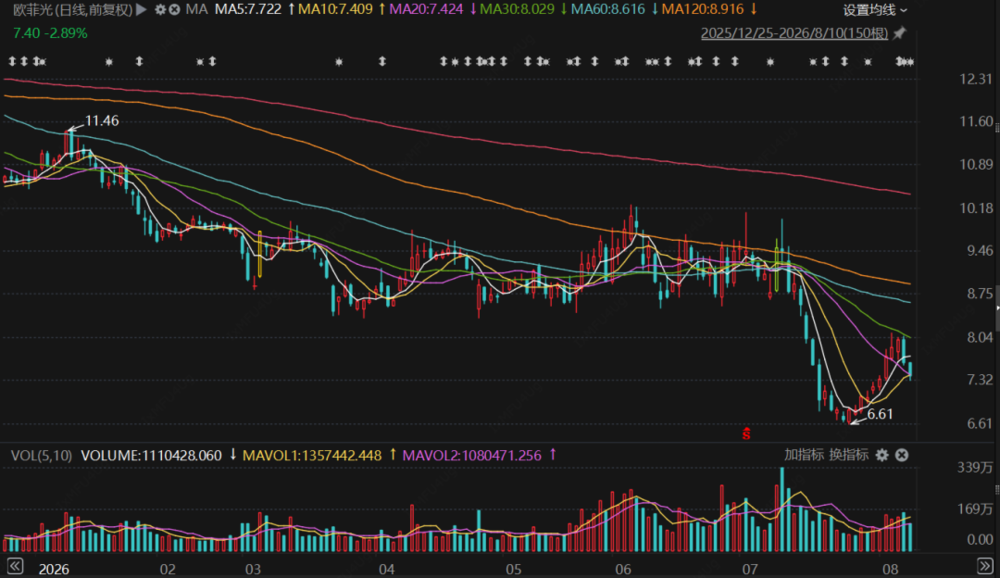
- •Market analysts have noted that O-Film's stock price experienced significant volatility following the public disclosure of the investor complaint, reflecting heightened sensitivity to corporate governance risks in the Chinese optical component sector.
- •The Shenzhen Stock Exchange (SZSE) has reportedly issued a follow-up inquiry letter to O-Film demanding detailed clarification on the specific nature of the business relationship between New Feel Photonics and O-Film's core R&D team.
- •Regulatory filings indicate that Cai Rongjun has increased his personal pledge ratio of O-Film shares, a move that institutional investors are scrutinizing in the context of the alleged asset diversion.
- •Industry reports suggest that the 800G and 1.6T optical module market is currently experiencing a supply-demand imbalance, making the alleged diversion of these high-margin orders particularly damaging to O-Film's projected profitability.
- •Legal experts following the case highlight that the core of the dispute rests on the definition of 'non-compete' clauses within O-Film's internal governance documents and whether New Feel Photonics qualifies as a 'related party' under current CSRC disclosure rules.
Competitor Analysis
- O-Film
- High-margin 800G/1.6T (Alleged)
- Luxshare Precision
- Integrated Connectivity
- Sunny Optical
- Precision Optics/Lenses
- O-Film
- Tier 2/3 Supplier
- Luxshare Precision
- Tier 1 Strategic Partner
- Sunny Optical
- Tier 1 Optical Leader
- O-Film
- Under Investigation
- Luxshare Precision
- Stable
- Sunny Optical
- Stable
| Feature | O-Film | Luxshare Precision | Sunny Optical |
|---|---|---|---|
| Optical Module Focus | High-margin 800G/1.6T (Alleged) | Integrated Connectivity | Precision Optics/Lenses |
| Market Position | Tier 2/3 Supplier | Tier 1 Strategic Partner | Tier 1 Optical Leader |
| Governance Profile | Under Investigation | Stable | Stable |
Technical Deep Dive
- 800G/1.6T Optical Modules: These modules utilize high-speed PAM4 modulation and silicon photonics integration to achieve terabit-level throughput.
- CPO (Co-Packaged Optics) Technology: Involves integrating optical engines directly onto the switch ASIC substrate to reduce power consumption and latency compared to pluggable transceivers.
- Manufacturing Requirements: High-precision active alignment and sub-micron assembly tolerances are required for the coupling of lasers to silicon photonic waveguides.
Future ImplicationsAI analysis grounded in cited sources
Timeline
- 2023-05O-Film enters into a factory lease agreement with New Feel Photonics.
- 2025-01O-Film sets the initial related-party transaction ceiling at RMB 594 million.
- 2026-01O-Film increases the related-party transaction ceiling to RMB 1.156 billion.
- 2026-07Investors file a formal criminal complaint alleging asset and technology diversion.
Weekly AI Recap
Read this week's curated digest of top AI events →
AI-curated news aggregator. All content rights belong to original publishers.
Original source: 虎嗅 ↗
This is a summary, not the original. Read the source, or get the weekly briefing.
The weekly digest
One email a week. Unsubscribe anytime.