NYT challenges Microsoft over copyright-infringing AI infrastructure
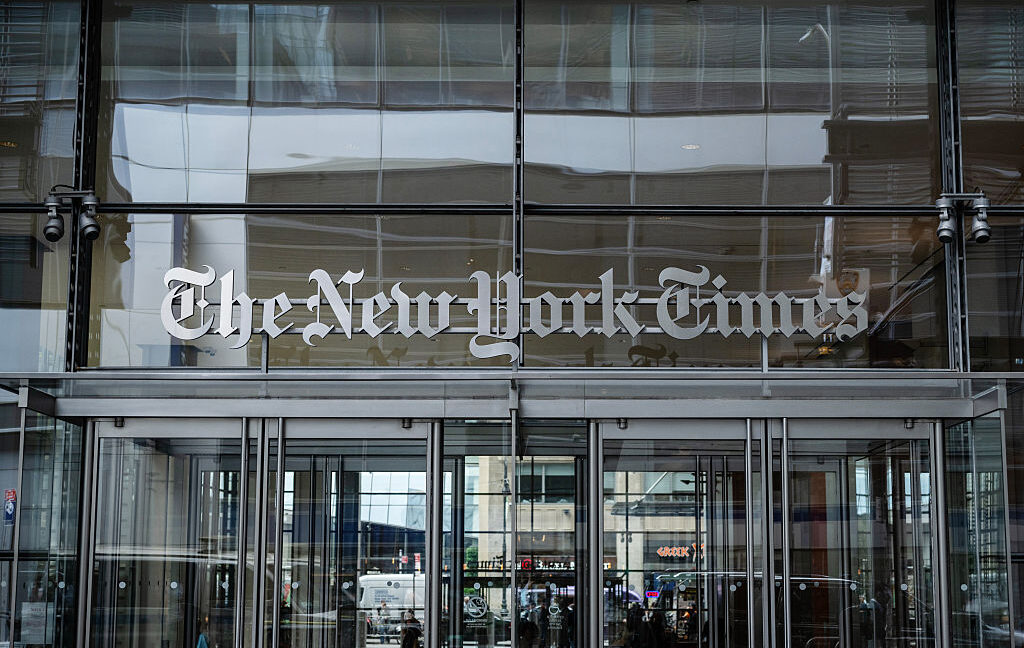
A major legal escalation that could redefine liability for companies providing infrastructure for AI model training.
30-Second TL;DR
What Changed
NYT alleges Microsoft's supercomputer infrastructure was designed to support copyright-infringing AI model training.
Why It Matters
This case could set a critical precedent for cloud providers and hardware manufacturers regarding their liability for the data processed by their customers' AI models. It may force companies to implement stricter data provenance audits for large-scale training clusters.
What To Do Next
Review your organization's data sourcing policies and ensure you have clear documentation of training data provenance to mitigate potential liability in future copyright litigation.
Key Points
- •NYT alleges Microsoft's supercomputer infrastructure was designed to support copyright-infringing AI model training.
- •The legal argument shifts focus toward the infrastructure provider's liability in the AI training pipeline.
- •The case references recent SCOTUS rulings to challenge existing copyright defenses used by tech giants.
Deep Insight
AI-generated analysis for this event — not the original article.
Enhanced Key Takeaways
- •The New York Times' legal strategy specifically invokes the Digital Millennium Copyright Act (DMCA) Section 1202, alleging Microsoft and OpenAI intentionally removed copyright management information (CMI) during the ingestion of training data.
- •Court filings suggest the plaintiffs are seeking to establish 'vicarious liability' for Microsoft, arguing the company exercised sufficient control over the infrastructure and training process to be held responsible for the output of the models.
- •Recent judicial interpretations of 'transformative use' under the Fair Use doctrine have narrowed, providing the NYT with a stronger basis to argue that AI model training does not constitute fair use when the output directly competes with the source material.
- •The lawsuit highlights the 'Stargate' supercomputer project, alleging that Microsoft's massive capital investment in specialized hardware was predicated on the unauthorized use of copyrighted datasets to achieve commercial viability.
- •Discovery requests in the case have expanded to include internal communications regarding the 'data scraping' pipeline, aiming to prove that Microsoft engineers were aware of the copyright status of the ingested NYT articles.
Technical Deep Dive
- The infrastructure in question centers on Microsoft's Azure AI supercomputing clusters, which utilize thousands of NVIDIA H100 and B200 GPUs interconnected via high-bandwidth InfiniBand networking.
- Training pipelines involve massive-scale data ingestion engines that utilize distributed file systems to process petabytes of text data, including Common Crawl and proprietary datasets.
- The legal focus on 'infrastructure liability' targets the orchestration layer, specifically how Microsoft's proprietary software stack manages data provenance and filtering during the pre-training phase of Large Language Models (LLMs).
Future ImplicationsAI analysis grounded in cited sources
Timeline
- 2023-12The New York Times files its initial copyright infringement lawsuit against OpenAI and Microsoft.
- 2024-02OpenAI files a motion to dismiss parts of the NYT lawsuit, arguing the training process is fair use.
- 2024-09A federal judge allows the core copyright infringement claims to proceed while dismissing some secondary claims.
- 2025-05The NYT amends its complaint to specifically target Microsoft's infrastructure role and the supercomputer architecture.
- 2026-03New SCOTUS rulings regarding digital copyright and AI training are cited by the NYT to bolster their arguments.
Weekly AI Recap
Read this week's curated digest of top AI events →
AI-curated news aggregator. All content rights belong to original publishers.
Original source: Ars Technica ↗
This is a summary, not the original. Read the source, or get the weekly briefing.
The weekly digest
One email a week. Unsubscribe anytime.