GDS Boosts Data Center Expansion on AI Demand
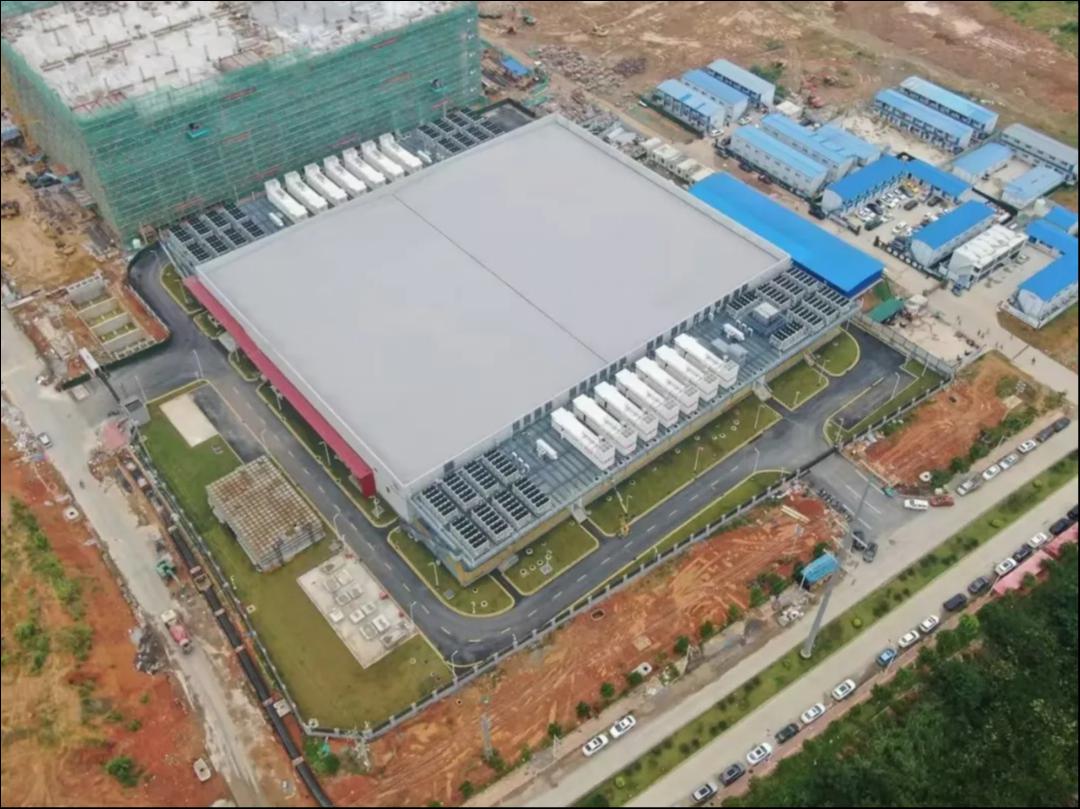
💡China’s AI demand is driving a major data center capacity expansion—key context for infrastructure planning.
⚡ 30-Second TL;DR
What Changed
AI demand in China is the primary driver of GDS Holdings' order growth.
Why It Matters
The expansion signals that AI infrastructure demand is translating into substantial capacity commitments in China. Higher data center availability could support regional AI training and inference deployments, while increasing competition for power, sites, and network resources.
What To Do Next
If you are planning China-based AI workloads, request GDS's latest AI-ready capacity, power-delivery timeline, and GPU hosting options before locking your deployment region.
Key Points
- •AI demand in China is the primary driver of GDS Holdings' order growth.
- •The company plans to invest 10 billion yuan this year to expand its data center footprint.
- •Chairman and CEO Huang Wei expects annual sales signings to set a record and significantly exceed the original target.
🧠 Deep Insight
AI-generated analysis for this event.
🔑 Enhanced Key Takeaways
- •GDS Holdings has increasingly pivoted toward a dual-platform strategy, separating its China business from its international arm, GDS International (GDSI), to attract independent capital and focus on different regulatory environments.
- •The 10 billion yuan investment is heavily concentrated on high-density power facilities specifically designed to support liquid cooling technologies required by next-generation GPU clusters.
- •GDS has secured significant long-term power agreements in key Tier-1 Chinese cities, mitigating the risk of energy constraints that have historically throttled data center expansion in the region.
- •The company's recent order book growth is heavily skewed toward 'hyperscale' customers, including major Chinese cloud service providers and AI foundation model developers who require massive, contiguous compute capacity.
- •GDS is actively integrating AI-driven predictive maintenance and energy management software across its fleet to improve Power Usage Effectiveness (PUE) ratings, aiming to meet stricter government carbon neutrality mandates.
📊 Competitor Analysis▸ Show
| Competitor | Market Focus | Key Advantage | Pricing Strategy |
|---|---|---|---|
| Chindata Group | Hyperscale-only | High-density, edge-to-core integration | Competitive/Volume-based |
| VNET Group | Retail & Wholesale | Long-standing carrier neutrality | Premium/Service-oriented |
| Equinix (China) | Interconnection | Global ecosystem & low latency | Premium/High-margin |
🛠️ Technical Deep Dive
- Implementation of advanced liquid cooling systems (Direct-to-Chip) to support rack densities exceeding 30kW-50kW.
- Deployment of modular data center architecture to reduce time-to-market for AI-ready capacity.
- Integration of AI-based DCIM (Data Center Infrastructure Management) tools to optimize real-time cooling loads based on server utilization.
- Utilization of high-voltage power distribution systems to minimize energy loss during transmission to high-performance computing (HPC) clusters.
🔮 Future ImplicationsAI analysis grounded in cited sources
⏳ Timeline
Weekly AI Recap
Read this week's curated digest of top AI events →
👉Related Updates
AI-curated news aggregator. All content rights belong to original publishers.
Original source: 钛媒体 ↗