Nvidia's $20B LPU AI Inference Bet
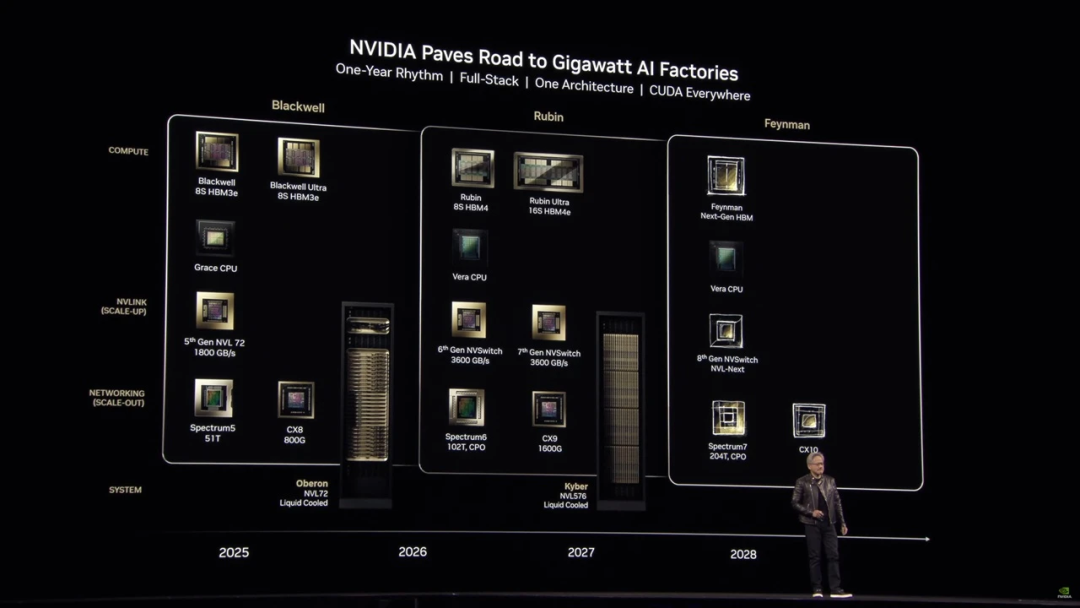
💡$20B Nvidia LPU bet signals inference chip wars heating up.
⚡ 30-Second TL;DR
What Changed
$20 billion investment in LPU technology.
Why It Matters
Could reshape AI inference landscape, pressuring rivals in compute efficiency.
What To Do Next
Benchmark Nvidia LPU specs against H100 for inference cost savings.
Key Points
- •$20 billion investment in LPU technology.
- •Strategic push into AI inference market.
- •Nvidia faces 'three sieges' from competitors.
- •Positions as major inference infrastructure play.
🧠 Deep Insight
Background and context from public sources — not the original article. 7 sources cited.
🔑 Enhanced Key Takeaways
- •Nvidia acquired Groq for $20 billion at a 2.9x valuation to integrate its LPU technology into the NVIDIA AI Factory architecture.[2]
- •Groq's LPU delivers Llama 2 70B at 300 tokens/second, 10x faster than NVIDIA H100 clusters, enabling real-time agentic AI applications.[3]
- •LPU architecture uses a single-core design with massive on-chip SRAM for deterministic execution, eliminating GPU pipeline stalls and cache misses.[2][3]
- •Groq LPUs achieve 1-3 joules per token energy efficiency, up to 10x better than GPUs, reducing costs for large-scale inference.[3]
- •LPUs excel in single-stream inference for chatbots and real-time agents, complementing GPUs which optimize for batch training workloads.[4]
📊 Competitor Analysis▸ Show
| Feature | Nvidia GPU (H100) | Groq LPU |
|---|---|---|
| Tokens/sec (Llama 2 70B) | 30-40 tok/s [3] | 300 tok/s (10x faster) [3] |
| Energy per token | 10-30 joules [3] | 1-3 joules (10x efficient) [3] |
| Latency | Variable due to scheduling [3] | Deterministic, ultra-low [2][3] |
| Best for | Batch training/high throughput [4] | Real-time single-stream inference [4] |
🛠️ Technical Deep Dive
- •LPU employs a software-first, programmable assembly line architecture optimized for linear algebra in LLM inference, ensuring deterministic data arrival at each computation stage.[3]
- •Single-core design with massive on-chip SRAM eliminates multi-core complexities, pipeline stalls, and cache misses for predictable low latency.[2]
- •Focuses on sequential text processing: excels in prefill (input tokens) and decode (output tokens) phases with sub-300ms time-to-first-token (TTFT).[3]
- •10x compute density and memory bandwidth over GPUs for LLMs, reducing time per word/output token.[5]
🔮 Future ImplicationsAI analysis grounded in cited sources
⏳ Timeline
📎 Sources (7)
Factual claims are grounded in the sources below. Forward-looking analysis is AI-generated interpretation.
Weekly AI Recap
Read this week's curated digest of top AI events →
👉Related Updates
AI-curated news aggregator. All content rights belong to original publishers.
Original source: 钛媒体 ↗
This is a summary, not the original. Read the source, or get the weekly briefing.
Weekly AI briefing
One email a week. Unsubscribe anytime.