Nvidia vs Qualcomm 6G AI Clash
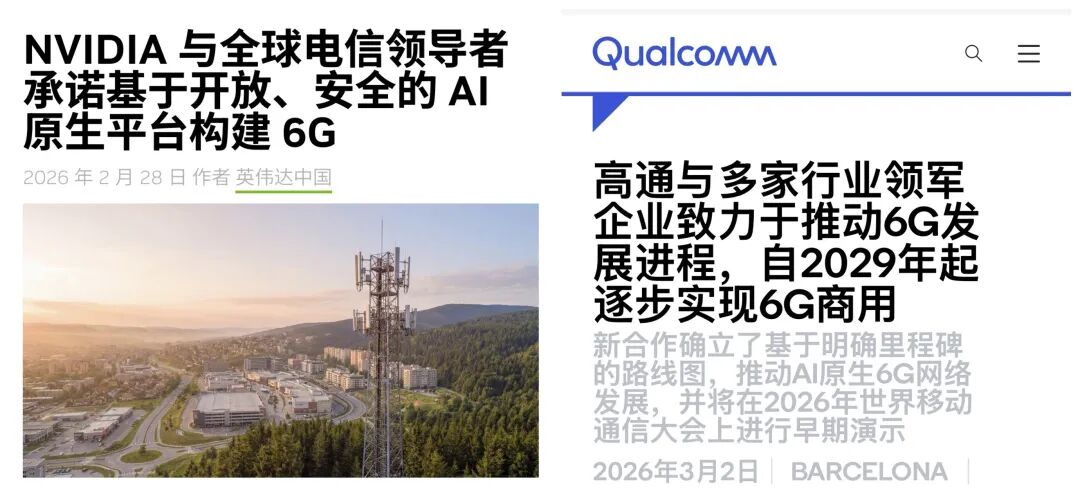
💡Nvidia's AI-RAN bid to control 6G compute vs Qualcomm standards war
⚡ 30-Second TL;DR
What Changed
Nvidia AI-RAN integrates RAN, edge computing, AI on GPU/CUDA platform
Why It Matters
Geopolitical split risks 6G fragmentation, favoring Nvidia's AI dominance in allied networks but challenging global scale. AI practitioners face ecosystem choices impacting compute access in telecom.
What To Do Next
Prototype Nvidia GPU pilots for RAN AI inference using CUDA toolkit.
Key Points
- •Nvidia AI-RAN integrates RAN, edge computing, AI on GPU/CUDA platform
- •Partners: BT, DT, Softbank, Ericsson, Nokia – no Chinese firms
- •Qualcomm 60-member alliance includes China Mobile, Alibaba; targets 2028 6G readiness
- •Nvidia redefines networks as AI infra; Qualcomm preserves unified standards
🧠 Deep Insight
Background and context from public sources — not the original article. 9 sources cited.
🔑 Enhanced Key Takeaways
- •Nvidia's AI-RAN Alliance has grown to over 130 participating companies, with 26 of 33 demos at MWC 2026 built on NVIDIA AI Aerial software-defined architecture[2][3].
- •SynaXG achieved a benchmark on Nvidia GH200 server running 4G/5G/mmWave alongside AI workloads at 36 Gbps throughput and <10ms latency, first AI-RAN on FR2 mmWave[2].
- •T-Mobile US demoed concurrent AI and RAN processing on Nvidia's platform with Nokia's CUDA-accelerated software, supporting video streaming, gen AI, and captioning over 5G[2].
- •Qualcomm-Ericsson partnership targets uplink capacity for Agentic AI using 6-8 GHz spectrum and 4T4R antenna configs to triple uplink demand every five years[4].
🛠️ Technical Deep Dive
- •Nvidia AI-RAN enables concurrent RAN and AI processing on GH200 servers, supporting multi-band (4G, 5G sub-6GHz, mmWave FR2) with 36 Gbps throughput and <10ms latency for agentic AI[2].
- •Nokia's CUDA-accelerated RAN software integrates with Nvidia platform for real-time video streaming, generative AI, and AI captioning alongside 5G over-the-air[2].
- •Qualcomm-Ericsson focus on 6-8 GHz cmWave with 400 MHz component carrier, 4-transmit/4-receive antennas to boost uplink for Agentic AI sensor/video data to cloud[4].
- •Nvidia AI Aerial underpins software-defined 6G for continuous evolution, embedding AI in RAN/edge/core for integrated sensing, communications, and decision-making[3].
🔮 Future ImplicationsAI analysis grounded in cited sources
⏳ Timeline
📎 Sources (9)
Factual claims are grounded in the sources below. Forward-looking analysis is AI-generated interpretation.
- theregister.com — Qualcomm Nvidia AI Native 6g
- crnasia.com — Nvidia Bets Big on AI Native Networks at Mwc 2026
- nvidianews.nvidia.com — Nvidia and Global Telecom Leaders Commit to Build 6g on Open and Secure AI Native Platforms
- futurumgroup.com — Qualcomm Ericsson Partnership Accelerates Path to Intelligent AI 6g Fabric
- t3.com — 6g Is Officially Coming in 2029 and Its All About AI
- constellationr.com — Mwc 2026 6g Gets AI Makeover
- qualcomm.com — Qualcomm 6g Device to Data Center Transformation
- lightreading.com — Qualcomm Hints at Chasing Bigger Role in 6g Networks
- blogs.nvidia.com — AI in Telco Survey 2026
Weekly AI Recap
Read this week's curated digest of top AI events →
👉Related Updates

AI-curated news aggregator. All content rights belong to original publishers.
Original source: 虎嗅 ↗
This is a summary, not the original. Read the source, or get the weekly briefing.
Weekly AI briefing
One email a week. Unsubscribe anytime.