Nvidia Secures $500bn for AI Data Centres
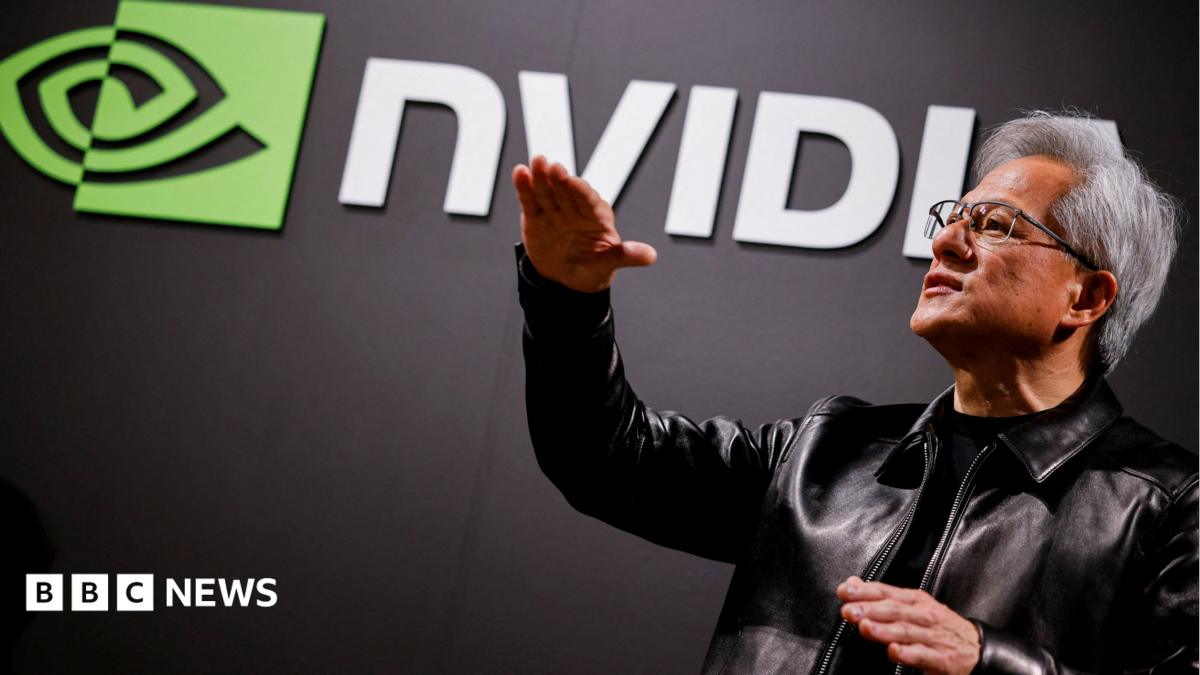
Nvidia’s $500bn data-centre push could reshape the compute capacity available for AI training and inference.
30-Second TL;DR
What Changed
Nvidia is securing $500bn in financing from major banks.
Why It Matters
The financing signals continued expansion of AI compute infrastructure and could accelerate the availability of capacity for training and inference workloads. It may also increase demand for power, cooling systems, networking, and data-centre construction.
What To Do Next
Review your AI capacity plan and model the cost, power, and latency impact of running future workloads on Nvidia-based cloud infrastructure.
Key Points
- •Nvidia is securing $500bn in financing from major banks.
- •The funding will support construction of new AI data centres.
- •The facilities are designed for large-scale chip deployment, operation, and cooling.
Deep Insight
AI-generated analysis for this event — not the original article.
Enhanced Key Takeaways
- •The financing initiative is part of a broader 'AI Infrastructure Sovereign' strategy aimed at reducing reliance on third-party cloud providers by establishing Nvidia-owned and operated compute clusters.
- •A significant portion of the $500bn capital expenditure is earmarked for advanced liquid cooling technologies and modular data center designs to mitigate the thermal output of next-generation Blackwell and post-Blackwell architectures.
- •The funding consortium includes a mix of sovereign wealth funds and traditional investment banks, marking a shift toward long-term infrastructure debt rather than standard corporate equity financing.
- •Nvidia is partnering with regional energy providers to integrate dedicated small modular reactors (SMRs) and renewable microgrids to power these high-density facilities, addressing the massive electricity demands of AI training.
- •This capital injection is expected to accelerate the deployment of 'AI Factories,' which are designed to provide AI-as-a-Service (AIaaS) directly to enterprise clients, bypassing traditional cloud service provider markups.
Competitor Analysis
- Nvidia (AI Factories)
- Infrastructure-as-a-Service
- Microsoft (Azure AI)
- Cloud Platform/PaaS
- AWS (Trainium/Inferentia)
- Cloud Platform/IaaS
- Nvidia (AI Factories)
- Proprietary (Blackwell+)
- Microsoft (Azure AI)
- Hybrid (Custom + Nvidia)
- AWS (Trainium/Inferentia)
- Custom Silicon + Nvidia
- Nvidia (AI Factories)
- Full Stack (Vertical)
- Microsoft (Azure AI)
- Software-Defined
- AWS (Trainium/Inferentia)
- Software-Defined
- Nvidia (AI Factories)
- Capacity-based Leasing
- Microsoft (Azure AI)
- Consumption-based
- AWS (Trainium/Inferentia)
- Consumption-based
| Feature | Nvidia (AI Factories) | Microsoft (Azure AI) | AWS (Trainium/Inferentia) |
|---|---|---|---|
| Primary Model | Infrastructure-as-a-Service | Cloud Platform/PaaS | Cloud Platform/IaaS |
| Hardware | Proprietary (Blackwell+) | Hybrid (Custom + Nvidia) | Custom Silicon + Nvidia |
| Control | Full Stack (Vertical) | Software-Defined | Software-Defined |
| Pricing | Capacity-based Leasing | Consumption-based | Consumption-based |
Technical Deep Dive
- Utilization of high-density rack architectures supporting power loads exceeding 100kW per rack.
- Implementation of direct-to-chip liquid cooling systems to manage the thermal design power (TDP) of high-performance GPU clusters.
- Integration of high-speed interconnect fabrics (NVLink Switch System) to enable massive-scale GPU pooling across physical data center boundaries.
- Deployment of advanced power management units (PMUs) to optimize energy efficiency during peak training workloads and idle states.
Future ImplicationsAI analysis grounded in cited sources
Timeline
- 2023-03Nvidia announces DGX Cloud, signaling the shift toward AI-as-a-Service.
- 2024-03Nvidia unveils the Blackwell architecture, setting new standards for AI compute density.
- 2025-06Nvidia begins pilot programs for modular, liquid-cooled data center units.
- 2026-02Nvidia announces strategic partnerships with energy firms to secure dedicated power for AI clusters.
Weekly AI Recap
Read this week's curated digest of top AI events →
Related Updates

AI-curated news aggregator. All content rights belong to original publishers.
Original source: BBC Technology ↗
This is a summary, not the original. Read the source, or get the weekly briefing.
The weekly digest
One email a week. Unsubscribe anytime.