NVIDIA RTX Links Directly to Vision Pro
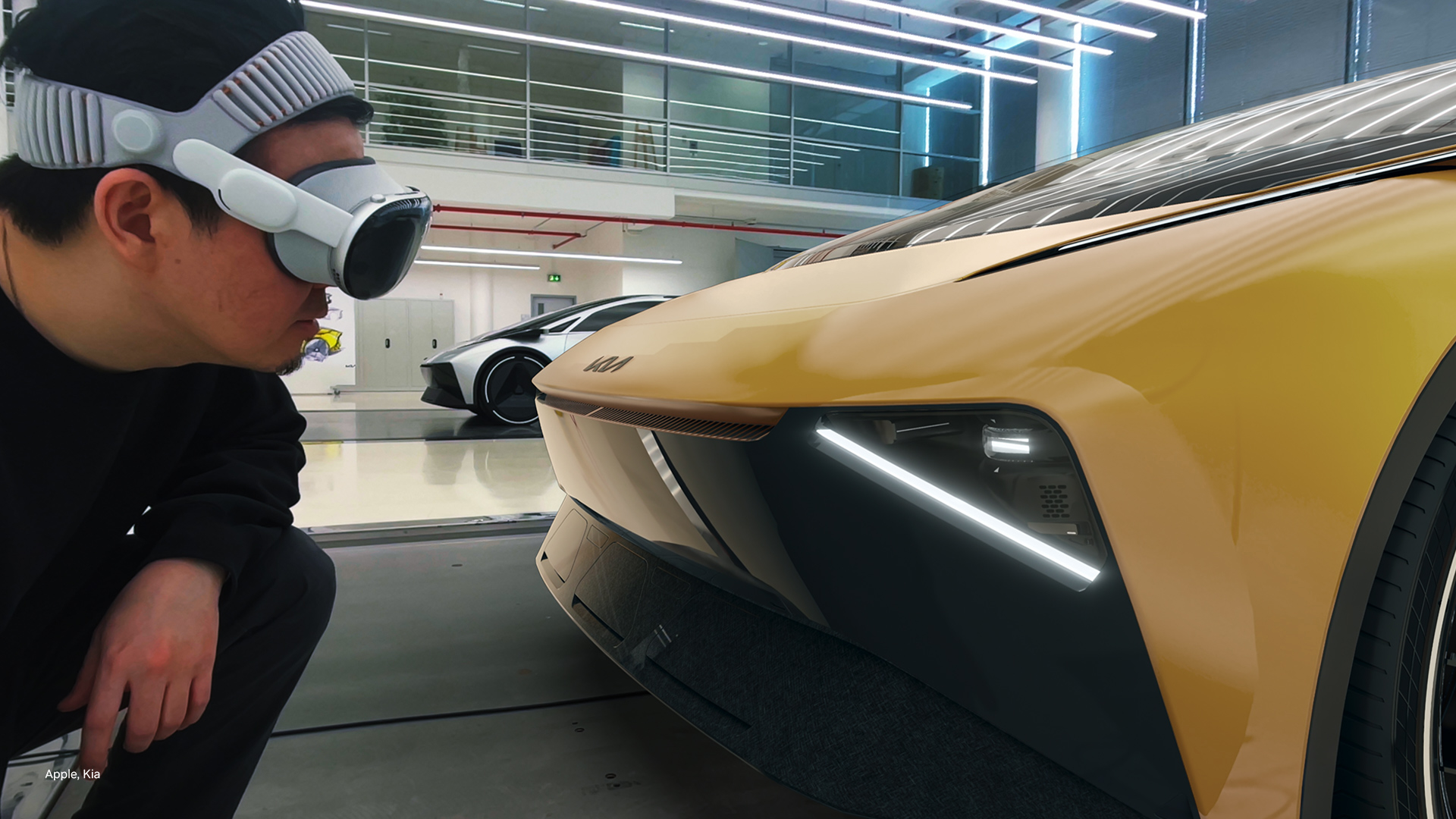
💡Run pro RTX 3D apps on Vision Pro—new direct CloudXR integration unlocks it.
⚡ 30-Second TL;DR
What Changed
Native integration of CloudXR 6.0 into Apple visionOS
Why It Matters
Enables professionals to leverage NVIDIA RTX graphics power on Vision Pro, boosting XR workflows without local compute limits. Accelerates adoption of high-fidelity 3D apps in enterprise settings.
What To Do Next
Connect your RTX PC to Vision Pro via CloudXR 6.0 and test Autodesk VRED streaming.
Key Points
- •Native integration of CloudXR 6.0 into Apple visionOS
- •Direct connection from NVIDIA RTX PCs to Vision Pro
- •Secure streaming of RTX-powered 3D simulators and apps
- •Supports Autodesk VRED Immersive on Innoactive XR
🧠 Deep Insight
Background and context from public sources — not the original article. 7 sources cited.
🔑 Enhanced Key Takeaways
- •CloudXR 6.0 leverages Apple Vision Pro's native eye-tracking for foveated streaming, rendering high-resolution visuals only where users are looking while reducing peripheral detail—enabling up to 4K 120 FPS performance on M5 Vision Pro hardware[3][4][5].
- •Mixed reality passthrough with ARKit-based accessory tracking automatically aligns virtual cockpits and overlays physical flight yokes, racing wheels, and pedals into the VR environment, eliminating manual recalibration[1][2][3].
- •CloudXR 6.0 supports both local PC streaming and cloud-based NVIDIA RTX rendering, with privacy-preserving foveated streaming that protects gaze data while delivering low-latency visuals[1][2].
- •iRacing and X-Plane 12 are the launch titles for official Vision Pro support via CloudXR, with X-Plane 12 positioned as the 'world's most advanced flight simulator' and available across Mac, Windows, and Linux platforms[2][3][4].
🛠️ Technical Deep Dive
- •Foveated Streaming Architecture: CloudXR 6.0 uses Apple Vision Pro's eye-tracking to identify gaze direction, rendering full 4K detail in the foveal region while reducing resolution in peripheral vision—similar to PSVR 2's approach but with superior efficiency gains[5].
- •Network Optimization: CloudXR dynamically adjusts to network conditions, maximizing image quality and frame rates across varying Wi-Fi performance[1].
- •Rendering Pipeline: Streams from NVIDIA RTX GPUs and RTX Virtual Workstation (vWS) systems, with GPU-accelerated VR delivery providing significant graphical performance over standalone headset silicon[5].
- •Accessory Tracking: ARKit-based image detection reliably tracks cockpit positions and physical accessories, enabling seamless physical-digital world merging without crude recentering systems[1][2][3].
- •Performance Metrics: Achieves up to 4K resolution at 120 FPS on M5 Vision Pro hardware when streaming from RTX-powered systems[3][4][5].
🔮 Future ImplicationsAI analysis grounded in cited sources
⏳ Timeline
📎 Sources (7)
Factual claims are grounded in the sources below. Forward-looking analysis is AI-generated interpretation.
- x-plane.com — X Plane Is Coming to Apple Vision Pro with Nvidia Cloudxr
- 9to5mac.com — Visionos 26 4 Unlocks Support for Worlds Most Advanced Flight Simulator on Apple Vision Pro
- uploadvr.com — X Plane Iracing Coming to Apple Vision Pro via Nvidia Cloudxr
- macrumors.com — Apple Vision Pro X Plane Flight Simulator
- tomsguide.com — Nvidia Is Bringing a Killer App to the Apple Vision Pro and Its Good News for Sim Racers
- digit.in — Cloudxr Meets Vision Pro Nvidia Apple Aim to Redefine Spatial Computing
- developer.nvidia.com — Nvidia Rtx Innovations Are Powering the Next Era of Game Development
Weekly AI Recap
Read this week's curated digest of top AI events →
👉Related Updates
AI-curated news aggregator. All content rights belong to original publishers.
Original source: NVIDIA Blog ↗
This is a summary, not the original. Read the source, or get the weekly briefing.
Weekly AI briefing
One email a week. Unsubscribe anytime.