NVIDIA Revenue Surges as Memory Commitments Hit $160B
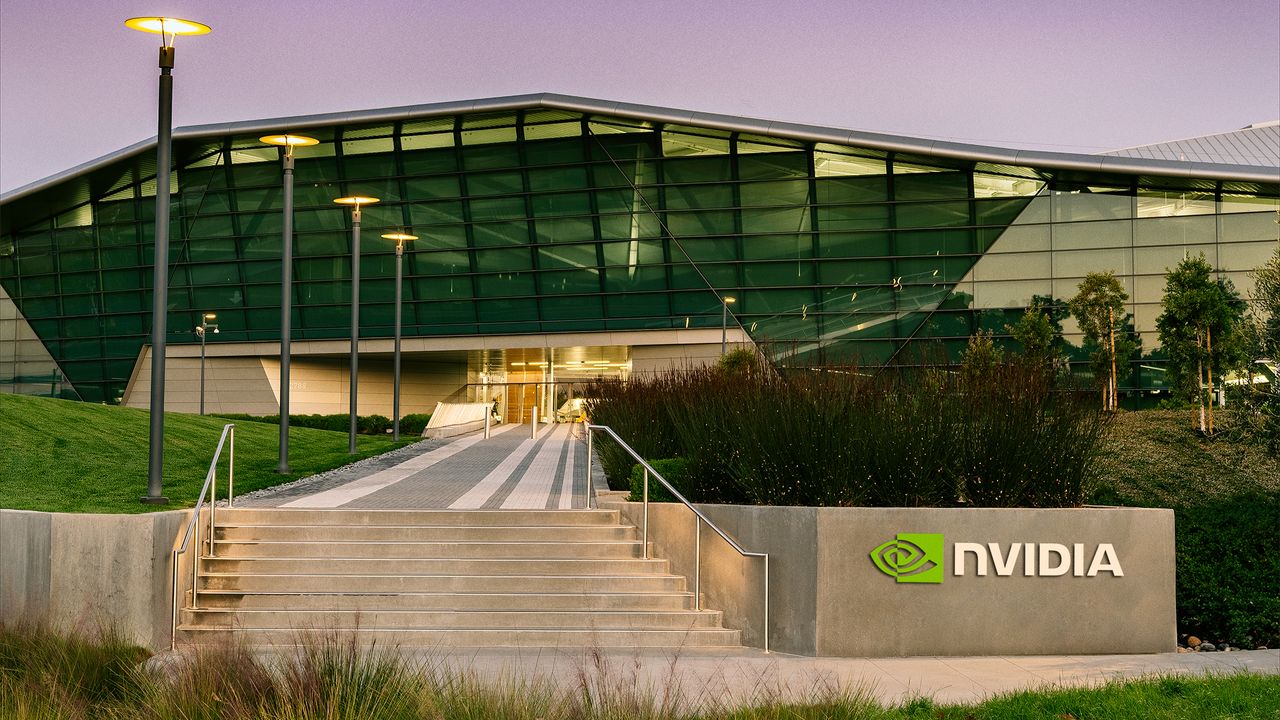
💡NVIDIA's memory spending offers a crucial signal for AI infrastructure capacity and supply planning.
⚡ 30-Second TL;DR
What Changed
NVIDIA reported Q2 FY2027 revenue above $96 billion.
Why It Matters
NVIDIA's large memory commitments signal continued confidence in expanding AI accelerator and data-center demand. They may also intensify competition for high-bandwidth memory and other critical components across the AI infrastructure market.
What To Do Next
Use NVIDIA CUDA workload forecasts to update your next 12-month GPU and memory capacity plan, then validate supply assumptions with vendors.
Key Points
- •NVIDIA reported Q2 FY2027 revenue above $96 billion.
- •The company may purchase up to $160 billion worth of memory.
- •Total commitments have risen to $279 billion ahead of higher AI demand.
- •Jensen Huang described AI as having reached an inflection point.
🧠 Deep Insight
Background and context from public sources — not the original article. 7 sources cited.
🔑 Enhanced Key Takeaways
- •NVIDIA's GAAP revenue for Q2 FY2027 reached a specific record of $96.22 billion.
- •Management identified high-bandwidth memory (HBM) shortages as a persistent growth bottleneck expected to last through fiscal year 2028.
- •NVIDIA is evolving into a 'super capital hub,' providing direct credit support and chip residual-value guarantees to facilitate customer data center construction.
- •The revenue generated per gigawatt of data center capacity is projected to scale from $25 billion with Blackwell to $40 billion with the upcoming Vera Rubin platform.
- •NVIDIA has mobilized over $500 billion in third-party capital through partnerships with financial institutions like Apollo, BlackRock, and Goldman Sachs to fund AI infrastructure.
📊 Competitor Analysis▸ Show
| Feature/Metric | NVIDIA (Blackwell/Rubin) | In-House Silicon (e.g., OpenAI Jalapeno) |
|---|---|---|
| Ecosystem Maturity | High (CUDA/Software Stack) | Low (Custom/Proprietary) |
| Capital Intensity | High (Direct Financing) | Variable (Internal R&D) |
| Supply Chain Control | Dominant (Massive Commitments) | Limited (Foundry Dependent) |
🛠️ Technical Deep Dive
- NVIDIA is transitioning from the Hopper architecture to the Blackwell platform, with the Vera Rubin architecture identified as the next-generation successor.
- The company is optimizing for increased revenue density per gigawatt of data center power, targeting a 60% increase in efficiency from Blackwell to Rubin.
- Supply chain strategy focuses on securing long-term HBM capacity to mitigate the primary hardware bottleneck in AI training and inference clusters.
🔮 Future ImplicationsAI analysis grounded in cited sources
⏳ Timeline
📎 Sources (7)
Factual claims are grounded in the sources below. Forward-looking analysis is AI-generated interpretation.
Weekly AI Recap
Read this week's curated digest of top AI events →
👉Related Updates

AI-curated news aggregator. All content rights belong to original publishers.
Original source: Tom's Hardware ↗
This is a summary, not the original. Read the source, or get the weekly briefing.
Weekly AI briefing
One email a week. Unsubscribe anytime.