Nvidia Partners with d-Matrix for AI Inference Systems
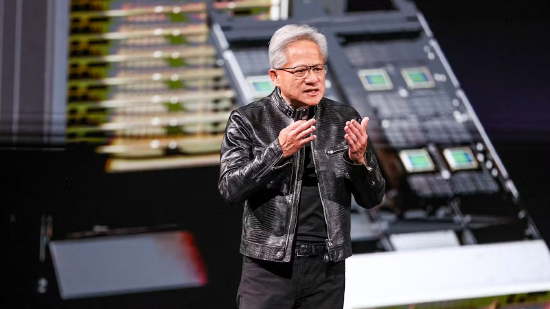
๐กNvidia's rare move to partner with a competitor signals a major shift in AI hardware strategy for inference.
โก 30-Second TL;DR
What Changed
Nvidia is adopting a collaborative approach to counter rising competition in the AI server chip market.
Why It Matters
This move signals Nvidia's willingness to embrace a more open, heterogeneous hardware strategy to maintain dominance in the inference market. It may lower barriers for specialized AI chip startups to integrate into existing data center workflows.
What To Do Next
Monitor the performance benchmarks of the d-Matrix integration to see if it offers a cost-effective alternative for your inference pipelines.
Key Points
- โขNvidia is adopting a collaborative approach to counter rising competition in the AI server chip market.
- โขThe partnership focuses on integrating d-Matrix hardware with Nvidia's ecosystem.
- โขThe joint solution is specifically optimized for large language model (LLM) inference workloads.
๐ง Deep Insight
AI-generated analysis for this event.
๐ Enhanced Key Takeaways
- โขd-Matrix utilizes proprietary digital in-memory computing (DIMC) architecture, which significantly reduces energy consumption for transformer-based inference compared to traditional SRAM-based designs.
- โขThe collaboration leverages Nvidia's TensorRT-LLM software stack to ensure seamless compatibility between d-Matrix's Nighthawk chipsets and Nvidia's existing GPU-centric data center infrastructure.
- โขThis partnership addresses the 'memory wall' bottleneck in LLM inference by offloading specific compute-intensive token generation tasks to d-Matrix's specialized accelerators.
- โขd-Matrix previously secured strategic investment from Microsoft's M12 venture fund, signaling strong industry backing for their chiplet-based modular architecture prior to the Nvidia partnership.
- โขThe joint system architecture is designed to support high-throughput, low-latency inference for models exceeding 70 billion parameters, targeting real-time generative AI applications.
๐ Competitor Analysisโธ Show
| Feature | d-Matrix (Nighthawk) | Groq (LPU) | Nvidia (H100/B200) |
|---|---|---|---|
| Architecture | Digital In-Memory Computing | Deterministic Tensor Streaming | General Purpose GPU |
| Primary Strength | Energy Efficiency/TCO | Ultra-low Latency | Ecosystem/Versatility |
| Target Workload | High-throughput LLM Inference | Real-time Chat/Agentic AI | Training & General Inference |
๐ ๏ธ Technical Deep Dive
- Architecture: Utilizes Digital In-Memory Computing (DIMC) to perform matrix-vector multiplication directly within the memory array, minimizing data movement.
- Chiplet Design: Employs a modular chiplet-based approach allowing for scalable performance configurations based on model size.
- Interconnect: Integrates with Nvidia systems via standard PCIe interfaces, utilizing custom drivers to map LLM weights to the DIMC fabric.
- Power Efficiency: Designed to achieve significantly higher tokens-per-watt metrics than traditional GPU-based inference by eliminating the von Neumann bottleneck for weight-stationary operations.
๐ฎ Future ImplicationsAI analysis grounded in cited sources
โณ Timeline
Weekly AI Recap
Read this week's curated digest of top AI events โ
๐Related Updates
AI-curated news aggregator. All content rights belong to original publishers.
Original source: cnBeta (Full RSS) โ
