NVIDIA Leaks 9GB GDDR7 RTX 5050
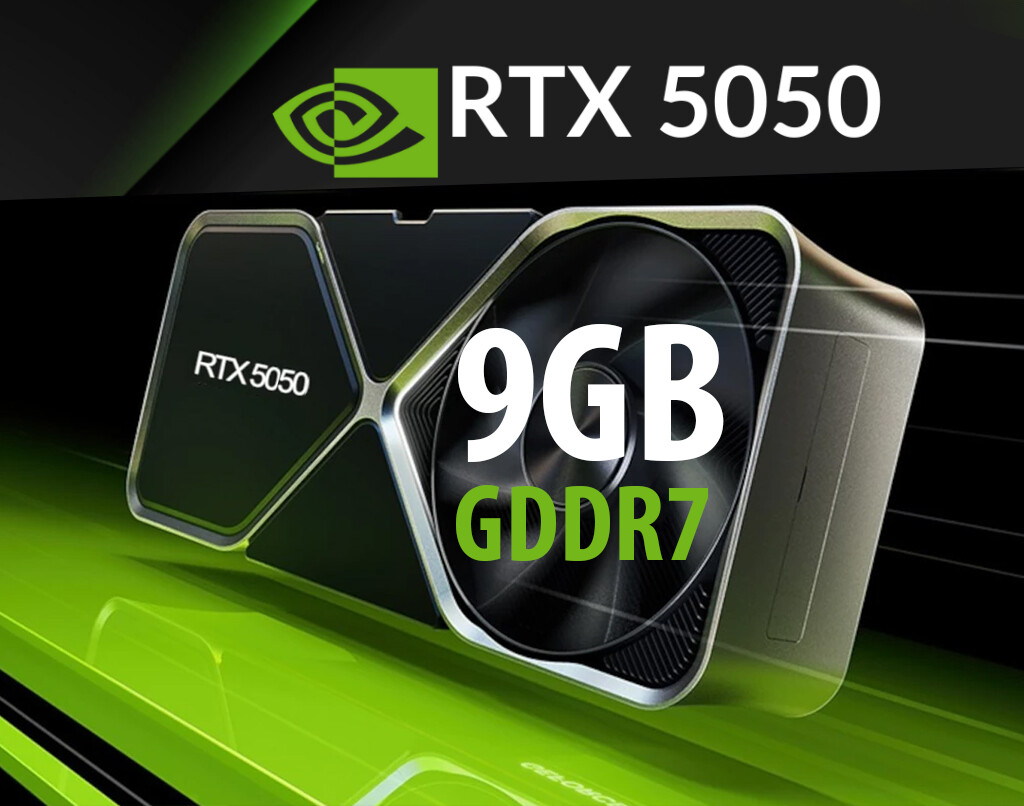
💡9GB GDDR7 RTX 5050 boosts budget GPU VRAM for AI training/inference
⚡ 30-Second TL;DR
What Changed
9GB GDDR7 VRAM version planned for RTX 5050
Why It Matters
The extra VRAM and faster memory will better support local AI model inference on entry-level GPUs, aiding developers with memory-constrained workloads.
What To Do Next
Follow MEGAsizeGPU on X for RTX 50-series updates and test VRAM limits in your PyTorch workflows.
Key Points
- •9GB GDDR7 VRAM version planned for RTX 5050
- •Current model: 8GB GDDR6 at 20Gbps, 128-bit bus, 320GB/s bandwidth
- •Leaker MEGAsizeGPU has reliable NVIDIA leak history
🧠 Deep Insight
Background and context from public sources — not the original article. 4 sources cited.
🔑 Enhanced Key Takeaways
- •NVIDIA's RTX 50 series laptop GPUs already utilize GDDR7 memory across multiple tiers (RTX 5090, 5080, 5070 with 24GB, 16GB, and 12GB respectively), suggesting desktop variants with GDDR7 represent a convergence strategy between mobile and desktop product lines[1].
- •The current RTX 5050 desktop uses a new GB207 GPU die not previously deployed in consumer products, with 2560 CUDA cores and a 128-bit memory bus delivering 320 GB/s bandwidth—a 43% improvement over the RTX 3050's 224 GB/s despite identical bus width[2][4].
- •Industry analysis indicates the RTX 5050 faces significant pricing pressure at $249, with reviewers noting it delivers performance comparable to the RTX 4060 while the RTX 5060 offers superior performance-per-dollar value, creating potential market positioning challenges for a 9GB variant[4].
📊 Competitor Analysis▸ Show
| Feature | RTX 5050 (8GB GDDR6) | RTX 5060 | RTX 4060 | RTX 3050 |
|---|---|---|---|---|
| VRAM | 8 GB GDDR6 | 12 GB GDDR7 | 8 GB GDDR6 | 8 GB GDDR6 |
| Memory Bandwidth | 320 GB/s | 672 GB/s | 240 GB/s | 224 GB/s |
| CUDA Cores | 2560 | 5888 | 3072 | 2560 |
| TDP | 130W | ~170W | 70W | 70W |
| Launch Price | $249 | ~$299 | $299 | $249 |
| Performance vs 4060 | Comparable/Slightly Slower | ~20% faster | Baseline | ~30% slower |
🛠️ Technical Deep Dive
- GPU Architecture: RTX 5050 uses Blackwell-based GB207 die, a new configuration not previously deployed in consumer graphics[2]
- Memory Configuration (Current): 8GB GDDR6 at 20 Gbps on 128-bit bus; proposed 9GB GDDR7 variant would increase effective bandwidth through higher memory clock speeds while maintaining 128-bit interface
- CUDA Core Count: 2560 cores with boost clocks ranging 2.31–2.57 GHz[2][3]
- Power Efficiency: 130W TDP enables passive or minimal cooling solutions; significantly lower than RTX 5060 (~170W)
- Display Support: Supports up to 4K at 480Hz via DisplayPort 2.1b with DSC, or 8K at 165Hz with compression[3]
- Feature Limitations: 8GB VRAM constrains Multi-Frame Generation (Blackwell's generational feature) in demanding scenarios, limiting next-gen appeal despite architectural support[4]
🔮 Future ImplicationsAI analysis grounded in cited sources
⏳ Timeline
📎 Sources (4)
Factual claims are grounded in the sources below. Forward-looking analysis is AI-generated interpretation.
Weekly AI Recap
Read this week's curated digest of top AI events →
👉Related Updates
AI-curated news aggregator. All content rights belong to original publishers.
Original source: cnBeta (Full RSS) ↗
This is a summary, not the original. Read the source, or get the weekly briefing.
Weekly AI briefing
One email a week. Unsubscribe anytime.