Nvidia launches RTX Spark AI superchip for Windows PCs
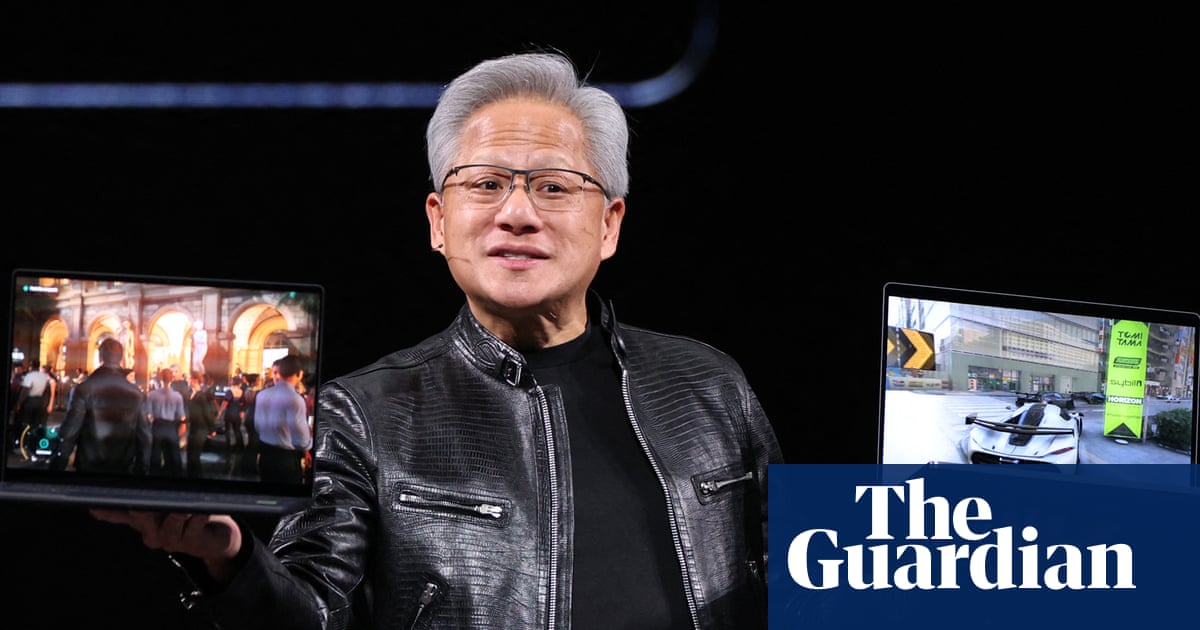
💡Nvidia's new chip aims to replace mouse/keyboard with AI agents, marking a major shift in PC interaction.
⚡ 30-Second TL;DR
What Changed
Nvidia enters the PC market with the RTX Spark chip for Windows.
Why It Matters
This launch signals a major shift in edge computing, potentially accelerating the adoption of local AI agents on consumer hardware. It intensifies the competition for AI-optimized silicon in the PC ecosystem.
What To Do Next
Monitor Nvidia's developer documentation for the RTX Spark SDK to prepare your AI agents for local hardware acceleration.
Key Points
- •Nvidia enters the PC market with the RTX Spark chip for Windows.
- •The chip is designed to power AI agents capable of replacing traditional input methods.
- •Nvidia is positioning this product to compete directly with Intel, Apple, Qualcomm, and AMD.
🧠 Deep Insight
Background and context from public sources — not the original article. 12 sources cited.
🔑 Enhanced Key Takeaways
- •The RTX Spark is an Arm-based processor, co-developed with MediaTek, and manufactured on TSMC's 3nm EUV foundry node.
- •It integrates a 20-core NVIDIA Grace CPU and a Blackwell RTX GPU with 6,144 CUDA cores, delivering up to 1 petaFLOP of FP4 AI performance.
- •The chip supports up to 128GB of unified LPDDR5X memory, enabling local execution of AI models with up to 120-200 billion parameters.
- •Nvidia has collaborated extensively with Microsoft, ensuring the RTX Spark meets Copilot+ requirements with a low-power NPU and comes with the full NVIDIA software stack, including CUDA, Tensor RT, and DLSS 4.5.
- •Leading PC OEMs, including ASUS, Dell, HP, Lenovo, MSI, and Microsoft Surface, are set to launch laptops and mini PCs powered by the RTX Spark in Fall 2026.
📊 Competitor Analysis▸ Show
While specific benchmarks and pricing for the RTX Spark are not yet available, it is positioned to compete directly with existing and upcoming AI PC offerings from major players:
| Competitor | Key AI PC Offerings/Strategy |
|---|---|
| Intel | Core Ultra AI Series 2 processors (200H, 200HX, 200S, 200V) designed for AI PCs; Gaudi 3 GPU (data center, but indicative of AI focus). |
| Apple | Apple Silicon (M-series chips) known for integrated CPU/GPU/NPU architecture and strong performance in its macOS ecosystem. |
| Qualcomm | Snapdragon X series, which has been a prominent player in the Windows on Arm ecosystem, focusing on power efficiency and AI capabilities. |
| AMD | Ryzen AI Embedded P100 and X100 Series processors (released January 2026) for various AI-intensive tasks; Zen 5 microarchitecture. |
Nvidia has indicated that RTX Spark PCs will be priced at the premium end of the market, and initial performance comparisons are expected closer to the Fall 2026 launch.
🛠️ Technical Deep Dive
- Manufacturing Process: Built on TSMC's 3nm EUV foundry node.
- CPU Architecture: Features a 20-core NVIDIA Grace CPU, an Arm-based design co-developed with MediaTek, comprising a mix of performance and efficiency cores.
- GPU Architecture: Integrates a Blackwell RTX GPU with 48 streaming multiprocessors (SMs) and 6,144 CUDA cores, offering graphics performance similar to a desktop GeForce RTX 5070.
- AI Performance: Delivers up to 1 petaFLOP of FP4 AI performance.
- Memory: Supports up to 128GB of unified LPDDR5X memory with a bandwidth of 300 GB/s, enabling the CPU and GPU to share a large memory pool.
- Local AI Model Support: Capable of running AI models up to 120-200 billion parameters entirely locally.
- NPU: Includes a low-power NPU to meet Microsoft Copilot+ requirements (which typically require 40 TOPS).
- Interconnect: Utilizes a 600 GB/s NVLink-C2C chip-to-chip interconnect.
- Software Stack: Comes with the full NVIDIA software ecosystem, including CUDA, Tensor RT, NVFP4, DLSS 4.5, RTX ray tracing, Reflex, and G-SYNC.
- Connectivity: Features contemporary PC networking interfaces such as Wi-Fi 7 and GbE up to 10 Gbps.
- Power Consumption: Designed to operate from single-digit wattage up to 80W.
- Gaming Capabilities: Capable of powering 1440p-class AAA gaming with DirectX 12 Ultimate features like ray tracing and DLSS 4.5.
🔮 Future ImplicationsAI analysis grounded in cited sources
⏳ Timeline
📎 Sources (12)
Factual claims are grounded in the sources below. Forward-looking analysis is AI-generated interpretation.
Weekly AI Recap
Read this week's curated digest of top AI events →
👉Related Updates

AI-curated news aggregator. All content rights belong to original publishers.
Original source: The Guardian Technology ↗
This is a summary, not the original. Read the source, or get the weekly briefing.
The weekly digest
One email a week. Unsubscribe anytime.