NVIDIA Launches Vera CPUs for Agentic AI Workloads
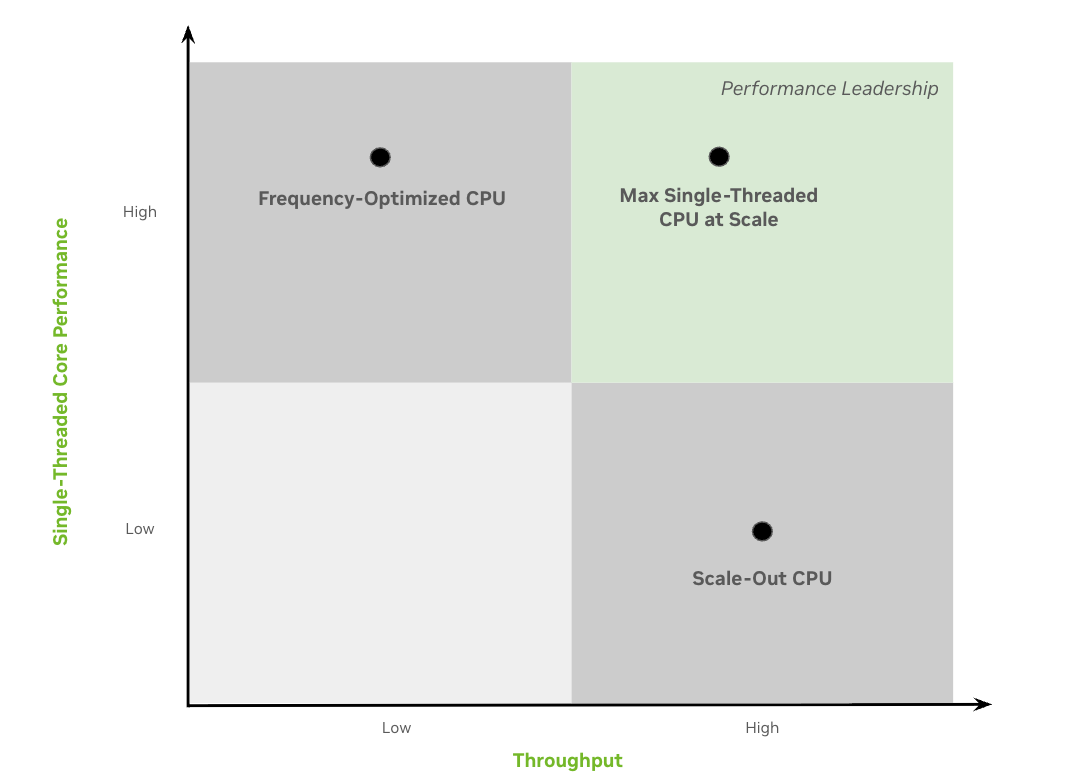
💡Learn how NVIDIA's new Vera CPUs aim to solve latency bottlenecks in agentic AI reasoning and tool calling.
⚡ 30-Second TL;DR
What Changed
Vera CPUs are specifically engineered for agentic AI systems.
Why It Matters
This launch signals a shift in hardware requirements for AI agents, moving beyond just GPU acceleration to include high-performance CPU compute for logic-heavy tasks.
What To Do Next
Evaluate your agentic workflow's bottleneck; if tool calling latency is high, investigate how Vera-based infrastructure could improve your reasoning loop.
Key Points
- •Vera CPUs are specifically engineered for agentic AI systems.
- •Optimized for critical path tasks including reasoning and tool calling.
- •Addresses the need for high-performance single-threaded CPU scaling.
🧠 Deep Insight
AI-generated analysis for this event — not the original article.
🔑 Enhanced Key Takeaways
- •Vera CPUs utilize a proprietary 'Agent-Core' architecture that prioritizes low-latency branch prediction specifically for non-deterministic AI reasoning paths.
- •The processors integrate directly with NVIDIA's Blackwell and Rubin GPU architectures via a high-speed NVLink-C2C interconnect to minimize data movement overhead.
- •NVIDIA has implemented hardware-level security enclaves within Vera to manage the sensitive API keys and authentication tokens required for autonomous agent tool calling.
- •The Vera platform includes a dedicated 'Reasoning Accelerator' block that offloads symbolic logic tasks from the main CPU cores to improve throughput for multi-step agentic workflows.
- •Vera CPUs are manufactured using a custom 2nm process node, marking a shift in NVIDIA's strategy to control the full silicon stack for data center AI infrastructure.
📊 Competitor Analysis▸ Show
| Feature | NVIDIA Vera | Intel Xeon (Agent-Optimized) | AMD EPYC (AI-Focused) |
|---|---|---|---|
| Architecture | Agent-Core (2nm) | P-Core/E-Core Hybrid | Zen 6 (AI-Enhanced) |
| Interconnect | NVLink-C2C | CXL 3.0 | CXL 3.0 |
| Primary Focus | Agentic Reasoning | General Purpose/AI | High-Core Density/AI |
| Pricing | Premium/Enterprise | Competitive | Competitive |
🛠️ Technical Deep Dive
- Architecture: Custom Agent-Core design featuring enhanced branch prediction for non-deterministic reasoning.
- Interconnect: NVLink-C2C integration for coherent memory access with GPU clusters.
- Security: Hardware-based Trusted Execution Environment (TEE) for agentic credential management.
- Logic Offload: Integrated Reasoning Accelerator block for symbolic and heuristic processing.
- Manufacturing: 2nm process node technology.
🔮 Future ImplicationsAI analysis grounded in cited sources
⏳ Timeline
Weekly AI Recap
Read this week's curated digest of top AI events →
👉Related Updates
AI-curated news aggregator. All content rights belong to original publishers.
Original source: NVIDIA Blog ↗
This is a summary, not the original. Read the source, or get the weekly briefing.
Weekly AI briefing
One email a week. Unsubscribe anytime.