Nvidia launches $20bn bond sale to fund AI expansion
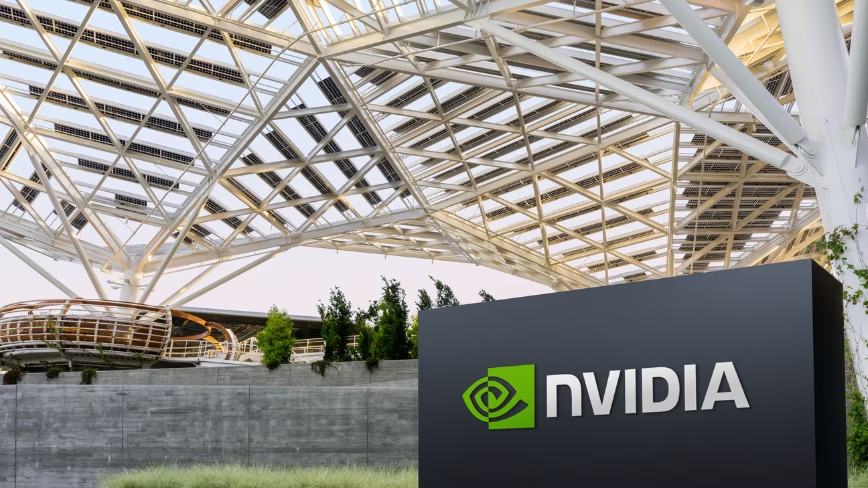
💡Nvidia's $20bn debt raise highlights the massive scale of infrastructure investment required for the AI boom.
⚡ 30-Second TL;DR
What Changed
Nvidia seeking at least $20 billion in bond offering
Why It Matters
The massive capital raise underscores the intense demand for AI compute and the high cost of maintaining dominance in the GPU supply chain.
What To Do Next
Monitor Nvidia's capital expenditure reports to anticipate future GPU supply availability and potential shifts in hardware pricing.
Key Points
- •Nvidia seeking at least $20 billion in bond offering
- •First bond sale since 2021
- •Debt structured in seven tranches with 2-30 year maturities
- •Capital likely earmarked for AI infrastructure and R&D
🧠 Deep Insight
Background and context from public sources — not the original article. 11 sources cited.
🔑 Enhanced Key Takeaways
- •The $20 billion bond sale represents Nvidia's largest debt offering in its history, substantially surpassing its previous $5 billion issuance in June 2021 and a $2 billion sale in September 2016.
- •The capital raised is earmarked for general corporate purposes, which includes the repayment and refinancing of existing outstanding notes, not solely for new AI infrastructure investments.
- •Nvidia's bond issuance is part of a wider trend among major technology companies, including Alphabet, Amazon, and Microsoft, which have collectively borrowed hundreds of billions of dollars to fund their extensive AI computing infrastructure expansions.
- •As of April 26, 2026, Nvidia possessed a robust financial position with $81 billion in cash and marketable securities and $8.5 billion in outstanding senior notes, underpinning its capacity for this significant debt offering.
- •The debt is structured into seven tranches with maturities spanning from two to 30 years, with the longest-dated bonds initially marketed at a spread of approximately 0.9 percentage points above Treasury yields.
🔮 Future ImplicationsAI analysis grounded in cited sources
⏳ Timeline
📎 Sources (11)
Factual claims are grounded in the sources below. Forward-looking analysis is AI-generated interpretation.
Weekly AI Recap
Read this week's curated digest of top AI events →
👉Related Updates


AI-curated news aggregator. All content rights belong to original publishers.
Original source: The Next Web (TNW) ↗
This is a summary, not the original. Read the source, or get the weekly briefing.
Weekly AI briefing
One email a week. Unsubscribe anytime.