NVIDIA Launches Space AI Computer for Satellites
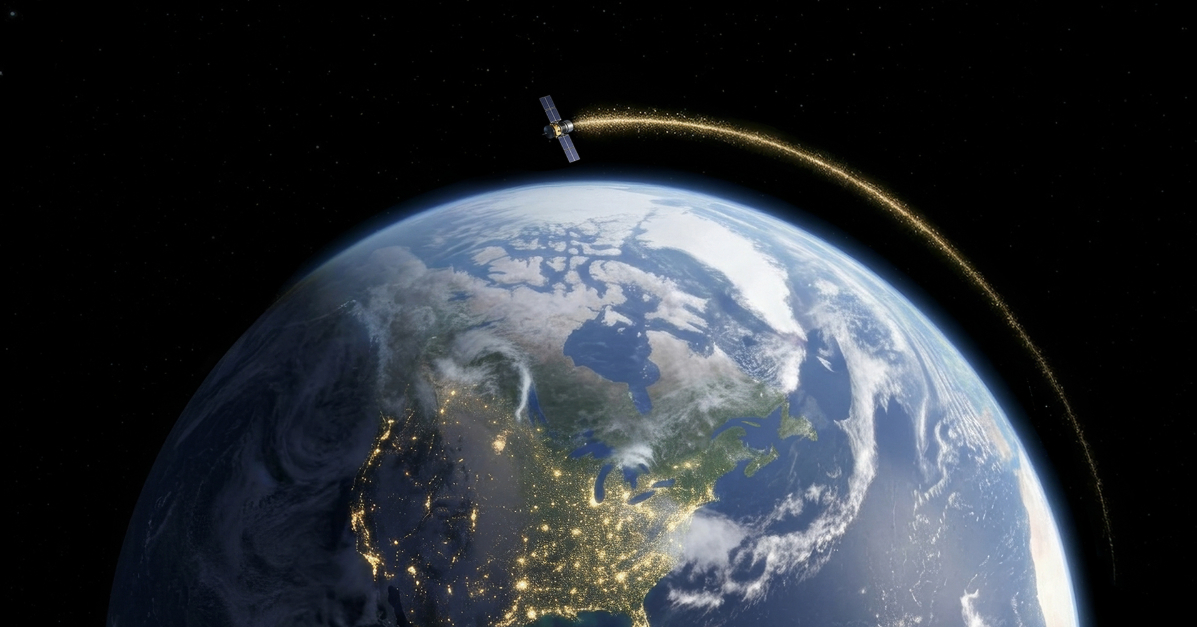
💡NVIDIA's space-grade AI module turns satellites into orbital data centers—key for edge AI in orbit.
⚡ 30-Second TL;DR
What Changed
NVIDIA unveiled Space-1 Vera Rubin Module for satellite integration
Why It Matters
This launch enables real-time AI inference on satellites, slashing data transmission latency to Earth. It opens opportunities for edge AI in space observation, telecom, and exploration, potentially transforming satellite operators' capabilities.
What To Do Next
Review NVIDIA's Space-1 documentation to prototype AI models for satellite edge computing.
Key Points
- •NVIDIA unveiled Space-1 Vera Rubin Module for satellite integration
- •Enables high-performance AI processing in orbit
- •Targets creation of orbital data centers
- •Designed specifically for space environments
🧠 Deep Insight
Background and context from public sources — not the original article. 9 sources cited.
🔑 Enhanced Key Takeaways
- •The Vera Rubin Space-1 Module delivers up to 25x more AI compute than the H100 GPU for orbital inference workloads, enabling larger models in constrained environments.[1][2][4]
- •Six commercial space companies have already deployed the platform, accelerating adoption in the commercial space sector.[2]
- •The module is powered by solar energy and features a tightly integrated CPU-GPU architecture with high-bandwidth interconnect for real-time processing of space-based data streams.[3][4]
- •NVIDIA is developing a specialized cooling mechanism to address the lack of conduction and convection in space.[1]
🛠️ Technical Deep Dive
- •Vera chip combines two Rubin GPUs with one Vera CPU, featuring 88 cores, neural branch predictor, and LPDDR5X RAM memory subsystem up to 1.5TB with 1.2 TB/s bandwidth.[1][5]
- •Rubin GPU has 336 billion transistors on 3nm node, 224 Streaming Multiprocessors with fifth-generation Tensor Cores for NVFP4/FP8, delivering 50 petaflops NVFP4 performance.[1][5][7]
- •Second-generation NVLink-C2C provides 1.8 TB/s coherent bandwidth between Vera CPU and Rubin GPU, unifying LPDDR5X and HBM4 memory pools.[5][7]
- •Designed for low-power operation with SOCAMM LPDDR5X modules for improved serviceability and fault isolation in space.[5]
🔮 Future ImplicationsAI analysis grounded in cited sources
⏳ Timeline
📎 Sources (9)
Factual claims are grounded in the sources below. Forward-looking analysis is AI-generated interpretation.
- nationaltoday.com — Nvidia Previews Vera Rubin Space 1 Module for Orbital Data Centers
- Tom's Hardware — Nvidia Announces Vera Rubin Space Module
- nvidianews.nvidia.com — Space Computing
- stocktitan.net — Nvidia Launches Space Computing Rocketing AI Into Gxo9jdpbbfwe
- developer.nvidia.com — Inside the Nvidia Rubin Platform Six New Chips One AI Supercomputer
- Tom's Hardware — Nvidia Unveils Details of New 88 Core Vera Cpus Positioned to Compete with Amd and Intel New Vera Cpu Rack Features 256 Liquid Cooled Chips That Deliver Up to a 6x Gain in Cpu Throughput
- tspasemiconductor.substack.com — 2026 Nvidia 6 Chips for the Next
- nst.com.my — Nvidia Making AI Module Outer Space
- blogs.nvidia.com — 2026 Ces Special Presentation
Weekly AI Recap
Read this week's curated digest of top AI events →
👉Related Updates
AI-curated news aggregator. All content rights belong to original publishers.
Original source: ITmedia AI+ (日本) ↗
This is a summary, not the original. Read the source, or get the weekly briefing.
Weekly AI briefing
One email a week. Unsubscribe anytime.