Nvidia Jetson to power AI on lunar orbit mission
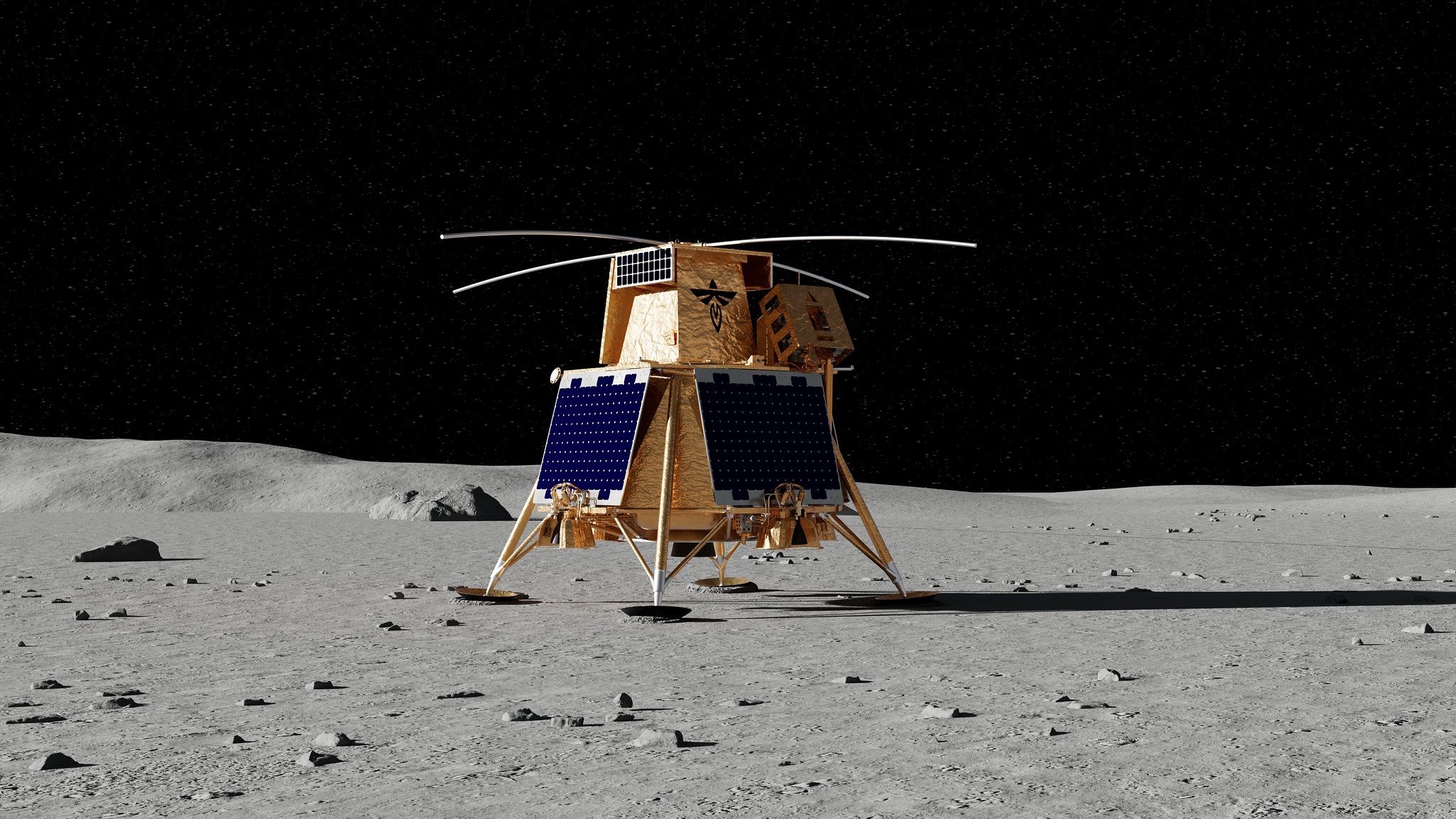
💡First-ever deployment of Nvidia Jetson in lunar orbit, showcasing edge AI capabilities in extreme space environments.
⚡ 30-Second TL;DR
What Changed
Nvidia Jetson platform will be deployed on the Blue Ghost 2 lunar mission.
Why It Matters
This deployment validates the reliability of edge AI hardware in extreme space environments, potentially opening new markets for autonomous space exploration and satellite processing.
What To Do Next
Review the Nvidia Jetson documentation for radiation-hardened or edge-deployment best practices if you are building for aerospace or extreme environments.
Key Points
- •Nvidia Jetson platform will be deployed on the Blue Ghost 2 lunar mission.
- •The mission aims to enable real-time AI data processing directly in lunar orbit.
- •The hardware is integrated into Firefly Aerospace's Ocula lunar imaging system.
- •Launch is currently scheduled for late 2026.
🧠 Deep Insight
AI-generated analysis for this event — not the original article.
🔑 Enhanced Key Takeaways
- •The Ocula system utilizes the Nvidia Jetson Orin module, specifically designed to handle high-performance compute tasks in radiation-prone environments.
- •Firefly Aerospace's mission is part of NASA's Commercial Lunar Payload Services (CLPS) initiative, which aims to foster a commercial lunar economy.
- •The AI processing capabilities will be used for autonomous navigation and real-time terrain analysis, reducing the latency typically associated with Earth-to-Moon communications.
- •This deployment involves specialized radiation-hardened shielding and software-level error correction to mitigate the effects of cosmic rays on the Jetson hardware.
- •The mission will demonstrate 'edge computing' in deep space, a critical step for future autonomous lunar and Martian exploration where real-time human intervention is impossible.
📊 Competitor Analysis▸ Show
| Feature | Nvidia Jetson (Blue Ghost 2) | Xilinx Versal AI Core (Space-Grade) | Cobham Gaisler GR740 |
|---|---|---|---|
| Architecture | GPU-accelerated AI | Adaptive SoC (FPGA + AI Engine) | LEON4 SPARC Processor |
| Primary Use | Real-time Computer Vision | Signal Processing/AI | Flight Control/General Compute |
| Radiation Tolerance | Software-mitigated/Shielded | Native Space-Grade | Native Space-Grade |
| Performance | High (TFLOPS) | High (Deterministic) | Low (Reliability-focused) |
🛠️ Technical Deep Dive
- Hardware: Nvidia Jetson Orin System-on-Module (SoM).
- Compute Performance: Up to 275 TOPS (Trillion Operations Per Second) in terrestrial configurations, throttled for thermal and power constraints in space.
- Integration: Ocula imaging system acts as a payload interface, managing power distribution and thermal dissipation for the Jetson module.
- Software Stack: Nvidia JetPack SDK adapted for Linux-based space flight software environments.
- Mitigation Strategy: Implementation of Triple Modular Redundancy (TMR) at the software level and physical shielding to protect against Single Event Upsets (SEUs).
🔮 Future ImplicationsAI analysis grounded in cited sources
⏳ Timeline
Weekly AI Recap
Read this week's curated digest of top AI events →
👉Related Updates
AI-curated news aggregator. All content rights belong to original publishers.
Original source: cnBeta (Full RSS) ↗
This is a summary, not the original. Read the source, or get the weekly briefing.
The weekly digest
One email a week. Unsubscribe anytime.