NVIDIA Eyes $78B Q1 Revenue on AI Surge
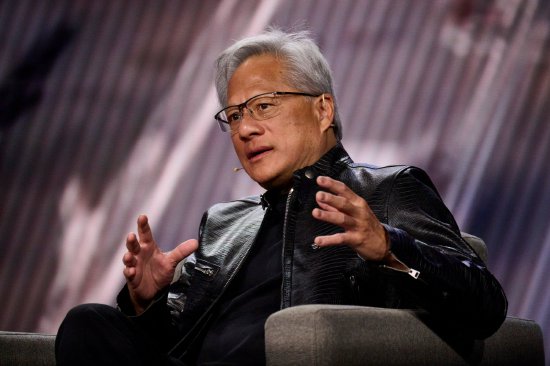
💡NVIDIA's $78B beat signals endless AI GPU demand—plan your hardware buys now
⚡ 30-Second TL;DR
What Changed
NVIDIA Q1 revenue forecast at ~$78B
Why It Matters
Strong revenue guidance boosts confidence in AI chip demand, potentially stabilizing GPU supply chains. AI practitioners may see improved hardware availability for training large models.
What To Do Next
Incorporate NVIDIA's $78B forecast into your next AI cluster procurement budget planning.
Key Points
- •NVIDIA Q1 revenue forecast at ~$78B
- •Exceeds analyst consensus of $72.8B
- •Reflects ongoing AI infrastructure investments
- •Chipmaker's statement issued on Wednesday
🧠 Deep Insight
Background and context from public sources — not the original article. 5 sources cited.
🔑 Enhanced Key Takeaways
- •Nvidia's Q4 FY2026 revenue reached $68.1 billion with 73% year-over-year growth, demonstrating accelerating momentum into Q1 guidance[1]. Data center revenue specifically grew 75% year-over-year to $62.3 billion in Q4, representing 91% of total revenue and underscoring extreme concentration in AI infrastructure[5].
- •Big Tech's combined capital expenditure is projected to hit $630 billion in 2026, with most spending earmarked for data centers and AI processors, directly fueling Nvidia's demand outlook[3][4]. This represents a structural shift in how technology companies allocate capital toward AI infrastructure buildout.
- •Nvidia's adjusted gross margin remained exceptionally strong at 75.2% in Q4, while adjusted operating income jumped 81% year-over-year to $46.11 billion, demonstrating pricing power and operational leverage despite intense competition[5]. Free cash flow nearly doubled to $34.9 billion, highlighting extraordinary cash-generation capacity at scale[5].
- •Customer concentration is rising significantly, with two major clients now accounting for 36% of total sales[3], creating both revenue stability and dependency risk as hyperscalers consolidate AI infrastructure spending. This concentration contrasts with Nvidia's historically more diversified customer base.
- •Nvidia has visibility to $500 billion in revenue from Blackwell and Rubin offerings spanning calendar 2025 through end of 2026, while management believes total AI infrastructure investment could reach $3-4 trillion annually by 2029-2030[1], suggesting sustained multi-year demand tailwinds.
📊 Competitor Analysis▸ Show
| Metric | Nvidia | AMD | Google/Meta (In-House) |
|---|---|---|---|
| Q1 FY2026 Revenue Guidance | $78B (midpoint) | Preparing flagship AI server launch H2 2026 | Developing proprietary silicon; increasing capex allocation |
| Market Position | Dominant AI chip supplier; 91% revenue from data centers | Gaining traction with hyperscaler deals (Meta confirmed) | Building in-house alternatives to reduce Nvidia dependency |
| Gross Margin | 75.2% (adjusted) | Not disclosed in search results | Not disclosed in search results |
| Key Risk | Customer concentration (36% from 2 clients) | Execution risk on new flagship; smaller scale | Long development cycles; Nvidia's entrenched ecosystem |
| Strategic Focus | Blackwell/Rubin product roadmap; U.S. manufacturing expansion | Competing on price/performance; securing hyperscaler partnerships | Vertical integration; reducing external chip reliance |
🔮 Future ImplicationsAI analysis grounded in cited sources
⏳ Timeline
📎 Sources (5)
Factual claims are grounded in the sources below. Forward-looking analysis is AI-generated interpretation.
- fortune.com — Nvidia Nvda Earnings Q4 Results Jensen Huang
- nvidianews.nvidia.com — Nvidia Announces Financial Results for First Quarter Fiscal 2026
- quiverquant.com — Nvidia+(nvda)+crushes+q1+guidance+as+big+tech's+ai+spending+hits+$630+billion
- virginiabusiness.com — Nvidia Q1 Sales AI Chip Demand
- investinglive.com — Nvidia Q4 Crushes Q1 Guide Tops Street As AI Engine Roars 20260225
Weekly AI Recap
Read this week's curated digest of top AI events →
👉Related Updates

AI-curated news aggregator. All content rights belong to original publishers.
Original source: cnBeta (Full RSS) ↗
This is a summary, not the original. Read the source, or get the weekly briefing.
Weekly AI briefing
One email a week. Unsubscribe anytime.