Nvidia Denies DLSS 5 Reads 3D Engine Data
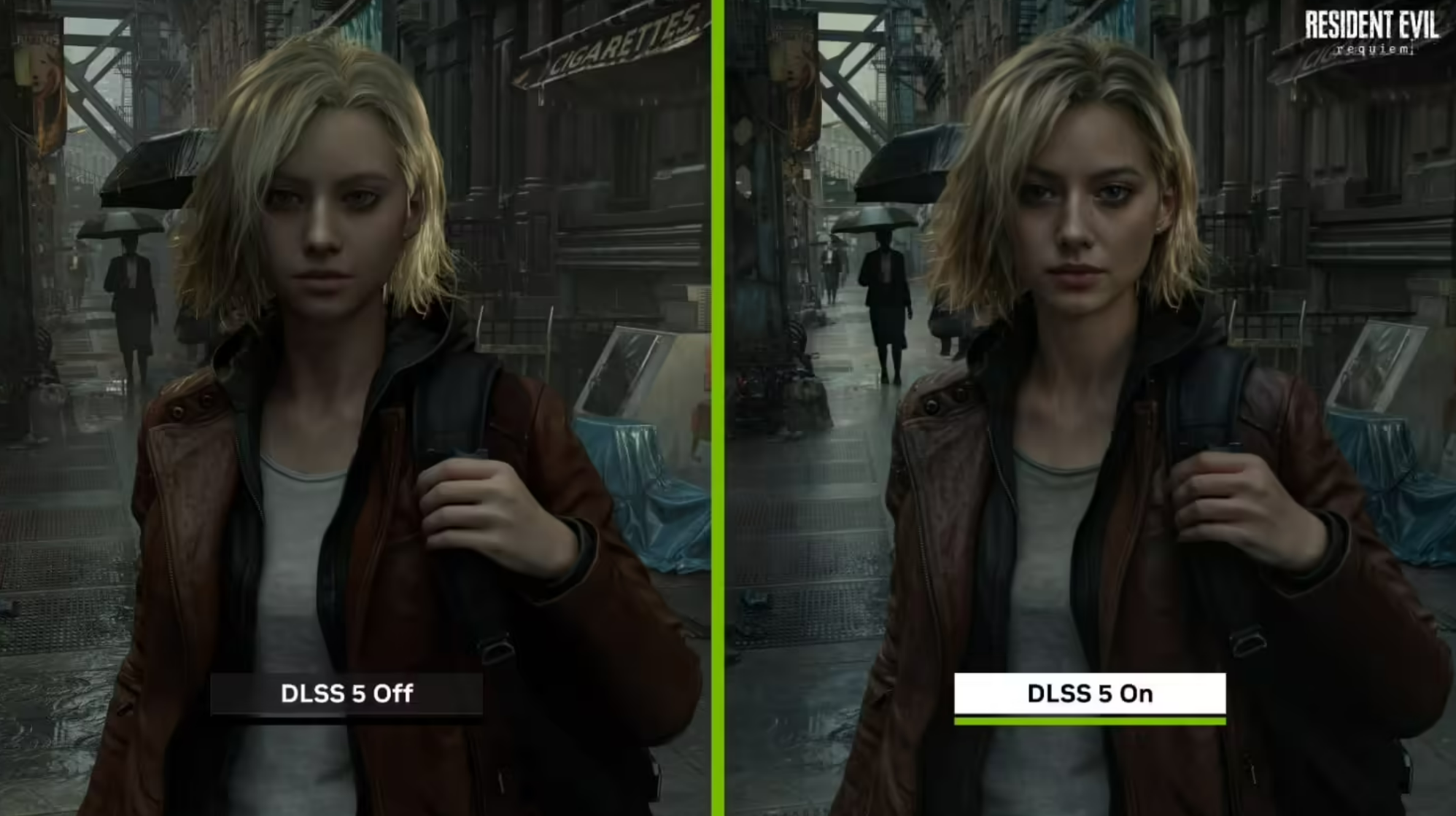
💡Nvidia clarifies DLSS 5 inputs – vital for AI graphics devs verifying no 3D leaks
⚡ 30-Second TL;DR
What Changed
DLSS 5 criticized as poor AI rendering resembling face swaps.
Why It Matters
Boosts transparency on DLSS 5 operations amid controversy. Reassures game developers on privacy and performance. Could influence adoption of Nvidia's AI graphics tech.
What To Do Next
Enable DLSS 5 in latest Nvidia Game Ready drivers and test frame inputs in Unreal Engine 5.
Key Points
- •DLSS 5 criticized as poor AI rendering resembling face swaps.
- •Inputs limited to 2D frames and motion vectors from game scenes.
- •Does not access 3D engine data, per Nvidia expert.
- •Corrects misleading prior marketing on 3D content usage.
🧠 Deep Insight
AI-generated analysis for this event — not the original article.
🔑 Enhanced Key Takeaways
- •The controversy stems from a viral 'artifact analysis' video by a prominent tech influencer, which claimed DLSS 5 was hallucinating geometry by injecting external AI-generated textures rather than reconstructing existing ones.
- •Nvidia's clarification specifically addresses the 'Neural Geometry Reconstruction' (NGR) module, confirming it operates solely on the post-rasterization buffer rather than the raw engine draw calls or vertex buffers.
- •Industry analysts suggest the confusion arose from Nvidia's 'Neural Engine Integration' marketing campaign, which erroneously implied that DLSS 5 could interpret game-engine-level metadata like material properties or light source IDs.
📊 Competitor Analysis▸ Show
| Feature | Nvidia DLSS 5 | AMD FSR 4.0 | Intel XeSS 2.0 |
|---|---|---|---|
| Input Data | 2D Frames + Motion Vectors | 2D Frames + Motion Vectors | 2D Frames + Motion Vectors |
| Hardware Requirement | Tensor Cores (RTX 40/50) | OpenCL/Compute Shaders | XMX/DP4a Instructions |
| Architecture | Proprietary Neural Network | Spatial/Temporal Upscaling | Neural Network (XMX) |
| Performance Impact | High (Frame Gen focus) | Moderate (Upscaling focus) | Moderate (Upscaling focus) |
🛠️ Technical Deep Dive
- DLSS 5 utilizes a multi-stage temporal accumulation buffer that relies on motion vectors generated by the game engine's G-buffer.
- The 'Neural Geometry Reconstruction' component is a lightweight convolutional neural network (CNN) optimized for Tensor Core execution, designed to reduce ghosting in high-motion scenes.
- The model architecture does not utilize 'latent diffusion' or 'generative adversarial' techniques for frame reconstruction, debunking the 'face swap' comparison.
- Input resolution is limited to the current frame and the previous two frames in the temporal buffer, preventing the 'hallucination' of objects not present in the render pipeline.
🔮 Future ImplicationsAI analysis grounded in cited sources
⏳ Timeline
📰 Event Coverage
Weekly AI Recap
Read this week's curated digest of top AI events →
👉Related Updates
AI-curated news aggregator. All content rights belong to original publishers.
Original source: cnBeta (Full RSS) ↗
This is a summary, not the original. Read the source, or get the weekly briefing.
The weekly digest
One email a week. Unsubscribe anytime.