NVIDIA and Microsoft Collaborate on Opus 4.8
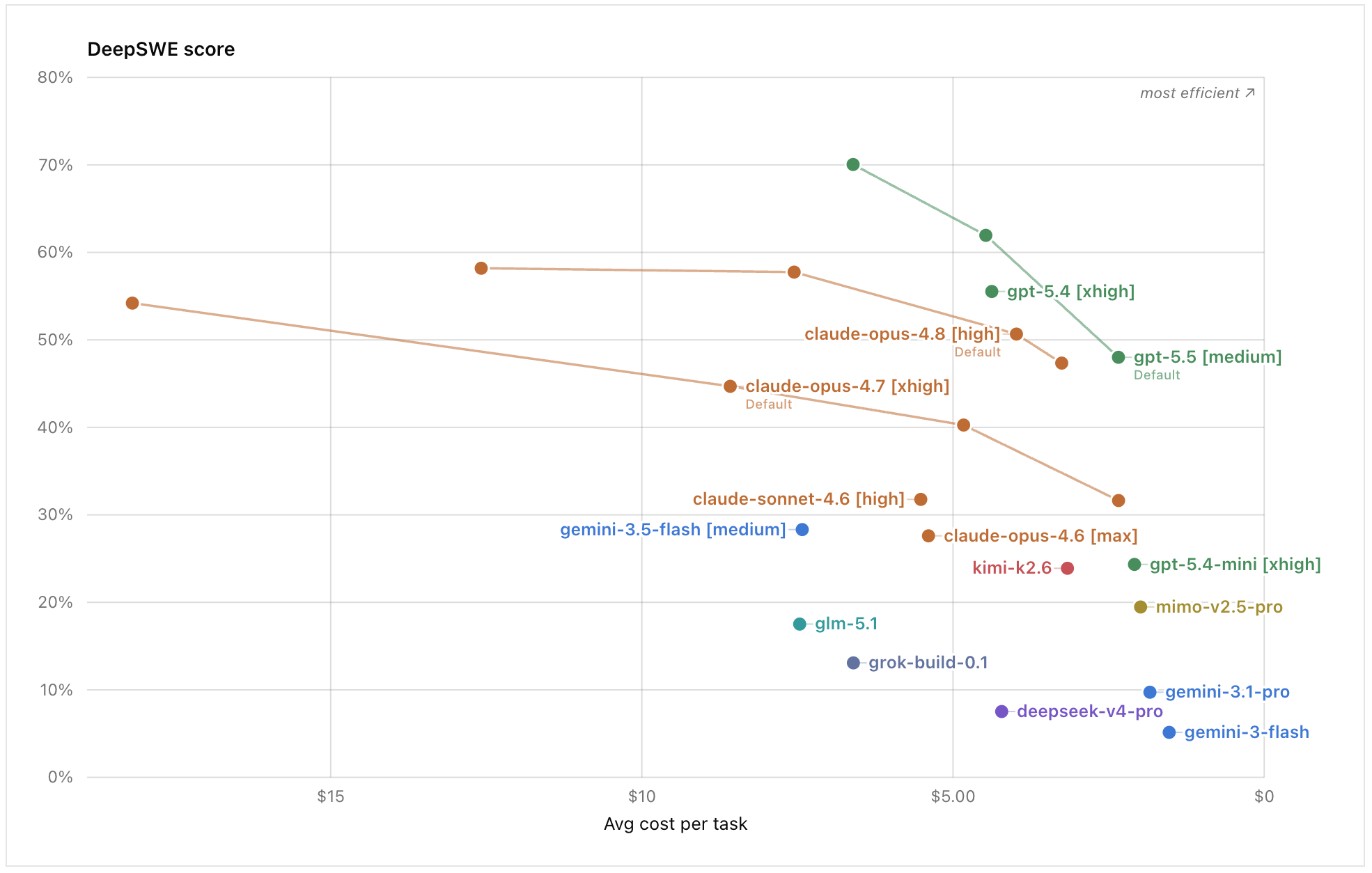
💡A major collaboration between NVIDIA and Microsoft on a new compute platform could shift AI infrastructure standards.
⚡ 30-Second TL;DR
What Changed
Opus 4.8 represents a new joint development between NVIDIA and Microsoft.
Why It Matters
This partnership could redefine the standards for enterprise-grade AI infrastructure. It likely provides developers with optimized access to compute resources tailored for large-scale model training.
What To Do Next
Monitor the official Microsoft Azure or NVIDIA developer blogs for documentation on how to integrate Opus 4.8 into your existing AI workflows.
Key Points
- •Opus 4.8 represents a new joint development between NVIDIA and Microsoft.
- •The project highlights continued synergy in AI infrastructure and compute.
- •Details suggest a focus on high-performance computing or advanced model architecture.
🧠 Deep Insight
Background and context from public sources — not the original article. 10 sources cited.
🔑 Enhanced Key Takeaways
- •Opus 4.8 is Anthropic's flagship large language model, not a new computing system or model jointly developed by NVIDIA and Microsoft as the original article implies.
- •Microsoft has made Claude Opus 4.8 available in its Azure AI Foundry, providing developers and enterprises access to Anthropic's most capable model for coding, agentic tasks, and professional work.
- •The underlying infrastructure supporting advanced AI models on Azure, including those in Azure AI Foundry, is significantly powered by NVIDIA's accelerated computing platforms, such as H200 GPUs and the Blackwell platform, along with NVIDIA NIM microservices.
- •Claude Opus 4.8 features a 1,000,000-token context window and 128,000-token max output, supporting text, image, and file inputs with text output, and is designed for highly autonomous agents and complex reasoning.
- •The model demonstrates improved honesty and judgment, being less likely to make unsupported claims and more likely to flag uncertainties compared to its predecessor, Opus 4.7, making it more trustworthy for high-stakes work.
📊 Competitor Analysis▸ Show
| Feature/Model | Claude Opus 4.8 (Anthropic) | GPT-5.5 (OpenAI) | Gemini 3.5 Flash (Google) |
|---|---|---|---|
| Availability on Microsoft Foundry | Yes | Not explicitly mentioned for GPT-5.5, but OpenAI models are generally available on Azure. | Not explicitly mentioned for Gemini 3.5 Flash, but Google Cloud's Vertex AI supports Claude Opus 4.8. |
| Online-Mind2Web Benchmark | 84% (meaningful jump over GPT-5.5) | Lower than Opus 4.8 | Not directly compared in search results. |
| CursorBench Performance | Exceeds prior Opus models, more efficient tool calling | Not directly compared in search results. | Not directly compared in search results. |
| Legal Agent Benchmark | Highest score recorded, first to break 10% overall | Not directly compared in search results. | Not directly compared in search results. |
| SWE-bench Verified | 88.6% | Not directly compared in search results. | Not directly compared in search results. |
| Terminal-Bench 2.1 | 74.6% (narrowed gap to GPT-5.5) | 83.4% (with Codex CLI harness) | Not directly compared in search results. |
| Finance Agent v2 | 53.9% | 51.8% | 57.9% (significant improvement over Gemini 3.1 Pro) |
| Pricing (Input/Output per million tokens) | Regular: $5 / $25 | Not available in search results. | Not available in search results. |
| Pricing (Fast Mode Input/Output per million tokens) | Fast: $10 / $50 | Not available in search results. | Not available in search results. |
🛠️ Technical Deep Dive
- Claude Opus 4.8 (Anthropic Model):
- Context Window: 1,000,000 tokens.
- Max Output: 128,000 tokens.
- Input Modalities: Supports text, image, and file inputs with text output.
- Core Capabilities: Designed for highly autonomous agents, long-horizon agentic work, knowledge work, memory-driven tasks, multi-step reasoning, complex coding, and end-to-end project orchestration.
- Advanced Features: Includes mid-conversation system messages, allowing updated instructions later in a conversation to preserve prompt cache hits and reduce input cost on agentic loops. Employs adaptive thinking, adjusting effort based on task complexity.
- Honesty and Judgment: Shows improved honesty, being less likely to make unsupported claims and more likely to flag uncertainties, and is about four times less likely than Opus 4.7 to let code flaws pass unremarked.
- Underlying Infrastructure (Microsoft Azure with NVIDIA):
- GPU Integration: Azure AI infrastructure leverages NVIDIA H200 and H100 GPUs, with plans to integrate the newest NVIDIA Blackwell platform.
- Superchip Architecture: The NVIDIA GB200 NVL72, built with Microsoft's custom infrastructure, features two NVIDIA GB200 Grace Blackwell Superchips and NVIDIA NVLink Switch scale-up networking, supporting up to 72 NVIDIA Blackwell GPUs in a single NVLink domain.
- Networking: Incorporates the latest NVIDIA Quantum InfiniBand, enabling scaling out to tens of thousands of Blackwell GPUs on Azure.
- Software Services: Azure AI Foundry offers NVIDIA NIM microservices, which are optimized containers for over two dozen popular foundation models, designed to accelerate inferencing workloads for generative AI applications and agents.
- Orchestration: NVIDIA Run:ai integrates with Azure Kubernetes Service (AKS) to efficiently orchestrate and virtualize GPU resources across diverse AI projects, maximizing GPU utilization and supporting multi-node and multi-GPU training jobs.
🔮 Future ImplicationsAI analysis grounded in cited sources
⏳ Timeline
📎 Sources (10)
Factual claims are grounded in the sources below. Forward-looking analysis is AI-generated interpretation.
Weekly AI Recap
Read this week's curated digest of top AI events →
👉Related Updates
AI-curated news aggregator. All content rights belong to original publishers.
Original source: Ben's Bites ↗
This is a summary, not the original. Read the source, or get the weekly briefing.
The weekly digest
One email a week. Unsubscribe anytime.