North Korean Hackers Build AI Attack Tools
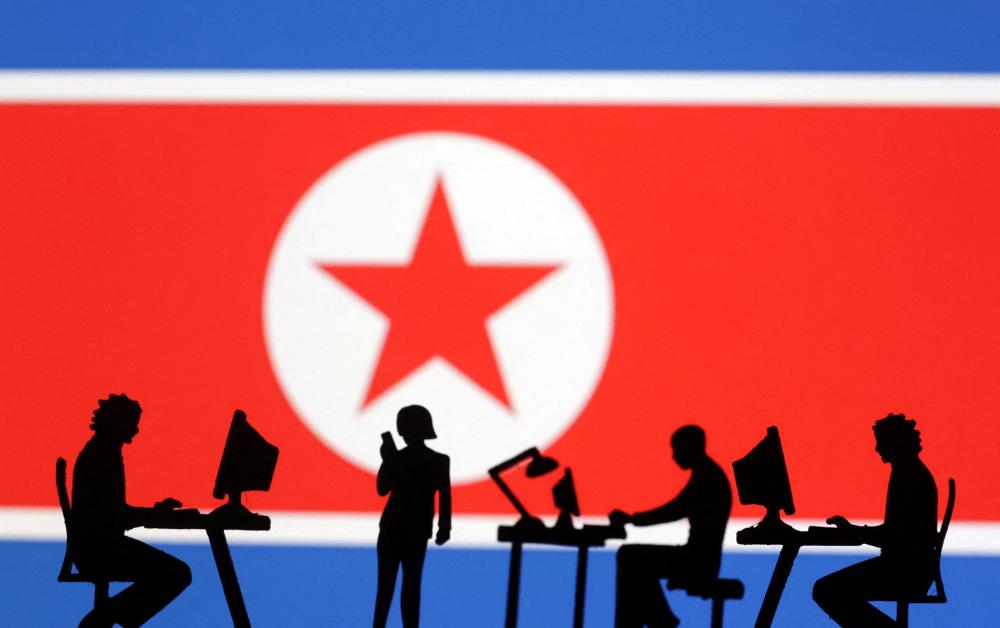
AI is entering adversary tooling—learn why reconnaissance defenses may need an update.
30-Second TL;DR
What Changed
The group is developing AI-enabled tooling.
Why It Matters
AI-assisted attack tooling could increase the speed and scale of reconnaissance and intrusion campaigns. Security teams should treat adversarial use of AI as an operational risk, even though the report provides limited technical evidence.
What To Do Next
Map your AI-assisted attack detections to the MITRE ATT&CK framework and test whether reconnaissance behaviors trigger alerts.
Key Points
- •The group is developing AI-enabled tooling.
- •The reported use cases include cyberattacks and reconnaissance.
- •No specific models, tools, targets, or deployment details were disclosed.
Deep Insight
AI-generated analysis for this event — not the original article.
Enhanced Key Takeaways
- •North Korean state-sponsored actors, specifically the Lazarus Group and Kimsuky, have been observed leveraging Large Language Models (LLMs) to improve the efficiency of social engineering campaigns and spear-phishing lures.
- •Intelligence reports indicate that these groups are utilizing AI to automate the generation of malicious code and to debug existing malware payloads, reducing the time required for weaponization.
- •The use of AI tools by North Korean hackers is primarily focused on overcoming language barriers in global cyber operations, allowing for more convincing communications in non-Korean languages.
- •International cybersecurity agencies, including the FBI and CISA, have issued joint advisories warning that North Korean entities are actively seeking to bypass safety guardrails on commercial AI models.
- •Evidence suggests that these actors are shifting toward 'living-off-the-land' techniques augmented by AI, which helps them evade detection by traditional signature-based security software.
Technical Deep Dive
- Utilization of LLM APIs to generate context-aware phishing emails that mimic specific corporate communication styles.
- Implementation of automated reconnaissance scripts that use AI to analyze public-facing infrastructure for vulnerabilities like unpatched CVEs.
- Experimentation with obfuscation techniques where AI is used to dynamically rewrite malware code to change its file hash and evade static analysis.
- Integration of AI-driven sentiment analysis to identify and target high-value individuals on professional networking platforms for initial access.
Future ImplicationsAI analysis grounded in cited sources
Timeline
- 2023-02Initial reports emerge of North Korean actors exploring generative AI for malicious purposes.
- 2024-02OpenAI and Microsoft release a joint report detailing how state-affiliated groups, including North Korean hackers, use AI services.
- 2024-08Cybersecurity firms observe increased use of AI in drafting sophisticated spear-phishing lures targeting defense contractors.
- 2025-05International intelligence agencies confirm North Korean groups are developing custom, non-public AI models to avoid commercial safety filters.
Weekly AI Recap
Read this week's curated digest of top AI events →
Related Updates

AI-curated news aggregator. All content rights belong to original publishers.
Original source: iTNews Australia ↗
This is a summary, not the original. Read the source, or get the weekly briefing.
The weekly digest
One email a week. Unsubscribe anytime.