North Korea-linked npm packages steal developer credentials
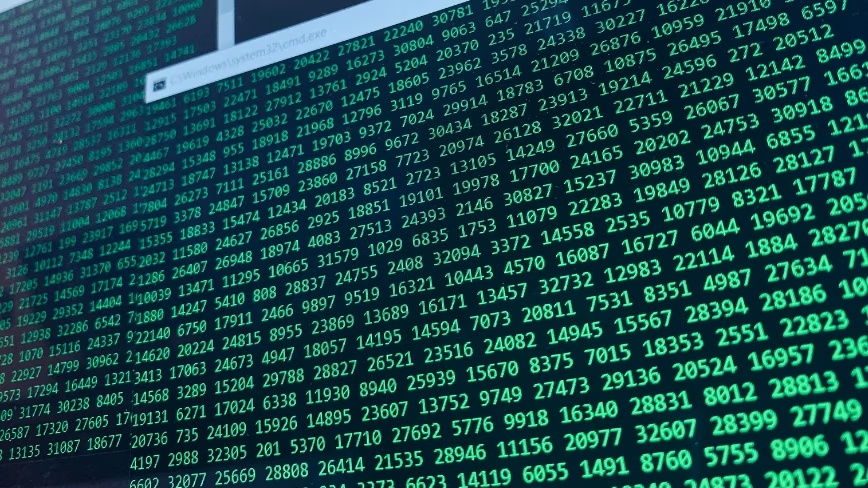
💡Critical supply chain security alert for developers using npm and Rollup tools.
⚡ 30-Second TL;DR
What Changed
Malicious packages: rollup-packages-polyfill-core and rollup-runtime-polyfill-core
Why It Matters
This supply chain attack highlights the critical need for rigorous dependency auditing in software development pipelines.
What To Do Next
Audit your project's package.json for suspicious dependencies and implement automated security scanning for all npm installs.
Key Points
- •Malicious packages: rollup-packages-polyfill-core and rollup-runtime-polyfill-core
- •Packages mimic legitimate rollup-plugin-polyfill-node metadata
- •Attackers gain remote access to developer machines
🧠 Deep Insight
AI-generated analysis for this event — not the original article.
🔑 Enhanced Key Takeaways
- •The malicious packages utilized a sophisticated 'typosquatting' technique, specifically targeting developers who might misspell legitimate Rollup-related dependencies.
- •JFrog's security research team identified that the malware contained a secondary payload designed to exfiltrate environment variables, including sensitive API keys and cloud provider credentials.
- •The attack infrastructure was linked to the Lazarus Group, a North Korean state-sponsored threat actor known for targeting the software supply chain to generate illicit revenue.
- •The malicious code included obfuscation techniques to evade static analysis tools commonly used in CI/CD pipelines to scan for vulnerabilities.
- •The packages were removed from the npm registry following a coordinated takedown effort between JFrog and the npm security team.
🛠️ Technical Deep Dive
- The malware employed a multi-stage execution process starting with a post-install script in the package.json file.
- Upon execution, the script would download a secondary binary from a remote command-and-control (C2) server.
- The payload utilized encrypted communication channels to bypass network-based intrusion detection systems.
- The malware specifically targeted local configuration files such as .npmrc, .ssh/id_rsa, and various cloud CLI credentials stored in the home directory.
🔮 Future ImplicationsAI analysis grounded in cited sources
⏳ Timeline
Weekly AI Recap
Read this week's curated digest of top AI events →
👉Related Updates


AI-curated news aggregator. All content rights belong to original publishers.
Original source: The Next Web (TNW) ↗
This is a summary, not the original. Read the source, or get the weekly briefing.
Weekly AI briefing
One email a week. Unsubscribe anytime.