Nordic Air Defence Launches K100XR Drone Interceptor
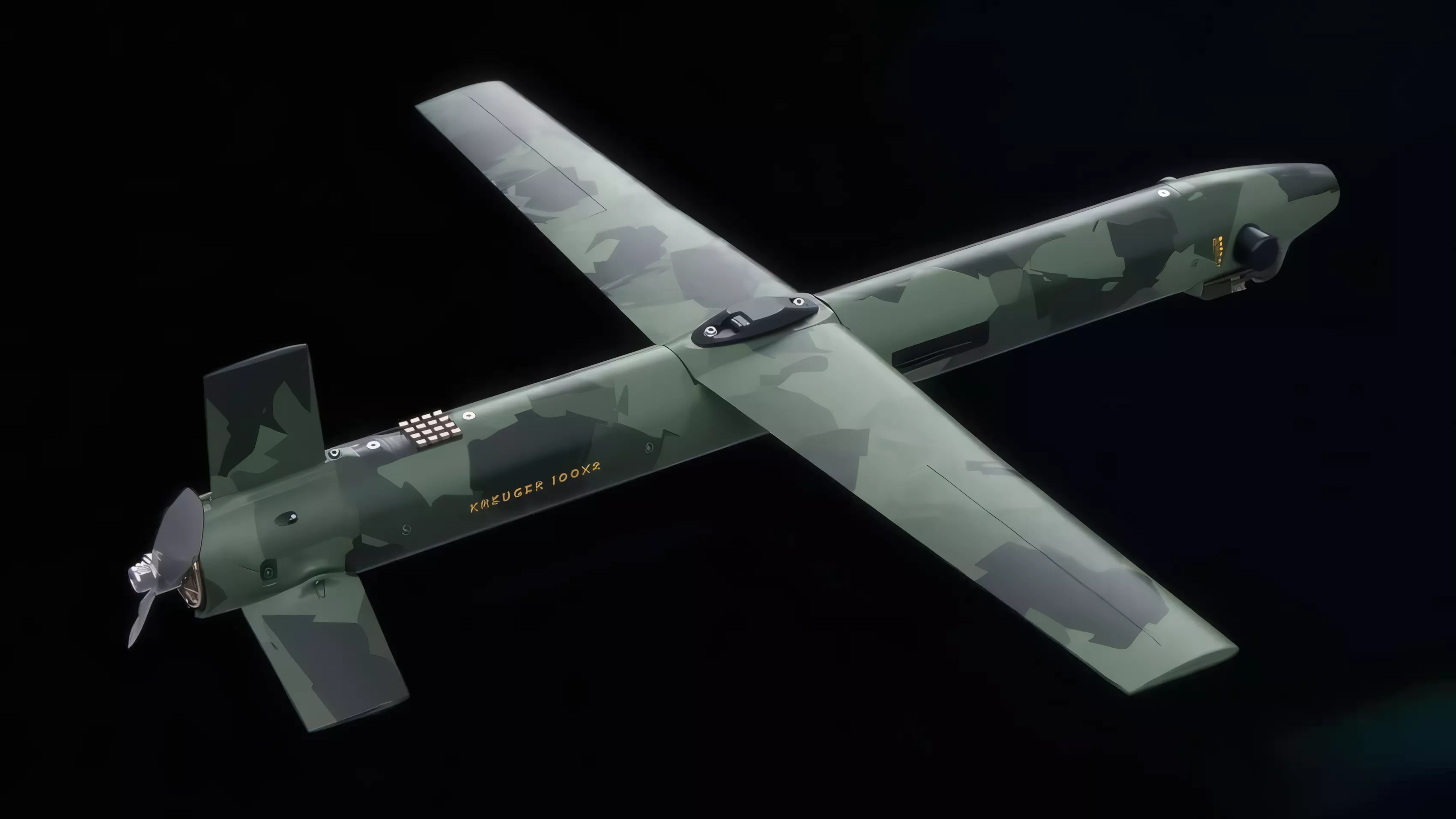
💡See how AI-driven robotics is disrupting traditional defense economics with low-cost autonomous interception.
⚡ 30-Second TL;DR
What Changed
K100XR is designed for cost-effective interception of low-altitude threats.
Why It Matters
This highlights the growing trend of autonomous defense systems in robotics. It signals a shift toward specialized, low-cost AI-driven hardware for military applications.
What To Do Next
Monitor the integration of computer vision and autonomous navigation in small-scale defense robotics.
Key Points
- •K100XR is designed for cost-effective interception of low-altitude threats.
- •Addresses the economic disparity in modern drone warfare defense.
- •Demonstrated at a recent live event by Nordic Air Defence.
🧠 Deep Insight
AI-generated analysis for this event — not the original article.
🔑 Enhanced Key Takeaways
- •The K100XR utilizes a proprietary AI-driven 'kinetic-proximity' guidance system that allows it to neutralize targets without requiring a direct collision, extending the drone's operational lifespan.
- •Nordic Air Defence has integrated the K100XR with existing NATO-standard C4I (Command, Control, Communications, Computers, and Intelligence) architectures to ensure seamless interoperability with legacy radar systems.
- •The interceptor features a modular payload bay capable of carrying either kinetic impactors or electronic warfare jamming suites, depending on the threat profile.
- •Initial flight tests conducted in Northern Sweden confirmed the K100XR can achieve a top speed of 350 km/h with a loitering endurance of up to 45 minutes.
- •The manufacturing process utilizes additive manufacturing (3D printing) for the airframe, significantly reducing production lead times and unit costs compared to traditional aerospace fabrication.
📊 Competitor Analysis▸ Show
| Feature | Nordic Air Defence K100XR | Anduril Roadrunner-M | Fortem DroneHunter F700 |
|---|---|---|---|
| Interception Method | Kinetic/Proximity | Kinetic/Explosive | Net Capture/Kinetic |
| Primary Advantage | Cost-per-kill efficiency | High-speed jet propulsion | Non-kinetic options available |
| Operational Role | Low-cost swarm defense | High-value asset protection | Urban/Sensitive site defense |
🛠️ Technical Deep Dive
- Propulsion: Dual-electric ducted fan configuration optimized for high-G maneuvers.
- Guidance: Multi-spectral optical sensor array combined with onboard edge-AI processing for autonomous target acquisition.
- Communication: Encrypted datalink with frequency-hopping spread spectrum (FHSS) to resist jamming.
- Airframe: Carbon-fiber reinforced polymer composite for high strength-to-weight ratio.
- Launch Mechanism: Pneumatic rail-launch system capable of rapid-fire deployment from mobile platforms.
🔮 Future ImplicationsAI analysis grounded in cited sources
⏳ Timeline
Weekly AI Recap
Read this week's curated digest of top AI events →
👉Related Updates
AI-curated news aggregator. All content rights belong to original publishers.
Original source: cnBeta (Full RSS) ↗
This is a summary, not the original. Read the source, or get the weekly briefing.
The weekly digest
One email a week. Unsubscribe anytime.