Nonprofit relaunches climate.gov after government shutdown
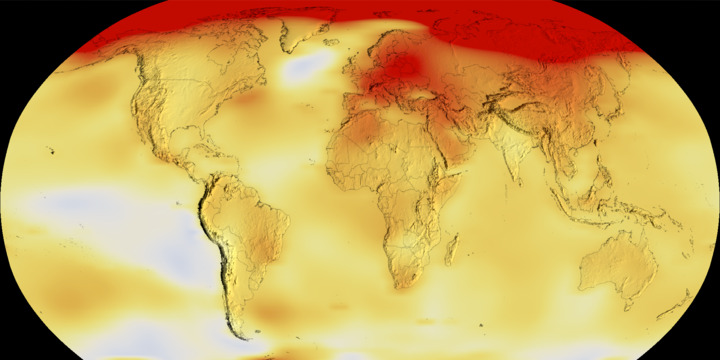
Critical climate data is back online. Essential for researchers and developers building climate-aware AI models.
30-Second TL;DR
What Changed
Climate.us has restored the full archive of the original climate.gov site.
Why It Matters
This restoration ensures that researchers and AI practitioners relying on historical climate datasets for training models maintain access to verified, government-backed scientific information.
What To Do Next
If you are building climate-focused AI models, verify your data sources against the restored climate.us archive to ensure your training sets are complete.
Key Points
- •Climate.us has restored the full archive of the original climate.gov site.
- •The project serves as a decentralized effort to preserve public scientific data.
- •Ensures continued public access to critical climate research and modeling datasets.
Deep Insight
AI-generated analysis for this event — not the original article.
Enhanced Key Takeaways
- •The initiative is spearheaded by the Environmental Data and Governance Initiative (EDGI), a network of academics and nonprofits formed specifically to monitor federal environmental data preservation.
- •The restoration project utilizes the Internet Archive's Wayback Machine and cached versions of the original NOAA-hosted climate.gov to reconstruct the site's database architecture.
- •Legal experts note that while the nonprofit has restored access, the site lacks the official 'gov' domain authority, meaning it cannot legally serve as the primary source for federal regulatory compliance or official government reporting.
- •The project utilizes a decentralized hosting model via IPFS (InterPlanetary File System) to ensure the data remains resistant to future takedown attempts or centralized censorship.
- •Funding for the server costs and maintenance of the restored archive is provided through a combination of private philanthropic grants and community-driven crowdfunding campaigns.
Technical Deep Dive
- The platform is built using a static site generator framework to minimize server-side vulnerabilities and reduce hosting costs.
- Data integrity is maintained through cryptographic hashing of all climate datasets to ensure that the information has not been altered since its original publication.
- The site architecture separates the front-end interface from the back-end data repository, allowing the raw datasets to be accessed via an API independent of the main website.
- Hosting is distributed across multiple global nodes to prevent single-point-of-failure outages during high-traffic events or targeted cyberattacks.
Future ImplicationsAI analysis grounded in cited sources
Timeline
- 2017-01Initial removal of climate-related data from federal websites following administration change
- 2017-02Formation of the Environmental Data and Governance Initiative (EDGI) to track data changes
- 2025-11Nonprofit begins the technical audit and scraping process of archived climate.gov assets
- 2026-05Beta launch of the restored climate.us platform for public testing
- 2026-06Official public relaunch of the full climate.us archive
Weekly AI Recap
Read this week's curated digest of top AI events →
AI-curated news aggregator. All content rights belong to original publishers.
Original source: Ars Technica ↗
This is a summary, not the original. Read the source, or get the weekly briefing.
The weekly digest
One email a week. Unsubscribe anytime.