Nobel Laureate David Gross on AI and Science
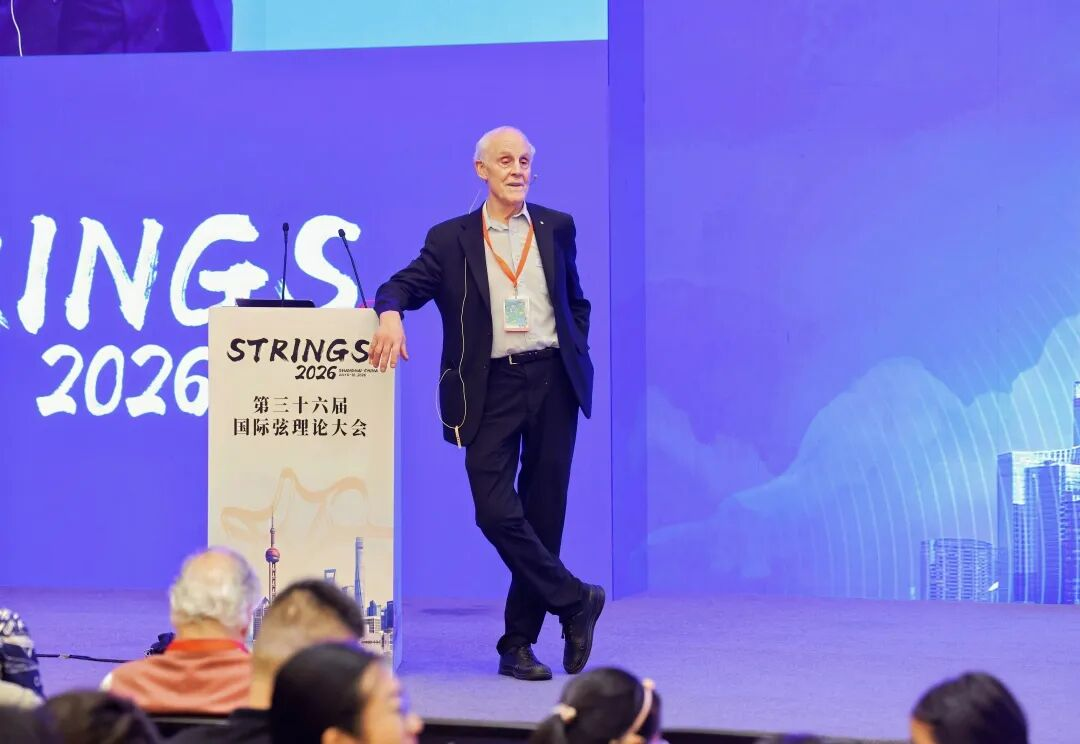
💡Insights from a Nobel laureate on how AI is reshaping scientific discovery and the future of research careers.
⚡ 30-Second TL;DR
What Changed
AI's rapid development is exciting and prompts deeper questions in brain science.
Why It Matters
The perspective encourages researchers to embrace AI as a tool for exploration while maintaining the human-centric nature of theoretical breakthroughs.
What To Do Next
Use AI to accelerate hypothesis generation in your research, but maintain human oversight for critical scientific reasoning.
Key Points
- •AI's rapid development is exciting and prompts deeper questions in brain science.
- •Scientific progress relies on human curiosity and the ability to navigate uncertainty, like climbing a dark mountain.
- •Physics training provides a versatile mindset applicable to various industries beyond academia.
- •Accepting skepticism and peer review is essential for scientific growth.
🧠 Deep Insight
AI-generated analysis for this event — not the original article.
🔑 Enhanced Key Takeaways
- •David Gross has specifically advocated for the use of AI in theoretical physics to identify patterns in high-dimensional data that human researchers might overlook, such as in string theory landscape analysis.
- •Gross emphasizes that while AI can optimize existing algorithms, it currently lacks the 'conceptual leap' capability required to formulate entirely new physical laws or paradigms.
- •He has frequently highlighted the 'crisis of complexity' in modern physics, where the sheer volume of data from experiments like the Large Hadron Collider necessitates AI-driven filtering and analysis tools.
- •Gross maintains a distinction between 'narrow AI' (which he views as a powerful tool for scientific computation) and 'artificial general intelligence,' expressing skepticism about the latter's ability to replicate human-like scientific intuition in the near term.
- •His perspective is heavily influenced by his tenure at the Kavli Institute for Theoretical Physics, where he has observed the integration of machine learning into collaborative research environments.
🔮 Future ImplicationsAI analysis grounded in cited sources
⏳ Timeline
Weekly AI Recap
Read this week's curated digest of top AI events →
👉Related Updates


AI-curated news aggregator. All content rights belong to original publishers.
Original source: 虎嗅 ↗
This is a summary, not the original. Read the source, or get the weekly briefing.
The weekly digest
One email a week. Unsubscribe anytime.