NIST Sells Bizarre 'Corpse Scent' and Radioactive Lung Samples
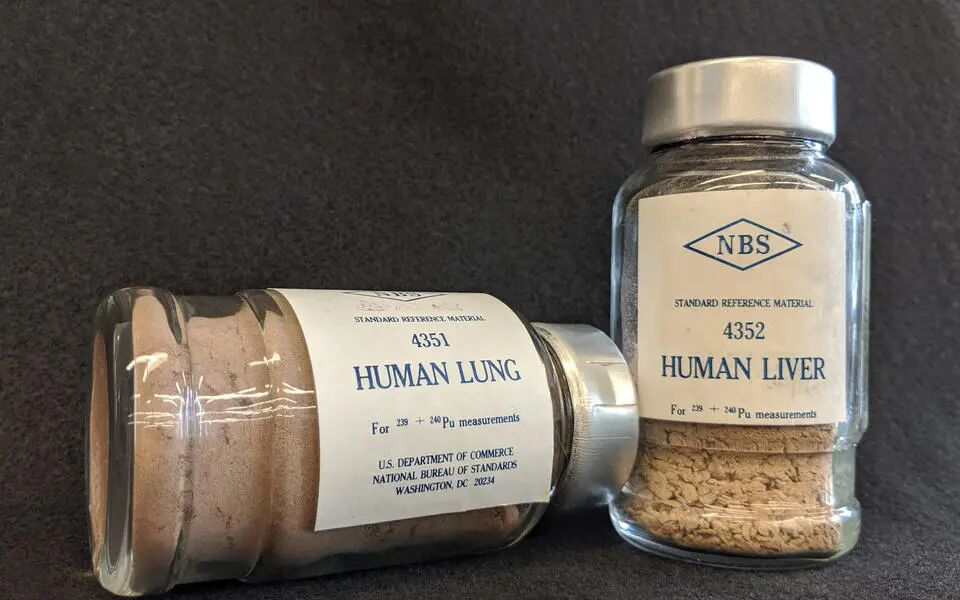
Discover the weird, high-stakes world of physical data standards that underpin modern detection AI.
30-Second TL;DR
What Changed
NIST provides specialized materials like synthetic corpse scents for training search-and-rescue dogs.
Why It Matters
Demonstrates the critical role of standardized physical samples in validating high-stakes detection technologies.
What To Do Next
If building sensor-based AI, look into NIST's standard reference materials (SRMs) for reliable validation data.
Key Points
- •NIST provides specialized materials like synthetic corpse scents for training search-and-rescue dogs.
- •Radioactive lung and liver tissues are used to calibrate radiation detection equipment.
- •These products are essential for scientific accuracy and public safety standards.
Deep Insight
AI-generated analysis for this event — not the original article.
Enhanced Key Takeaways
- •NIST's Standard Reference Materials (SRMs) program operates under the authority of the Standard Reference Materials Act, ensuring traceability to the International System of Units (SI).
- •The 'corpse scent' materials are specifically formulated as Human Remains Decomposition Odor (HRDO) standards to provide consistent training stimuli, reducing reliance on actual human remains which pose biohazard and ethical challenges.
- •Radioactive lung and liver SRMs are part of a broader suite of radioactivity standards that include gas, liquid, and solid matrices used to calibrate equipment for nuclear medicine and environmental monitoring.
- •NIST maintains a catalog of over 1,200 different SRMs, ranging from industrial materials like steel and cement to complex biological and environmental samples.
- •The production of these materials often involves inter-laboratory comparisons and rigorous certification processes to ensure the assigned values for chemical composition or physical properties are accurate and stable over time.
Technical Deep Dive
- NIST SRM 2917 (Human Remains Decomposition Odor) is designed to mimic the volatile organic compounds (VOCs) emitted during human decomposition, specifically targeting compounds like putrescine and cadaverine.
- Radioactive SRMs are often produced using specific radionuclides with well-characterized decay schemes, such as Am-241 or Pu-239, embedded in matrices that simulate the density and atomic composition of human organs.
- Calibration of radiation detection equipment using these SRMs involves calculating the detector efficiency by comparing the measured count rate against the certified activity concentration of the reference material.
- The stability of biological SRMs is maintained through specialized storage protocols, often involving lyophilization (freeze-drying) or vacuum sealing to prevent degradation of the chemical or radioactive components.
Future ImplicationsAI analysis grounded in cited sources
Timeline
- 1901-03Establishment of the National Bureau of Standards (NBS), the predecessor to NIST, with a mandate to provide standard weights and measures.
- 1906-09NBS begins the distribution of the first Standard Reference Materials, initially focusing on iron and steel samples for the industrial sector.
- 1988-08The National Bureau of Standards is renamed the National Institute of Standards and Technology (NIST) under the Omnibus Trade and Competitiveness Act.
- 2010-05NIST expands its forensic science research portfolio, leading to the development of more sophisticated chemical standards for law enforcement and public safety.
Weekly AI Recap
Read this week's curated digest of top AI events →
AI-curated news aggregator. All content rights belong to original publishers.
Original source: 虎嗅 ↗
This is a summary, not the original. Read the source, or get the weekly briefing.
The weekly digest
One email a week. Unsubscribe anytime.