NIST Caps Foreign Scientists at 3 Years
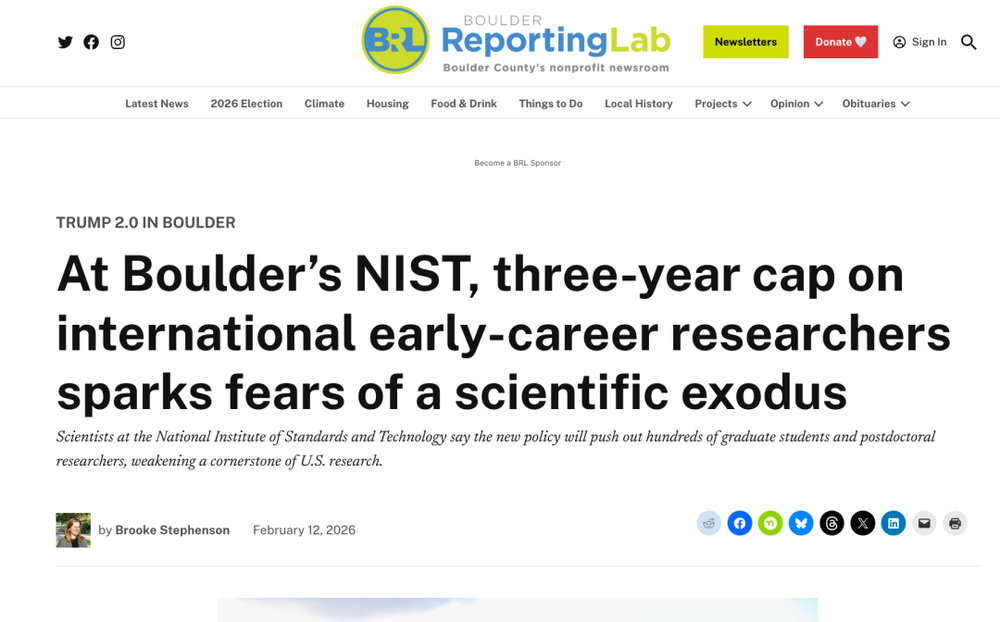
💡NIST policy threatens quantum/AI talent pipeline & standards amid shortages
⚡ 30-Second TL;DR
What Changed
Foreign researchers' lab access capped at 3 years total.
Why It Matters
This could undermine NIST's global credibility in AI safety standards and quantum research, worsening US talent shortages and disrupting international collaborations critical for AI infrastructure.
What To Do Next
Audit international postdoc collaborations with NIST quantum/AI labs for 3-year compliance risks.
Key Points
- •Foreign researchers' lab access capped at 3 years total.
- •Risk tiers by nationality: China/Russia high-risk, reviewed first.
- •Requires proxy director's personal approval for all foreign hires.
- •Contradicts NIST's recent congressional testimony on talent gaps.
- •Over half of some teams affected; access already restricted.
🧠 Deep Insight
Background and context from public sources — not the original article. 8 sources cited.
🔑 Enhanced Key Takeaways
- •NIST began restricting after-hours and weekend lab access for hundreds of foreign scientists at Boulder and Gaithersburg campuses in recent weeks, requiring federal employee escorts unless approved[1][3].
- •The policy stems from a 2025 update to NIST's research security rules and aligns with a 2021 Trump memorandum on national security for government-supported research, with Biden-era implementation guidelines[5].
- •House Democrats Zoe Lofgren and April McClain Delaney demanded on February 19, 2026, that NIST halt implementation, provide transparency, and respond by February 25 on policy details and impacts[4][8].
- •NIST issued its first public statement after February 12 reporting, claiming the program is for short-term collaborations to safeguard U.S. science, without addressing disruption concerns[2].
🔮 Future ImplicationsAI analysis grounded in cited sources
⏳ Timeline
📎 Sources (8)
Factual claims are grounded in the sources below. Forward-looking analysis is AI-generated interpretation.
- boulderreportinglab.org — At Boulders Nist Three Year Cap on International Researchers Sparks Fears of a Scientific Exodus
- boulderreportinglab.org — Nist Issues First Statement on New Policies in Response to Boulder Reporting Labs Reporting
- science.org — Nist Moves Restrict Foreign Scientists Its Labs
- meritalk.com — House Democrats Press Nist Over Reported Limits on Foreign Researchers
- coloradosun.com — Colorado Quantum Industry Scientists Foreign Nist Federal Labs
- thequantuminsider.com — Federal Lab Access Limits Are Rattling Quantum Sector
- aip.org — The Week of Feb 23 2026
- democrats-science.house.gov — 2026 02 19 Nist Letter on Foreign Researcher Policy Final
Weekly AI Recap
Read this week's curated digest of top AI events →
👉Related Updates

AI-curated news aggregator. All content rights belong to original publishers.
Original source: 虎嗅 ↗
This is a summary, not the original. Read the source, or get the weekly briefing.
Weekly AI briefing
One email a week. Unsubscribe anytime.