NIO's 2026 Strategy: The ES8 Five-Seater Launch
💡A strategic look at how a major EV player is pivoting its product design to challenge hybrid market dominance.
⚡ 30-Second TL;DR
What Changed
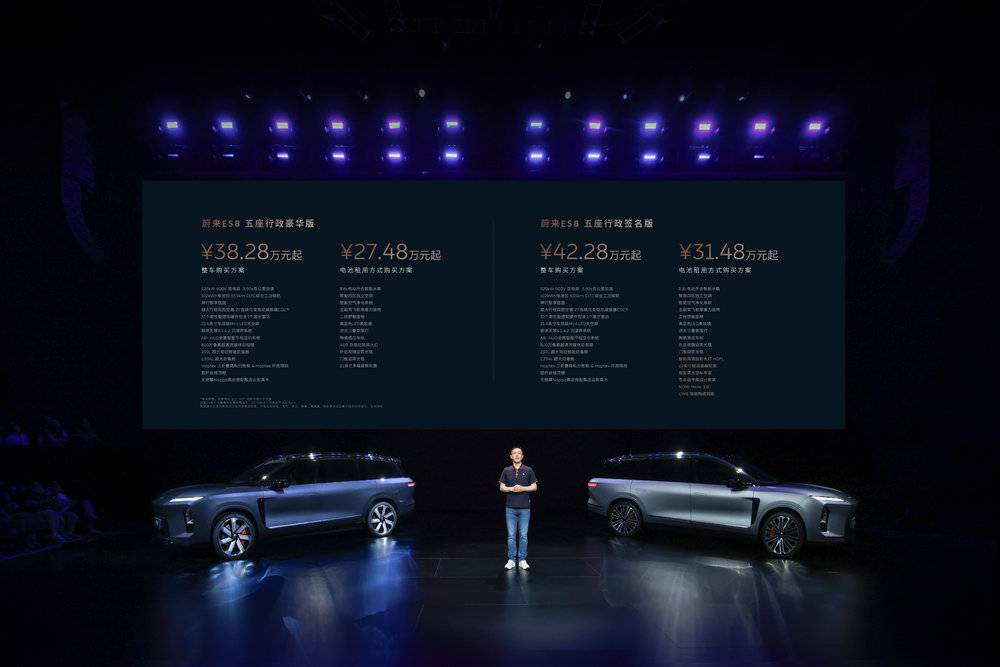
NIO launched the ES8 five-seater to target the 350k-500k RMB market segment.
Why It Matters
NIO's shift reflects the broader industry trend where pure electric vehicles are attempting to penetrate segments dominated by hybrids, testing the limits of consumer preference.
What To Do Next
For automotive tech developers, analyze NIO's '乘儲分離' (space-storage separation) design as a case study for optimizing cabin space in EV architectures.
Key Points
- •NIO launched the ES8 five-seater to target the 350k-500k RMB market segment.
- •The product features 'space-storage separation' to improve user experience in large SUVs.
- •NIO is pivoting from a six-seater focus to compete against range-extended and plug-in hybrid vehicles.
- •Financial stability in 2026 depends heavily on the success of this new model.
🧠 Deep Insight
AI-generated analysis for this event — not the original article.
🔑 Enhanced Key Takeaways
- •The ES8 five-seater utilizes NIO's NT 3.0 platform architecture, which optimizes battery pack integration to increase rear cargo volume by 15% compared to the six-seater variant.
- •NIO has integrated a new 'Smart Cabin 3.0' system that utilizes AI-driven spatial audio and adaptive seating ergonomics specifically tuned for the five-seat configuration.
- •Market analysts note that this launch marks a shift in NIO's 'User Enterprise' strategy, moving away from premium-only positioning to address the high-volume demand for large-format family SUVs.
- •The vehicle features an upgraded 100kWh ultra-long-range battery pack with improved energy density, specifically designed to counter the range anxiety advantages previously held by EREV (Extended Range Electric Vehicle) competitors.
- •NIO's supply chain adjustments for the five-seater ES8 include a localized production ramp-up at the NeoPark facility to reduce logistics costs and improve delivery timelines for the domestic Chinese market.
📊 Competitor Analysis▸ Show
| Feature | NIO ES8 (5-Seater) | Li Auto L9 | AITO M9 |
|---|---|---|---|
| Powertrain | BEV | EREV | BEV/EREV |
| Price Range (RMB) | 350k-500k | 400k-460k | 450k-570k |
| Key Advantage | Battery Swapping | Range/Refueling | Huawei Smart Driving |
🛠️ Technical Deep Dive
- Platform: Built on the NT 3.0 platform featuring centralized E/E architecture for faster OTA updates.
- Battery: Available with 75kWh and 100kWh packs, with support for 4th-generation battery swap stations.
- Suspension: Dual-chamber air suspension with CDC (Continuous Damping Control) for enhanced ride comfort.
- Cabin: Features a 17.4-inch OLED center display and a 16.2-inch rear entertainment screen with integrated AI assistant.
- Dimensions: Maintains the 5099mm length of the six-seater but reconfigures the second-row legroom for increased cargo capacity.
🔮 Future ImplicationsAI analysis grounded in cited sources
⏳ Timeline
Weekly AI Recap
Read this week's curated digest of top AI events →
👉Related Updates



AI-curated news aggregator. All content rights belong to original publishers.
Original source: 虎嗅 ↗
This is a summary, not the original. Read the source, or get the weekly briefing.
The weekly digest
One email a week. Unsubscribe anytime.