Ningki Ittai Ports Humanoid Tech to Commercial Cobots
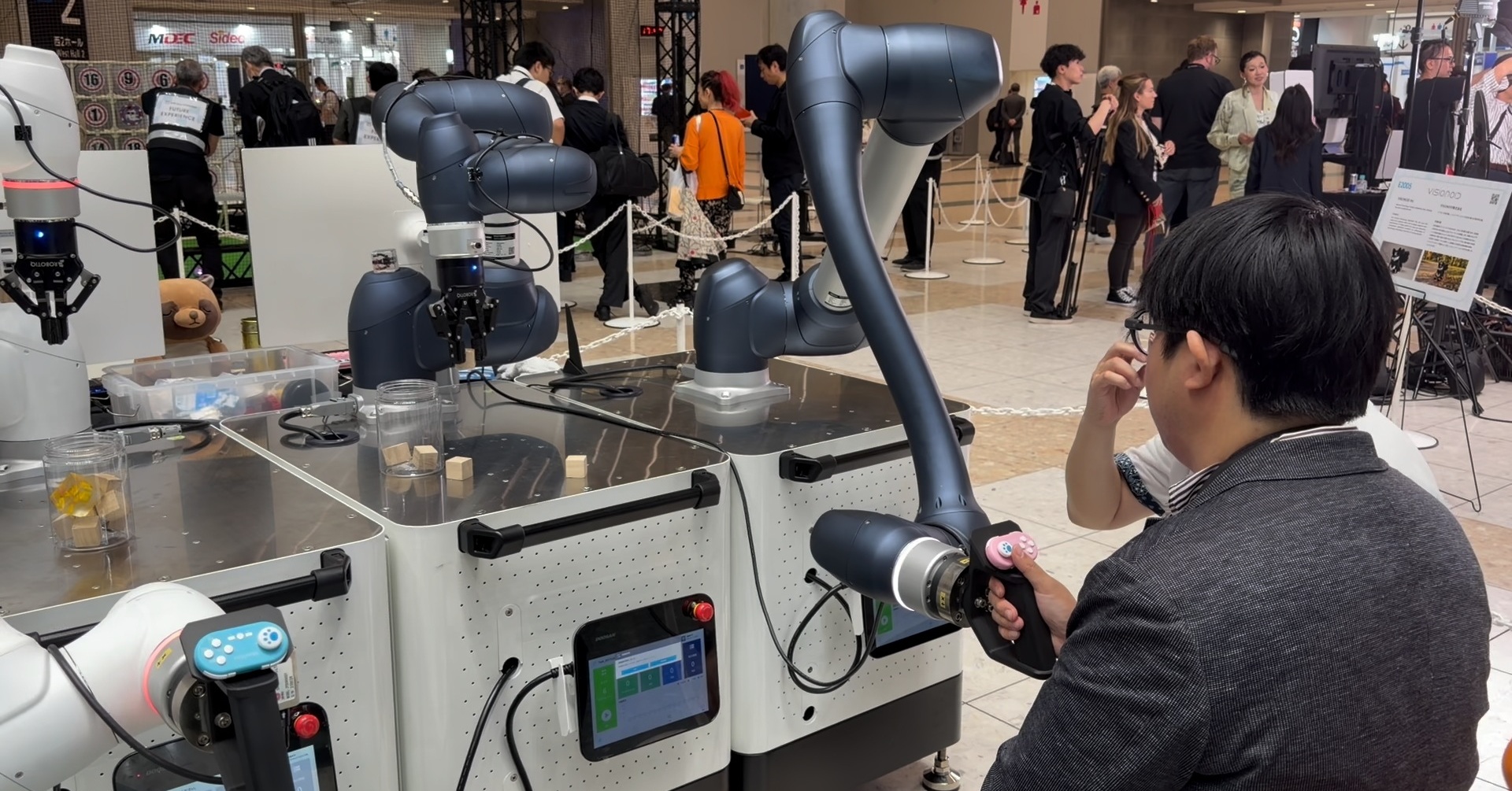
Humanoid rail tech hits commercial cobots—embodied AI for industrial builders
30-Second TL;DR
What Changed
人機一体 adapts rail-maintenance humanoid tech to commercial cobots
Why It Matters
Advances embodied AI from niche rail use to scalable industrial robots, lowering barriers for humanoid tech adoption in manufacturing.
What To Do Next
Explore 人機一体 integrations for upgrading your cobot fleet with humanoid capabilities.
Key Points
- •人機一体 adapts rail-maintenance humanoid tech to commercial cobots
- •Technology from JR-used 'yokai-like' heavy machinery goes commercial
- •Targets high-altitude work and industrial robot enhancements
- •Japanese startup drives humanoid tech democratization
Deep Insight
AI-generated analysis for this event — not the original article.
Enhanced Key Takeaways
- •Jinki Ittai's core technology, the 'Zero-Moment Point' (ZMP) based force-feedback control system, is being integrated into standard industrial cobot arms to allow for 'human-like' tactile sensitivity in remote operations.
- •The company is leveraging its proprietary 'Jinki-Ittai' (Man-Machine Unity) control platform, which minimizes latency between operator movement and robot execution, a critical requirement for high-altitude maintenance safety.
- •This commercialization strategy involves a partnership model where Jinki Ittai provides the 'software-defined' control layer to existing cobot manufacturers, rather than solely producing their own hardware.
Technical Deep Dive
- •Force-Feedback Control: Utilizes a proprietary bilateral control system that transmits physical resistance from the robot's end-effector back to the operator's haptic interface.
- •Latency Optimization: Implements a high-speed communication protocol designed to keep round-trip latency under 10ms, essential for stable remote operation of heavy machinery.
- •Modular Actuator Design: The technology utilizes high-torque, back-drivable actuators that allow the robot to be 'pushed' or guided by human operators without damaging the internal gearboxes.
- •Control Architecture: The system is built on a modular software stack that abstracts the robot's kinematics, allowing the same control interface to be ported across different cobot arm geometries.
Future ImplicationsAI analysis grounded in cited sources
Timeline
- 2015-10Jinki Ittai Co., Ltd. is founded by Professor Ryuichi Kaneko.
- 2020-04Jinki Ittai begins joint development of heavy-duty humanoid robots with West Japan Railway Company (JR West).
- 2022-04JR West officially deploys the humanoid heavy machinery for railway infrastructure maintenance.
- 2024-07Jinki Ittai announces expansion into commercial cobot markets, moving beyond custom rail-specific hardware.
Weekly AI Recap
Read this week's curated digest of top AI events →
Related Updates
AI-curated news aggregator. All content rights belong to original publishers.
Original source: ITmedia AI+ (日本) ↗
This is a summary, not the original. Read the source, or get the weekly briefing.
The weekly digest
One email a week. Unsubscribe anytime.