New Bright Blue Octopus Species Discovered in Galapagos
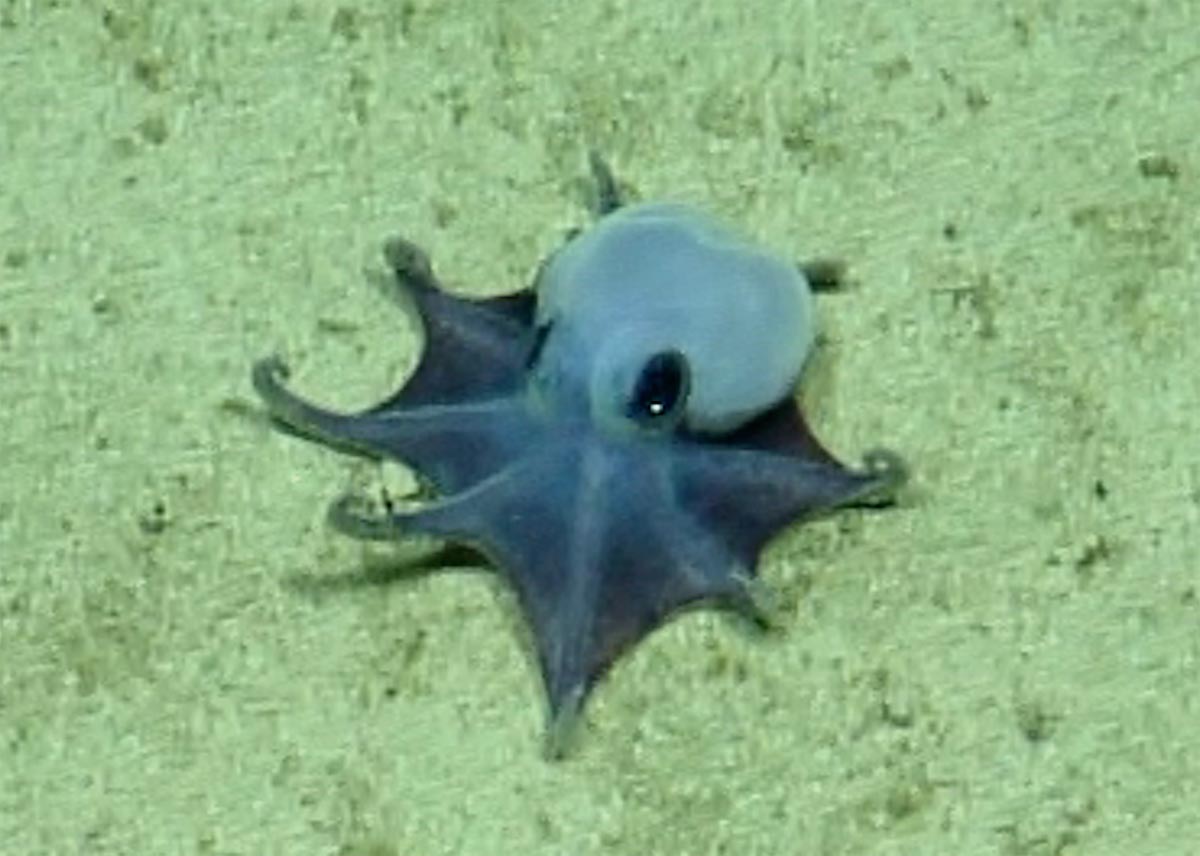
💡New biological discoveries provide unique edge-case data for training computer vision models.
⚡ 30-Second TL;DR
What Changed
New species identified in deep-sea Galapagos waters
Why It Matters
While primarily a biological discovery, it underscores the vast amount of unknown data in deep-sea environments, which is increasingly relevant for autonomous underwater vehicle (AUV) research.
What To Do Next
If you are working on computer vision for marine robotics, consider using this discovery to test your model's classification accuracy on rare, non-standard biological patterns.
Key Points
- •New species identified in deep-sea Galapagos waters
- •Distinctive bright blue coloration
- •Reinforces the region's status as a biological treasure trove
🧠 Deep Insight
Background and context from public sources — not the original article. 14 sources cited.
🔑 Enhanced Key Takeaways
- •The newly discovered species has been formally named Microeledone galapagensis, distinguishing it as only the second known member of its genus, Microeledone.
- •The golf-ball-sized octopus was first observed in 2015 at approximately 5,800 feet (1,773 meters) below the surface near Darwin Island during an expedition aboard the E/V Nautilus.
- •Identification of Microeledone galapagensis was achieved through non-destructive micro-CT scans, which allowed researchers to examine its internal anatomy, including a unique single tooth and smooth skin, without dissecting the sole collected specimen.
- •The discovery challenges the previous definition of the Megaleledonidae family, to which Microeledone galapagensis belongs, as this family was traditionally associated with large-bodied octopuses found exclusively in cold Southern Ocean waters.
- •The octopus's distinctive bright blue hue, a rare color in nature, is believed to be a survival strategy, helping it stand out against the sandy seafloor to researchers.
🛠️ Technical Deep Dive
- Discovery Vehicle: Remotely Operated Vehicle (ROV) deployed from the exploration vessel E/V Nautilus.
- Specimen Collection: The ROV was used to collect the single female specimen, and video footage of two other similar octopuses was captured.
- Imaging and Analysis: Micro-computed tomography (micro-CT) scans were employed to generate thousands of X-ray images, which were then compiled into a 3D model.
- Internal Anatomy Visualization: This non-destructive method allowed detailed examination of internal organs such as the mouth, beak, teeth, bipartite stomach, and eggs, which was crucial given the rarity of the specimen.
- Taxonomic Features: Key anatomical differences, including a large rachidian tooth and a large funnel organ, were identified through CT imaging, confirming its classification as a new species.
🔮 Future ImplicationsAI analysis grounded in cited sources
⏳ Timeline
📎 Sources (14)
Factual claims are grounded in the sources below. Forward-looking analysis is AI-generated interpretation.
Weekly AI Recap
Read this week's curated digest of top AI events →
👉Related Updates
AI-curated news aggregator. All content rights belong to original publishers.
Original source: cnBeta (Full RSS) ↗
This is a summary, not the original. Read the source, or get the weekly briefing.
The weekly digest
One email a week. Unsubscribe anytime.