New AI Predicts Cancer Metastasis Risk Precisely
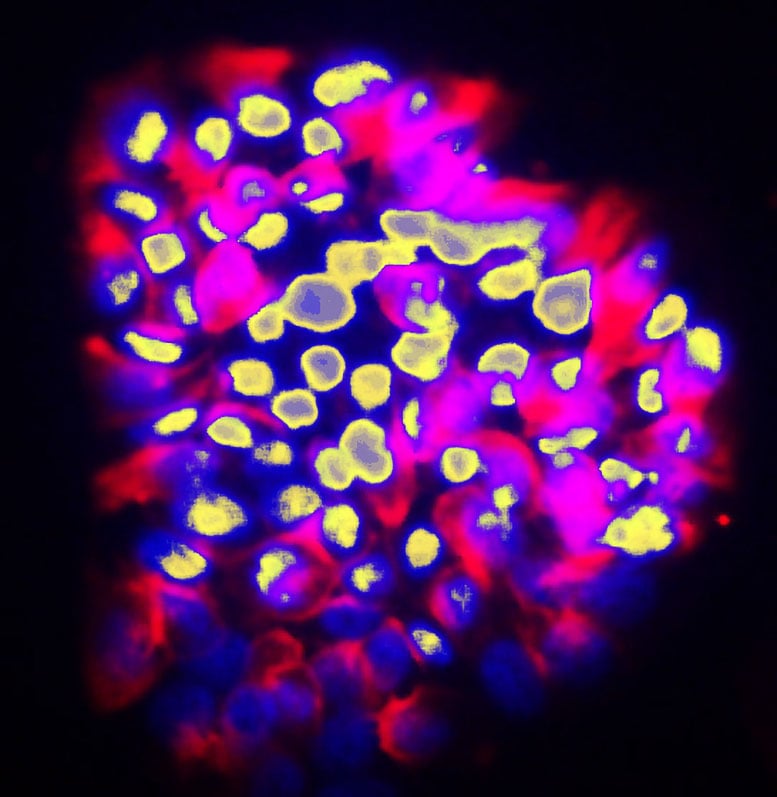
💡AI breakthrough: precise cancer metastasis forecast from gene data for med AI.
⚡ 30-Second TL;DR
What Changed
Developed by Geneva University researchers.
Why It Matters
Enables better risk stratification in oncology, potentially improving survival rates through tailored interventions. Demonstrates AI's growing role in genomics for clinical applications.
What To Do Next
Access TCGA datasets and fine-tune ML models for gene-based cancer prediction.
Key Points
- •Developed by Geneva University researchers.
- •Analyzes complex gene expression data.
- •High-precision metastasis and recurrence risk prediction.
- •Enhances individualized cancer therapy.
- •Targets multiple cancer types.
🧠 Deep Insight
Background and context from public sources — not the original article. 7 sources cited.
🔑 Enhanced Key Takeaways
- •MangroveGS exploits dozens to hundreds of gene signatures simultaneously, making it resistant to individual biological variations—a key architectural advantage over single-signature approaches[1][2]
- •The tool achieves ~80% accuracy on colon cancer metastasis prediction, substantially outperforming existing tools, and gene signatures derived from colon cancer generalize to stomach, lung, and breast cancers[1][2]
- •Clinical implementation uses RNA sequencing at hospitals with results transmitted via an encrypted portal, enabling rapid risk stratification to prevent overtreatment of low-risk patients while intensifying care for high-risk cases[2]
- •Broader AI oncology research identifies metastatic site count, tumor mutational burden, and genome alteration fraction as pan-cancer prognostic factors, with cancer-specific performance varying significantly (prostate AUC=0.88 vs. pancreatic AUC=0.68)[3][4]
🛠️ Technical Deep Dive
- •MangroveGS integrates multiple gene expression signatures into a single AI model rather than relying on individual biomarkers[1][2]
- •The model was trained on colon cancer cell data to identify gene expression patterns correlating with metastatic potential and recurrence risk[1]
- •Derived signatures are transferable across cancer types (stomach, lung, breast), suggesting common underlying metastatic mechanisms[1][2]
- •Clinical workflow: tumor RNA sequencing → anonymized data analysis → encrypted portal delivery of metastatic risk score to oncologists and patients[2]
- •Complementary research uses XGBoost combined with SHAP (SHapley Additive exPlanations) for explainable AI in metastatic cancer survival prediction, identifying key prognostic biomarkers[3][4]
🔮 Future ImplicationsAI analysis grounded in cited sources
⏳ Timeline
📎 Sources (7)
Factual claims are grounded in the sources below. Forward-looking analysis is AI-generated interpretation.
- medicalxpress.com — 2026 01 AI Tool Cancer Metastasis Gene
- unige.ch — AI Predict Risk Cancer Metastases
- cancer.jmir.org — E74196
- pubmed.ncbi.nlm.nih.gov — 41529257
- unige.ch — Promises AI Terms Cancer Treatment
- youtube.com — Watch
- weforum.org — AI Unlock Cancer Complexities If Build Data Infrastructure First
Weekly AI Recap
Read this week's curated digest of top AI events →
👉Related Updates



AI-curated news aggregator. All content rights belong to original publishers.
Original source: cnBeta (Full RSS) ↗
This is a summary, not the original. Read the source, or get the weekly briefing.
Weekly AI briefing
One email a week. Unsubscribe anytime.