Neuralink Demonstrates Thought-Controlled Wheelchair
💡Neuralink moves BCI beyond cursor control toward real-world mobility devices—a key test for embodied AI.
⚡ 30-Second TL;DR
What Changed
A participant used the N1 Implant to control wheelchair movement, turning, and seat-angle adjustments without hand input.
Why It Matters
For AI and robotics practitioners, the demonstration highlights a practical closed loop from neural sensing to real-world actuation. It also shows that the key barriers are shifting from basic decoding feasibility toward reliability, surgical standardization, patient-to-patient generalization, and regulatory-grade clinical evidence.
What To Do Next
If you are building neurotechnology, prototype a closed-loop decoder-to-device pipeline and benchmark latency, signal stability, and cross-user adaptation against the capabilities described in PRIME and CONVOY.
Key Points
- •A participant used the N1 Implant to control wheelchair movement, turning, and seat-angle adjustments without hand input.
- •Neuralink’s technology stack combines cortical electrodes, the R1 surgical robot, wireless telemetry, and neural signal-decoding algorithms.
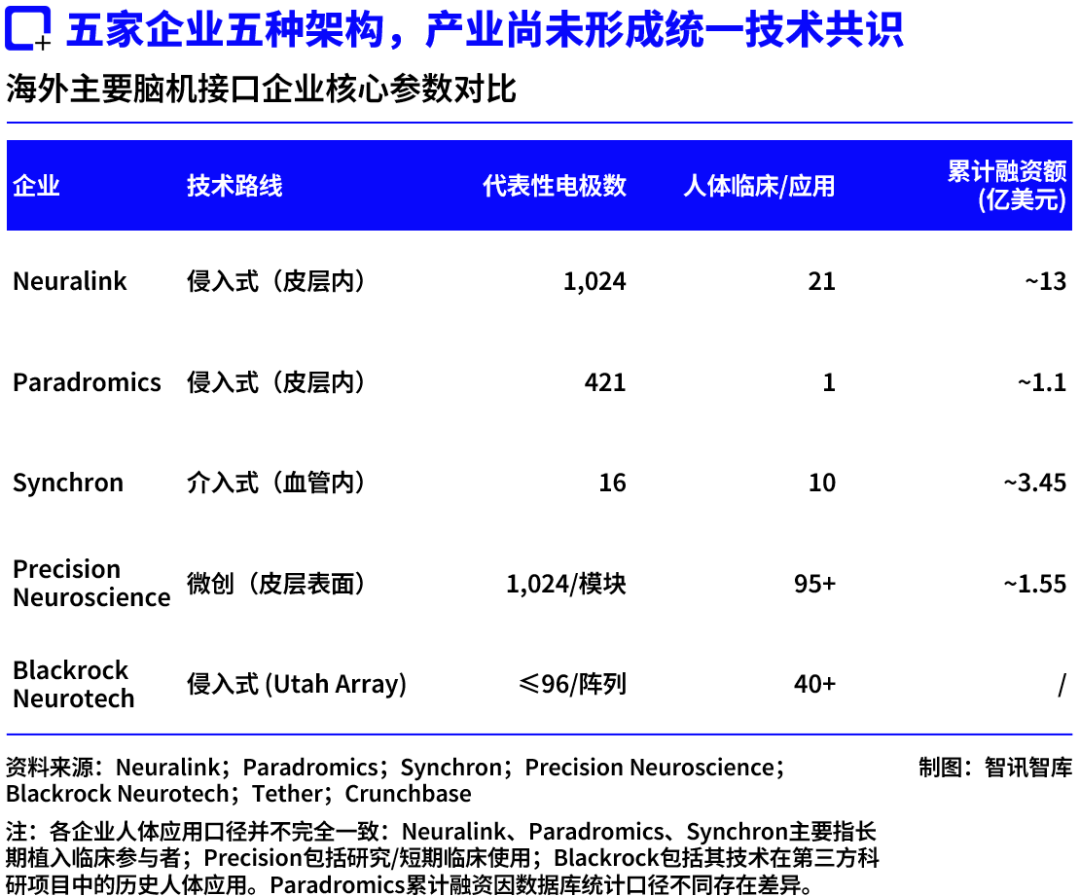
- •The PRIME and CAN-PRIME studies are expanding clinical evidence for people with spinal cord injuries or ALS, with reported enrollment reaching 21 participants by January 2026.
- •Near-term commercialization is expected to focus on restoring mobility through computers, wheelchairs, and robotic arms before attempting sensory restoration or broader human-computer interaction.
🧠 Deep Insight
AI-generated analysis for this event.
🔑 Enhanced Key Takeaways
- •Neuralink has implemented a 'thread-retraction' mitigation strategy in recent N1 iterations to address the electrode displacement issues observed in the first clinical participant.
- •The N1 implant utilizes an on-board custom ASIC that performs real-time spike sorting and data compression, reducing the power consumption required for wireless transmission.
- •Regulatory progress includes the FDA granting 'Breakthrough Device Designation' for the N1, which has accelerated the transition from the initial PRIME study to the broader CAN-PRIME trial.
- •Neuralink's software architecture now incorporates a 'shared-control' framework, where the BCI interprets intent while the wheelchair's onboard sensors handle obstacle avoidance and navigation safety.
- •The company has established a dedicated 'Patient Advocacy and Ethics Board' to oversee the long-term monitoring of participants, specifically focusing on the psychological impact of direct neural control.
📊 Competitor Analysis▸ Show
| Feature | Neuralink (N1) | Synchron (Stentrode) | Blackrock Neurotech |
|---|---|---|---|
| Implantation | Robotic (Intracortical) | Endovascular (Stent) | Surgical (Cortical Array) |
| Signal Quality | High (Spike-level) | Moderate (Local Field) | High (Spike-level) |
| Invasive Level | High | Low | High |
| Primary Use | Motor/Sensory | Motor/Communication | Research/Motor |
🛠️ Technical Deep Dive
- Implant Architecture: The N1 features 1,024 electrodes distributed across 64 flexible threads, each thinner than a human hair.
- Signal Processing: On-chip processing performs 20kHz sampling per channel with integrated spike detection algorithms.
- Wireless Power: Utilizes inductive charging through a wearable external device that magnetically aligns with the implant.
- Latency: The system achieves sub-50ms latency from neural intent detection to wheelchair motor command execution.
- Data Transmission: Employs a proprietary low-power Bluetooth-based protocol for secure, high-bandwidth neural data streaming.
🔮 Future ImplicationsAI analysis grounded in cited sources
⏳ Timeline
Weekly AI Recap
Read this week's curated digest of top AI events →
👉Related Updates



AI-curated news aggregator. All content rights belong to original publishers.
Original source: 虎嗅 ↗