Netflix's flywheel effect and data-driven content strategy
💡Learn how Netflix balances data-driven decision making with creative risk to maintain market dominance.
⚡ 30-Second TL;DR
What Changed
Netflix's flywheel: More content leads to more subscribers, which increases revenue for larger content budgets.
Why It Matters
Netflix's model demonstrates the power of combining big data with creative industries, providing a blueprint for other media and tech companies.
What To Do Next
Analyze your product's 'flywheel' metrics by mapping user growth against content/feature investment cycles to identify efficiency gains.
Key Points
- •Netflix's flywheel: More content leads to more subscribers, which increases revenue for larger content budgets.
- •Data is used for platform decisions (what to buy/make) but creative execution remains artist-led.
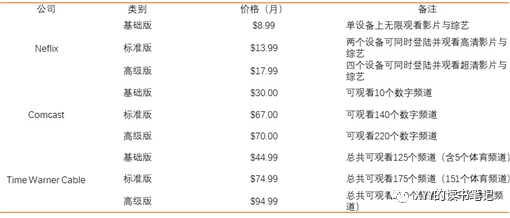
- •The shift from high-cost cable bundles to low-cost streaming created a massive competitive advantage.
- •Financial health has improved as content amortization costs decrease relative to revenue.
🧠 Deep Insight
Web-grounded analysis with 28 cited sources.
🔑 Enhanced Key Takeaways
- •Netflix's advanced personalization algorithms are estimated to save the company over $1 billion annually by significantly reducing subscriber churn, with 75-80% of all viewing hours on the platform driven by these algorithmic recommendations rather than user searches.
- •The company's content acquisition strategy for 2026 is structured around three main pillars: commissioning global originals, co-producing with local partners in key markets, and strategically licensing third-party content to fill catalog gaps, with an anticipated content budget of approximately $20 billion for the year.
- •Netflix extensively employs A/B testing across various aspects of its platform, including UI features, recommendation algorithms, content promotion tactics, and even personalized artwork (thumbnails), leveraging AI to optimize user experience and boost engagement metrics like click-through rates and watch time.
- •A core component of Netflix's global expansion is its 'local-for-global' content strategy, focusing on producing local-language content that resonates with specific regional audiences while also possessing universal appeal to attract a worldwide viewership, resulting in non-English content accounting for over a third of total viewing.
- •Netflix utilizes an accelerated amortization schedule for its content assets, expensing 90% or more of an original production's cost within the first four years, reflecting the expectation of higher upfront viewing and ensuring financial reporting stability.
📊 Competitor Analysis▸ Show
| Service | Ad-Supported Plan (Monthly) | Ad-Free Plan (Monthly) | Premium/4K Plan (Monthly) | Key Features/Content Focus |
|---|---|---|---|---|
| Netflix | $9 | $20 (Standard) | $27 | Extensive original content, broad variety, global content, binge-watching model |
| Disney+ & Hulu Bundle | N/A | $20 | N/A | Family-friendly content (Disney, Pixar, Marvel, Star Wars), next-day network TV episodes (Hulu) |
| Max | $10.99 | $15.99 (Standard) | $23 | HBO originals, Warner Bros. theatrical releases, DC Universe, prestige film library |
| Apple TV+ | N/A | $12.99 | Included | Critically acclaimed originals (Ted Lasso, Severance), 4K HDR Dolby Vision/Atmos included |
| Peacock | $7.99 (Select) / $11 (Premium) | $17 (Premium Plus) | N/A | NBC/Bravo shows, Universal/DreamWorks films, some live sports (Premier League) |
| Paramount+ | $9 | $12 (with Showtime) | N/A | CBS content, Nickelodeon, Paramount films, live NFL games, Showtime titles |
🛠️ Technical Deep Dive
- Netflix's recommendation system processes terabytes of daily interaction data from over 230 million global users, aiming for sub-100ms recommendation latency.
- The architecture employs ensemble methods, combining collaborative filtering, deep neural networks, and graph-based models (e.g., SemanticGNN for content understanding).
- Key innovations include contextual bandits for optimizing user interface elements like artwork personalization, where different thumbnail variants are shown to user segments based on viewing history, genre preferences, device type, and even eye-tracking data.
- Multi-task learning architectures, such as the 'Hydra' system, consolidate specialized models to handle various tasks like homepage ranking, search result ordering, and notification personalization simultaneously, improving efficiency and generalization.
- The system considers a wide array of implicit and explicit signals for personalization, including viewing history, ratings, search queries, browsing behavior, time of day, preferred languages, device used, and how long a title was watched. It explicitly states it does not use demographic information like age or gender in its decision-making process.
- Netflix utilizes extensive A/B testing to evaluate new algorithms, UI features, content promotion, and streaming quality, with AI-powered tools analyzing results to speed up iteration.
- Production infrastructure separates compute-intensive model training (often on AWS) from ultra-low-latency content delivery (via a proprietary CDN) to optimize for different performance requirements.
- Netflix categorizes viewers into over 2,000 distinct 'taste communities' or clusters based on viewing preferences, rather than traditional demographics, to inform content creation and personalization.
🔮 Future ImplicationsAI analysis grounded in cited sources
⏳ Timeline
📎 Sources (28)
Factual claims are grounded in the sources below. Forward-looking analysis is AI-generated interpretation.
- Google Search Source
- Google Search Source
- Google Search Source
- Google Search Source
- Google Search Source
- Google Search Source
- Google Search Source
- Google Search Source
- Google Search Source
- Google Search Source
- Google Search Source
- Google Search Source
- Google Search Source
- Google Search Source
- Google Search Source
- Google Search Source
- Google Search Source
- Google Search Source
- Google Search Source
- Google Search Source
- Google Search Source
- Google Search Source
- Google Search Source
- Google Search Source
- Google Search Source
- Google Search Source
- Google Search Source
- Google Search Source
Weekly AI Recap
Read this week's curated digest of top AI events →
👉Related Updates

AI-curated news aggregator. All content rights belong to original publishers.
Original source: 虎嗅 ↗