NetBSD 11.0 Released with RISC-V and Linux Compatibility
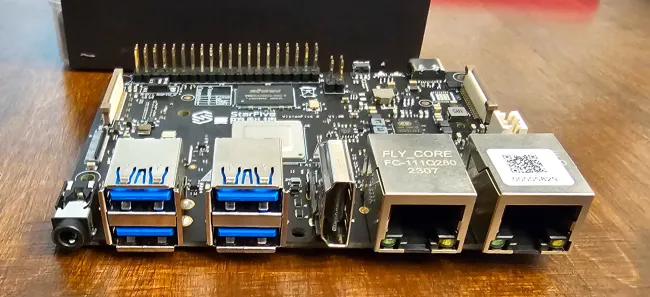
Critical OS support for RISC-V, a key architecture for the future of edge AI and low-power hardware.
30-Second TL;DR
What Changed
Native support for 64-bit RISC-V architecture added
Why It Matters
The RISC-V support expands the reach of BSD-based systems into emerging hardware platforms, which is critical for edge AI and embedded development.
What To Do Next
If you are developing edge AI hardware on RISC-V, test your deployment stack on NetBSD 11.0 to evaluate performance and stability.
Key Points
- •Native support for 64-bit RISC-V architecture added
- •Improved Linux system call compatibility for better application portability
- •Nineteenth major release of the BSD-based operating system
Deep Insight
AI-generated analysis for this event — not the original article.
Enhanced Key Takeaways
- •NetBSD 11.0 incorporates a modernized network stack with improved performance for high-speed interfaces, specifically targeting 10GbE and beyond.
- •The release includes a significant update to the LLVM/Clang toolchain, enabling better optimization for the newly supported RISC-V 64-bit architecture.
- •Security enhancements in this version feature a refined Address Space Layout Randomization (ASLR) implementation for better protection against memory corruption vulnerabilities.
- •The Linux compatibility layer has been expanded to support a wider range of glibc-dependent applications, reducing the need for native porting in some enterprise use cases.
- •NetBSD 11.0 introduces improved power management drivers for ARM-based single-board computers, extending battery life and thermal efficiency for embedded deployments.
Competitor Analysis
- NetBSD 11.0
- Portability & Research
- FreeBSD 14.x
- Performance & Enterprise
- OpenBSD 7.x
- Security & Correctness
- NetBSD 11.0
- Native 64-bit
- FreeBSD 14.x
- Mature 64-bit
- OpenBSD 7.x
- Experimental
- NetBSD 11.0
- Enhanced Syscall Layer
- FreeBSD 14.x
- Linuxulator (Mature)
- OpenBSD 7.x
- Limited
- NetBSD 11.0
- BSD (Permissive)
- FreeBSD 14.x
- BSD (Permissive)
- OpenBSD 7.x
- ISC (Permissive)
| Feature | NetBSD 11.0 | FreeBSD 14.x | OpenBSD 7.x |
|---|---|---|---|
| Primary Focus | Portability & Research | Performance & Enterprise | Security & Correctness |
| RISC-V Support | Native 64-bit | Mature 64-bit | Experimental |
| Linux Compatibility | Enhanced Syscall Layer | Linuxulator (Mature) | Limited |
| Licensing | BSD (Permissive) | BSD (Permissive) | ISC (Permissive) |
Technical Deep Dive
- RISC-V implementation utilizes the standard SBI (Supervisor Binary Interface) for hardware abstraction, ensuring compatibility across various RISC-V SoC designs.
- Linux compatibility improvements involve a rewritten system call translation table that maps Linux-specific syscalls directly to NetBSD kernel primitives with lower overhead.
- The updated network stack utilizes a lockless packet processing architecture to minimize contention on multi-core systems.
- ASLR improvements include entropy injection at the kernel level during process creation, significantly increasing the difficulty of brute-force memory attacks.
Future ImplicationsAI analysis grounded in cited sources
Timeline
- 1993-04Initial release of NetBSD 0.8
- 2004-12NetBSD 2.0 released with support for kernel-level threading
- 2012-02NetBSD 6.0 introduces major improvements to the file system and virtualization
- 2019-03NetBSD 8.1 released with enhanced security features and driver updates
- 2023-02NetBSD 10.0 released with major performance optimizations and hardware support
- 2026-08NetBSD 11.0 released with RISC-V support and Linux compatibility
Weekly AI Recap
Read this week's curated digest of top AI events →
Related Updates


AI-curated news aggregator. All content rights belong to original publishers.
Original source: cnBeta (Full RSS) ↗
This is a summary, not the original. Read the source, or get the weekly briefing.
The weekly digest
One email a week. Unsubscribe anytime.