Navigating the Changing Global Order: China-India Relations
💡Understand how shifting global power dynamics will impact the future of international tech collaboration and AI policy.
⚡ 30-Second TL;DR
What Changed
Global order is shifting due to technological and military revolutions, rendering old frameworks less effective.
Why It Matters
The shift toward regionalized, independent power centers suggests that AI development and deployment strategies may become increasingly fragmented by national interests rather than global standards.
What To Do Next
Monitor regional AI regulatory policies as geopolitical fragmentation may lead to divergent compliance requirements for global AI models.
Key Points
- •Global order is shifting due to technological and military revolutions, rendering old frameworks less effective.
- •China and India should manage their relationship based on mutual interests rather than external alignments.
- •Bilateral relations are currently on a positive trajectory with increased dialogue and economic engagement.
🧠 Deep Insight
AI-generated analysis for this event — not the original article.
🔑 Enhanced Key Takeaways
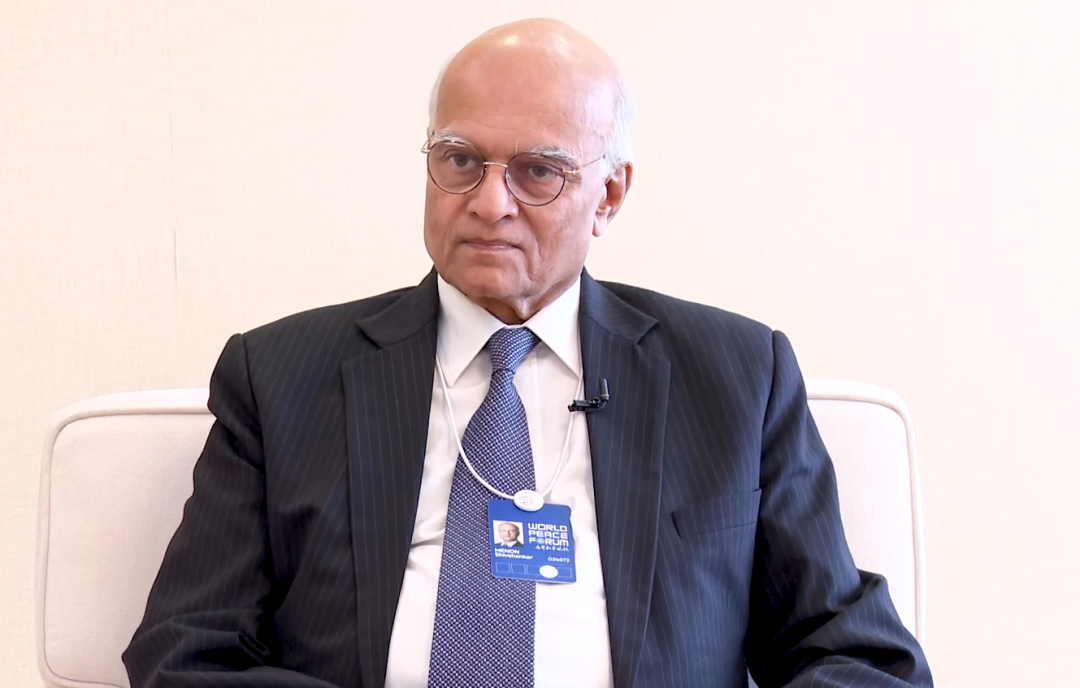
- •Shivshankar Menon served as India's National Security Advisor from 2010 to 2014, a period marked by significant efforts to establish the Border Defence Cooperation Agreement (BDCA) in 2013.
- •The 2020 Galwan Valley clash remains a primary structural constraint on bilateral relations, leading to the 'three mutuals' framework (mutual respect, mutual sensitivity, and mutual interests) proposed by External Affairs Minister S. Jaishankar.
- •Recent diplomatic breakthroughs in 2024 and 2025 have focused on restoring patrolling rights in the Depsang and Demchok sectors, signaling a shift toward de-escalation along the Line of Actual Control (LAC).
- •India's 'multi-alignment' strategy, which Menon advocates, seeks to balance participation in the Quad (with the US, Japan, and Australia) while maintaining strategic autonomy in BRICS and the Shanghai Cooperation Organization (SCO).
- •Economic interdependence remains asymmetric, with India maintaining a significant trade deficit with China while simultaneously implementing 'China Plus One' supply chain strategies to reduce reliance on Chinese manufacturing.
🔮 Future ImplicationsAI analysis grounded in cited sources
⏳ Timeline
Weekly AI Recap
Read this week's curated digest of top AI events →
👉Related Updates


AI-curated news aggregator. All content rights belong to original publishers.
Original source: 虎嗅 ↗
This is a summary, not the original. Read the source, or get the weekly briefing.
The weekly digest
One email a week. Unsubscribe anytime.